
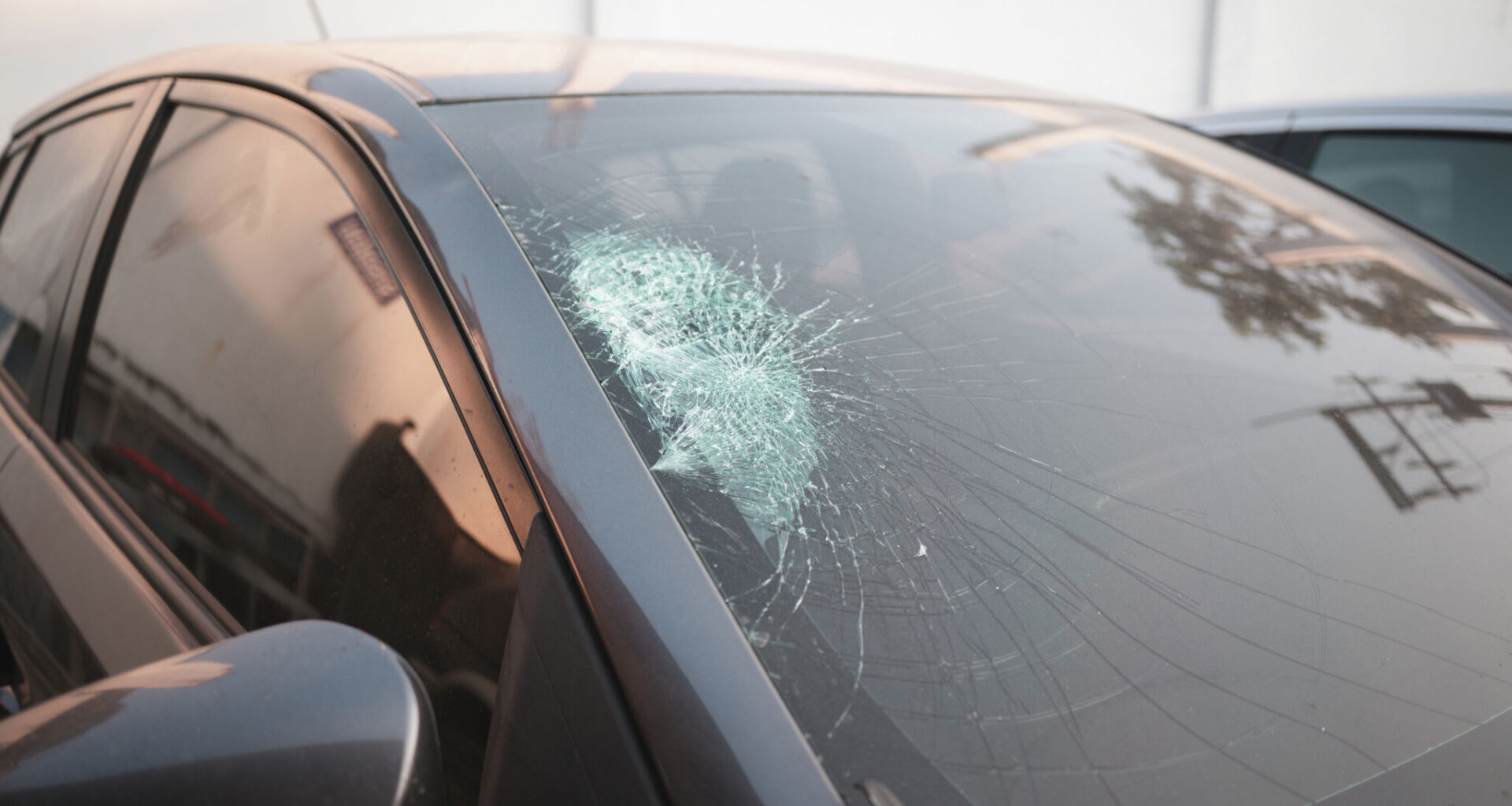
If you’ve driven on Interstate 35 in Texas, odds are you’ve seen an 18-wheeler throw a rock up in the air or worse, toward your vehicle’s direction. If it leads to a cracked windshield, folks may need to pay to fix it before they become at risk of getting a citation.
Whose fault does it legally become? State law orders truck loads to be firmly covered and secured at the front and back, meaning it is, in most cases, illegal for your vehicle to be overflowing with material. Still, attorneys warn that driving with a busted windshield may get you a ticket.
The portal for the Texas Constitution and Statutes, in its entirety, does not explicitly state that a person can not drive with a cracked windshield. However, law firms have warned that Section 547.613 may allow for it to be considered a Class C misdemeanor.
Texas Department of Public Safety Sergeant Bryan Washko tells MySA that safety troopers rely on Texas Transportation Code §547.613 (Restrictions on Windows) when determining whether enforcement action is appropriate.
“As a result, enforcement is generally left to the Trooper’s discretion based on the size, location, and severity of the damage and whether it creates a safety concern,” Washko said via an email statement.
Additionally, Section 547.004 makes it an offense to knowingly operate a vehicle that is deemed unsafe. Window repair company Omni Glass explains that not only can the cracks make it hard to see what is in front of you, but it reduced the support to the roof of a vehicle. If involved in a rollover accident, this can cause injury to the passengers.
Commercial vehicles have more specific guidelines. They are listed by the U.S Department of Transportation’s Federal Motor Carrier Safety Administration, which oversees high-risk carriers and commercial motor vehicle drivers. Section 393.60 says windshields must not have a crack that intersects with another crack or a damaged area larger than 3/4 of an inch (about the size of a dime). Small chips are fine as long as they are at least three inches apart from one another.
If the crack is widespread, it could block the driver from seeing their neighbors on the road and cause a crash. This is partly why Daniel Stary Injury Lawyers and Angel Reyes & Associates, a law firm with offices in Austin, Dallas, Houston, and beyond, says it could be deemed “an obstruction of view.”
This can prompt a citation, attorney Spencer Browne says in a blog post. Section 547.613 considers it an offense to operate “a motor vehicle that has an object or material that is placed on or attached to the windshield … that obstructs or reduces the operator’s clear view.”
Attorney Browne says that if pulled over, a police officer may offer a warning or issue a ticket. A Class C misdemeanor can cost up to $500, per Texas Penal Code Section 12.23.