
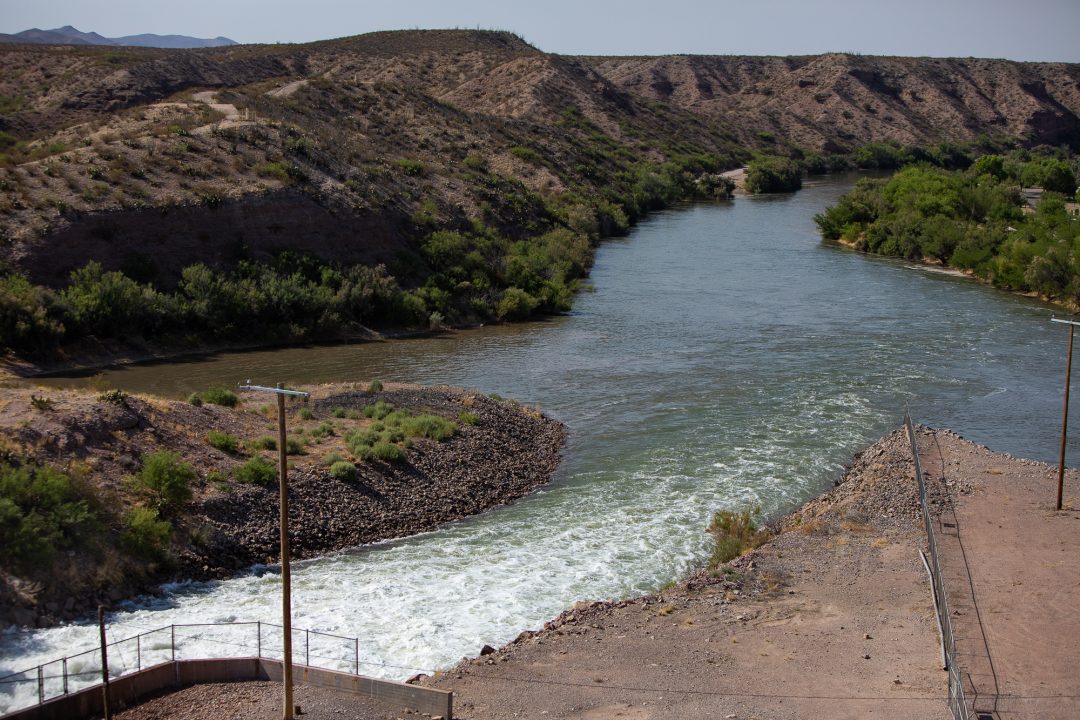
Water supply, data centers and customer bills. A discussion with El Paso Water
Diego Mendoza-Moyers: Today, let’s talk about water.
In an isolated desert city like El Paso, we all know water is probably the most valuable and important resource for sustaining our community.
We’ve been in a long-term drought here in this region of Far West Texas and Southern New Mexico, exacerbated by climate change and rising temperatures. And overcoming the challenges – both natural and manmade – that come with living in the desert is the only way El Paso and Ciudad Juárez will continue to exist.
Meanwhile, other cities in Texas are struggling with their water supplies.
Corpus Christi in South Texas is experiencing dangerously low reservoir levels, and by next year that city may be in an emergency situation with its water supply, and they don’t have great options. City leaders in Corpus recently shot down a long-proposed idea to build a billion-dollar seawater desalination plant to supply water for both residents as well as petrochemical facilities that are the backbone of the economy in that corner of Texas.
Also, the aquifer that supplies the fast-growing suburbs between Austin and San Antonio has reached critically-low levels due to drought, which threatens the booming growth in that part of the state.
And aging, leaky water infrastructure across Texas causes the loss of billions of gallons of water every year.
You get the point. Different parts of Texas have some big water challenges, which is why voters next week will decide whether to approve a $20 billion spending package to shore up the state’s water supply and improve infrastructure.
In El Paso, though, we’re in a pretty good position compared with the rest of the state when it comes to water.
City-owned El Paso Water has been fairly creative over the years to ensure we have a supply of water.
The U.S. Army and El Paso Water collaborated to develop the Kay Bailey Hutchison Desalination plant almost 20 years ago, and that’s still the largest inland desal plant in the world. It removes the salt out of water pumped from the Hueco Bolson aquifer that stretches beneath the eastern part of El Paso County. And El Paso Water pumps water back into the Hueco Bolson, our main source of water, to try to recharge the aquifer and avoid over-pumping.
And now, El Paso Water is spending $300 million to develop the Pure Water Center that essentially will purify sewage water to drinkable standards and send it back into our city’s water supply.
It may sound a little gross at first, but it’s likely that many other arid cities will eventually adopt the same so-called “direct potable reuse” technology to stretch their drinking water supplies.
So, when you see the Rio Grande run dry in the fall after flows from Elephant Butte cease, that doesn’t mean we’re short on water, and that’s something El Paso Water plans for every year.
Of course, this much water-related technology doesn’t come cheap. The trade-off for a sustainable drinking water supply in the desert has been water bills that rise consistently.
El Paso Water has implemented rate increases each year over the last decade. Going forward, El Paso Water’s plan to pipe in groundwater from aquifers 90 miles east of El Paso is likely to increase bills even more.
After all, the utility’s own estimates suggest an acre-foot of groundwater – which is about 326,000 gallons – costs the utility something like $250 to produce. And drawing and treating an acre-foot of water from the Rio Grande costs about $340. For comparison, El Paso Water thinks it will cost about $1,300 to pipe in an acre-foot of water from the aquifer in Dell City.
This importation plan and the new water treatment technology will probably make water bills here even more expensive. That question of when – or if – water becomes unaffordable for most El Pasoans is one that will determine the city’s future.
We’re also seeing water-consuming data centers popping up in our area, like the $1.5 billion data center Meta is building in Northeast El Paso, which will be allowed to consume as much as one-and-a-half million gallons of water per day when it’s fully built in a few years. And there’s a common concern I’ve heard a lot lately from El Pasoans: Where will these data centers get their water? And will there be enough left over for me and my family?
In just a moment, I’ll speak with Gilbert Trejo, vice president of engineering, operations and technical services for El Paso Water, about the sustainability of our water supply, especially as we see trillion-dollar corporations developing big AI data centers here in the El Paso area.
First, I want to mention that this El Paso Matters Podcast episode is sponsored by Tawney, Acosta and Chaparro, truck crash and injury attorneys. Their team of local, seasoned trial attorneys are ready to help if you’ve been injured in a crash.
Now, onto our conversation.
Gilbert, thanks for joining me. I appreciate you taking the time.
Gilbert Trejo: Sure. Happy to be here, Diego. Thank you for having me.
Diego: Sure. So, just to start, John Balliew, the CEO of El Paso Water, was speaking at City Council – you were there, too – recently. John made a lot of different comments, which I want to get into, but he basically said El Paso Water is in a good position when it comes to water supply going forward. And, so, I just wonder what you can share with us and what you would tell El Pasoans about the sustainability of our water supply in general?
Gilbert: Yeah, we’re in a great spot, and we always like to talk about this. So, I’m glad John was able to bring it up in front of council.
So, it really all starts with our 50-year water plan. So, this is something that all water utilities, water agencies have to do: submit it to the state to show that they are ready to – that they have water supply for the next 50 years. And there’s a lot that goes into it, from population to the type of growth that you expect to see, not just growth or lack of growth, but the type of growth as well. There’s a lot that goes into it. But, this 50-year water plan is pretty sophisticated. And, within that, you have to identify different water supplies, water sources, whether they even exist or not.
Ed Archuleta, president before John Balliew, he’s the one who pioneered this 50-year water planning. So, even before the state mandated it, El Paso Water was already doing 50-year water plans. So, once it was mandated by the state, we were already doing it, we’re comfortable doing it. And this is why we’re in a good spot. So, we’ve set ourselves up through this concept that we talk about. You’ll hear us talk about it all the time, this diversified water portfolio, which is really, I’ll refer to it to other utilities as a game plan. Like, “what is your plan to meet your demand as your city grows, as your town grows,” whatever it is?
And we’ve had our game plan in place since the 1990s, early 1990s. We’re just executing it. So, we’ve known for a long time what projects needed to be done well in advance of when they’re needed. So, a real good example of that is a Kay Bailey Hutchison plant. So that plant came online in 2008, but that’d been talked about since the late 1990s. And these water supply projects take several years, sometimes decades, to implement. Now in other parts of the state, they may be talking about new dams and reservoirs. Those could take 20 years. So we’re not building new dams or reservoirs, but it’s still going to take us upwards of 10 to 15 years to do any type of project.
So Kay Bailey Hutchison, that plant took over 10 years to pilot, design, find the right market conditions, technology becomes available or the technology becomes mature enough to do it. So when we implement these plans, we’re doing it, like, right at the peak of when we’re supposed to do it. So, this is part of the planning, too. It’s not just like, “Oh, man, we need more (supply). Let’s do a project.” That’s not how we do it. Like, it’s very thoughtful.
So, Kay Bailey Hutchinson is a good example. Pure Water Center is the other one. Like we’re doing this way in advance. We don’t need this water, per se, until 2030 is what our demand model showed back in 2012. Diego, think about that. Back in 2012, we’re already thinking about this. When do we need this water? When’s the right time to do these projects well in advance? Train our operators, do all these things. So, again, very thoughtful. So, when John says, “You know what? We’re in a good spot,” this is why. We have the game plan. We are on point executing these projects when we need them well ahead of time.
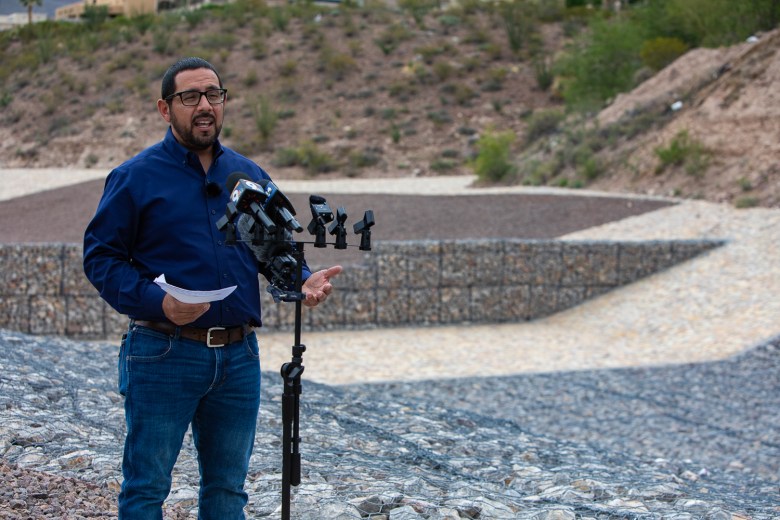 Gilbert Trejo, El Paso Water’s vice-president for engineering, operations and technical services, says that the utility’s main goals for stormwater projects are to collect water, especially runoff from the Franklin Mountains, and convey it safely through the surrounding communities, at Arroyo 1A on July 17, 2025. (Corrie Boudreaux/El Paso Water)
Diego: And one thing John talked about was the slowing population growth, which is something we’ve reported on here about, sort of less babies being born here and school enrollment going down and these kinds of signs of slowing population. And, so, John mentioned that. It seemed like he talked about that as a positive. And, so, I’m just curious your thoughts on this trend of slowing population growth and how that affects the demand for water?
Gilbert: I think the best way to think about it is that it buys us more time. So, the plans are in place. We’ve got to do these projects anyway. So, what the slowing population does, that’ll affect demand, but that doesn’t affect our plan. So, the fact that we have more time, per se, I said it buys us time, we have more time, that’s OK. It lets us be even more thoughtful. Again, the market conditions, how we execute projects, the type of construction we do, all of this – it just helps us out in terms of it’s a benefit for us, again, by giving us more time to find the right time to do this project, lets us reprioritize things in the (capital improvement plan).
So, it’s really an optimization thing for us when we see demand models go down because population is going down. It lets us really optimize when we execute the next project, when we decide to do it. So, it’s a real benefit to our customers that this is what the population means to us.
So, it’s not that we’re going to stop doing projects. It’s like, it buys us time and really lets us zone in as to exactly when we want to do it.
Diego: I think most people look at the slowing population as kind of a bad thing or something that’s not good for El Paso. But, for you guys, it’s maybe a little bit of a little bit of a benefit?
Gilbert: Yeah, from that standpoint, yeah. I would say so.
Diego: One thing John mentioned, too, El Paso Water is looking to expand the Upper Valley Water Treatment Plant. I thought that was interesting. I didn’t – because that pulls water from the Rio Grande, right, or at least in part. And, so, I was curious, why would El Paso Water have more water available from the river? Does it have to do with an expected increase in river flows because there’s more snow falling in Colorado or something? Does it have to do with this, I guess, proposed or pending settlement between Texas and New Mexico of this kind of long-running water dispute? I just wonder what was behind that comment about expanding this treatment plan?
Gilbert: Diego, it goes back to the game plan. We’ve been talking about expanding the Upper Valley plant for decades now. And part of our strategy and part of this 50-year water plan has always been to acquire more surface water rights, and we do that by acquiring land, or we already have the land, but we acquire more land, whether it’s in the Upper Valley, Lower Valley, whoever has water rights to sell. We have a program in place to go and get these so that we can keep building up our surface water rights.
As development occurs, infill, in the Lower Valley, Upper Valley, folks that have rights, maybe they’re looking to offload them. Sometimes we go and just ask folks, “Hey, you have surface water rights. You’re not even using them.” They’re like, “Yeah, I don’t want to use them.” We’ll buy them. So we have programs in place to augment our surface water rights. So, we’ve been talking about, and we knew we were going to expand the Upper Valley plant from the day that it was built. That plant went live in 2010 as a result. of a regulation to remove arsenic from groundwater. But even from that time, we already knew this plant’s gonna become a surface water plant at some point, once the demand is needed on the Westside, once we gain enough surface water rights in order to make it happen.
So, this is, again – part of our plans has always been to expand it. The question is, so why now? Yeah, we’re starting to realize the demand on the Westside. We see what’s going on over there up past Transmountain, starting to grow up there. We need to be way ahead of that. So part of the strategy now, especially gaining the momentum off of what’s happening with the Texas Legislature, let’s get some funds from the state. Let’s start to design this facility. Let’s really start to push this, make this plan a reality. But the fact is that we have upwards of 70,000 acre-feet of surface water rights. So, we only use around 60,000. So, we’ve built up enough of a water rights bank to expand Upper Valley and that’s just the plan now.
Diego: Can you speak to the magnitude of the expansion or the, I guess, increase in production from that plant you expect?
Gilbert: So, just conceptually right now, what the engineers are looking at is about a 5 MGD expansion of that facility for the surface water rights. So, that’s generally what we’re looking at. We’re going to refine the model. So, we’re not sure yet if it’s going to be like an initial 5 and then in the future another 5 or should we just do the 10 right now. That affects how we size pumps and the size of the basins and all that. So, we’re looking into that still.
Diego: Yeah. And, so, El Paso Water supplies something, like, 110 million gallons a day, so maybe a 4% or 5% increase or something like that.
One thing, too – so, you all have also talked about accelerating importation of water from the groundwater rights you have in Dell City, right, over the aquifer out there. I thought that was interesting. John mentioned, again, in these comments to City Council that it was sort of like, “Hey, we want to preserve the groundwater resources we have here in the Hueco Bolson. And, so, we’re going to accelerate importation.” I just wonder if you can speak at all to that plan and maybe the impact or what you’re seeing there about why accelerate the importation?
Gilbert: Yeah, so this is, I think this is the first time maybe John really publicly started to talk about importation of water to preserve our local supplies. This is a concept that we’ve been talking about for a couple years now. It’s more like a philosophical type approach to what we’re doing. So, it was – we’re still talking about it. We’re considering it. No real, I’ll say, technical engineering has been done.
But the conversations, to take you kind of behind the scenes here between us, is “Look, we have the local Hueco Bolson water supply. This is, like, it’s the most precious preserved thing that we can (have).” Like, it’s in our mission. We have to preserve our local water supply, high-quality water services. So, we said, “So, why don’t we start doing that?” Like we can continue to manage how we pump the aquifer. We can continue to recharge the aquifer as much as we can through the Fred Hervey plant, which is what we’re doing. The Enhanced Arroyo project, another project intended to preserve local water supply. So, again, enhance how much water we inject back into the Hueco Bolson with river water, when the demand’s not there, but with river water, when it rains up on the mountain, we can put all that water into the aquifer.
So, we’ve already established this philosophy and the strategy to preserve local supply. So, the next step is, well, we have all of this water rights in Dell City, and that aquifer does recharge. So, that’s something that I don’t think we talked about enough, but that’s an aquifer that recharges. That’s why we went out and were, I’ll say, as aggressive and implemented that strategy. That aquifer recharges. So, as we pump water into El Paso from that aquifer, as it rains up on the Guadalupe Mountains, it’s going to recharge. So, why not bring that water in and recharge our Hueco Bolson with it? Preserving what we have right now. So, that’s the general concept that John was talking about.
Again, it needs some more development, the engineering, the everything behind it. We’ve got to run some groundwater models, too, and we have some of this work budgeted for the next couple years. But, yeah, I’m glad John put it out there because it kind of just shows how we’re thinking about things. It’s not such knee-jerk reaction, like, “We should do this, we should do that.”
And unfortunately, it’s just not as simple as, “You know what? We’ve got to import water now, let’s do it.” Like there’s just a bigger strategy, a bigger way to think about it. And I’m glad John did it. That way we can start to put it out there so people can see how thoughtful it is, some of the work that we’re doing.
Diego: Yeah. So, one thing El Paso Water has communicated is, basically, importation is more expensive, right, than just pumping up groundwater or drawing water from the surface or from the river. And, so, is the trade-off sort of like, “Let’s preserve our groundwater supplies here,” but the trade is maybe there’s upward pressure on customer rates and bills, right? Is that sort of the calculation or kind of how you’re looking at this?
Gilbert: I think the balance – I’ll use the word calculus – the calculus behind it is complicated. So, as I mentioned earlier, when we execute these projects, there’s not only the groundwater models that are being done. There is the engineering analysis on technology and market conditions. There’s all sorts of energy recovery technologies out there now that help reduce the cost of pumping.
And then there’s the rate calculation models that are, and the financial models that are very complex, too. So, to start to think about this now, and let’s just start to see again, when is the right time to do this? Because one thing is for sure, the more we wait, the more things get more expensive. And that’s something that I think that’s, we know that for sure. The more we wait, it’s going to cost more.
So, we wait till 10 years from now, 15 years from now, it’s going to cost more than now. So, can we, in a thoughtful way, assemble a project where we can run all of these models and see when is the right time to do this, how best to do it? That’s what we’re looking into right now. So, yes, it’s complicated. There’s a lot of modeling and a lot of things that go into this consideration.
But again, the more we get ahead of it, the more we remain in control of it. And I think that’s something else that I would want our customers to know. The more proactive we are with this, the more we are in control of it. When we do it, how we do it, when we do things during market conditions, inflation, world construction conditions, like workforce things that affect supply chain matters, the way we’re doing projects now, it is that complicated. But the more we remain in control of our own project versus, “Oh, man, we should hurry and do something,” that’s how things get really expensive.
So, we like to remain in control of all of this. So, that’s how I would want our customers to think about the complexity, but how thoughtful we are in how we execute these projects.
Diego: Yeah, that’s what I’ve – covering utilities, I always kind of see this ballet of the engineering and the science and then the finance and then how it all comes together to affect bills is always really interesting and more complicated than I think people realize.
But when people hear El Paso Water (say) “Hey, we’re really starting to think about maybe pushing up our importation plans.” Should people think, “Man, our groundwater supplies are dwindling”? Or I just wonder how people should think about maybe the sustainability of the groundwater supplies we have in El Paso?
Gilbert: Well, this is why podcasts like yours, Diego, are so important, because we need to stay ahead of these messages. Because, no, that’s not what people should think. One of the guiding principles, I’ll say, that guides a lot of how we do projects, is that we do things out of diversification, not desperation.
And this is something that we talk about relative to the Pure Water Center. And all of the projects that we do. We get ahead of all of these things so that we can continue to diversify our water supply. In this case, continue to find ways to preserve our local water supply so that we remain in control of as many things as possible. Supply chain issues and the cost of steel and the cost of concrete. Like, a lot of the things are out of control. But we can see, and contractors do have very sophisticated models as to how they track these conditions. So, it gives us the ability to remain in control of as many things as possible. We can’t control everything, but as many things as possible.
So, for our customers, no, they shouldn’t say, “Oh, man, why are we importing water already? I thought that it wasn’t until later. And I’ve heard John and Gilbert talk about it’s not till 2050, 2060.” So, all that is true, but we continue to optimize and refine and diversify our portfolio. Which is now (why) we’re thinking, “Well, what if we do bring it in?” So again, it’s all this scenario planning that we do. We just don’t set a plan, it’s static, and we say, “All right, now it’s time to start the next one.” No, we’re constantly looking to see how to optimize our projects, our water supply, what makes sense, and that’s what I would want our customers to think about. Not at all to worry about, “Man, why are we already importing water?” It’s the opposite. We are dynamic. We remain very fluid in our plans of when best to do it for the betterment of our local water supply, and really for the betterment of the water bill.
Because you’re right, these projects, water supply projects, are expensive and they will affect the bill. But the fact is that if we can control and manage how much it affects the bill, that’s really what we’re after and doing things in a thoughtful way to manage that and not just hit customers with this project out of desperation saying, “Oh, no, something bad’s happening. We’ve got to do something.” That’s how you really slam customers with what I would call unreasonable rate increases to their bills. You cause panic. It’s not very thoughtful.
So, I would want our customers to think about, “Man, El Paso Water’s being very thoughtful about how they do projects,” and if that means starting to move projects in a little bit sooner, it’s because we’re optimizing what we’re doing. It’s not for any reason out of desperation or because something bad’s happening.
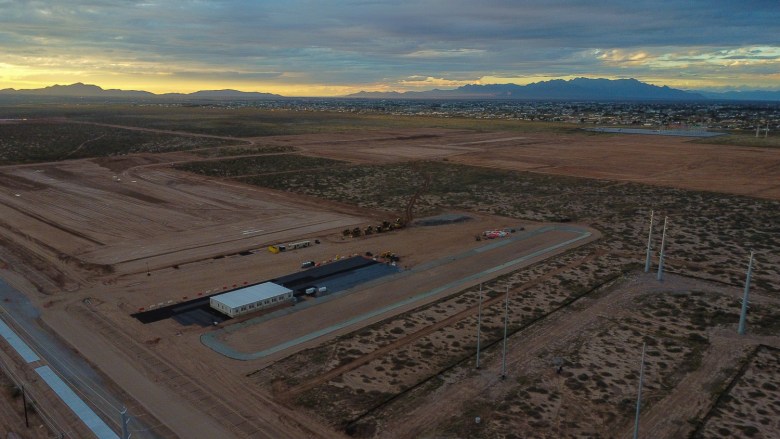 Construction begins on a Meta data center, located between Stan Roberts Sr. Ave. and State Line Road in Northeast El Paso, Oct. 13, 2025. (Corrie Boudreaux/El Paso Matters)
Diego: Yeah. All right, I want to ask the data center question, which I’m sure you’ve heard from other people as well, right? This idea that – we see this Meta one coming and there are other smaller ones, right? I just wonder generally your thoughts on the impact data centers have on our water supply and whether they pose a threat to the sustainability of our water, just generally? And I’ve got a follow up to that, but just kind of in general, how do you think about the impact of data centers on our water supply?
Gilbert: Well, I’m going to be, since it’s a podcast, I’m a little bit more relaxed, Diego. So I’m going to tell you, I’ve never gotten home and then gotten jeered by my own kids. Like, “Dad, what are you guys doing?” Because it hits the news and then now I’ve got my kids talking to me about data centers. “What are you guys doing?”
So, I had to give them as much as I could of the insight to data centers. But you know what? We welcome any business that shares our culture of conservation. I know Meta is a large corporate company, right? It goes without saying, but they do have a culture of conservation. And really, this is true for any industry that we welcome into town or, BorderPlex and the city’s economic development team. They’re all very thoughtful. We all share the culture of conservation here in El Paso, just period.
We understand how important it is. And we think, and we welcome everyone that cares so much about the water supply. And we like that our customers and everyone is like, “Wait a minute, this goes against everything you guys have been talking about, right? How could you guys allow the data center?” We get it. We think it’s great that people understand and care so much about water here in El Paso. It’s great. But the fact is that, with Meta coming in with their data center, the work and the technical work behind this has been going on for years, like I mentioned.
So, someone like Meta just doesn’t come in and say, “Hey, let’s put a data center in here for whatever” – they have their reasons. They’re very thoughtful about it. The first question for any industry that comes into town, water and power, right off the bat, water and power. So these discussions have been going on for a long time.
There are, I’ll refer to them as canon laws here in El Paso about water. It’s precious, it’s preserved, we have all these plans in place, no one is going to come in and just waste it. That’s just, period. And we appreciate, again, BorderPlex and even anytime anyone’s talking to the city economic development team about it, that’s just, it starts there: “What is your plan for conservation? What is your plan for not wasting water? What is your plan for recycling water?” And then with all that comes waste streams and how are you going to plan? So, it’s all environmental based.
And companies like Meta, they think the same way. Like, their plan is not to go into communities and trash them and take advantage of the resources or anything like that. And that for sure is not the case here in El Paso. So, these discussions have been going on for a long time. And because of that, Meta has gone, I’ll say, above and beyond, as they should, to change their own processes, to change their own cooling systems.
They’re, I’ll say, pioneering new cooling systems for data centers, which we pushed their engineers to do because, as with these discussions we’re having, they had to go back to the drawing board and say their typical work plan or design for a data center is not going to work in El Paso.
Now, for their own reasons, which I don’t know, frankly, they want to be in El Paso, so they went to the drawing board. They changed their cooling system designs to match what our demand was in terms of “This is what you could use” in terms of water demand.
Diego: To be more water efficient?
Gilbert: Yeah, to be way more water efficient, actually, Because they’ve had, they do have these data centers in other arid places, cities. But we’re a different ballgame here. And our plans are in place. We know what we can handle. We gave this to them. They sharpened their pencils, and they met the mark. And they met the mark, and this is what I told my daughters when they’re holding me accountable at the dinner table as to why this is happening, and how can we let this happen? You know what? They’re doing all the right things. They checked all of our boxes in terms of what our requirements were. And that’s why, and that’s how we got to where we are right now.
Diego: So, you could say, “Hey, we can meet this demand fine,” basically?
Gilbert: That’s why they’re here, yes. That is right.
Diego: And just as a follow-up, kind of more broadly, I’ve heard El Paso Water say, basically, from an economic development perspective, like “We don’t want to be the reason that a business or a private enterprise, a job creator, right, doesn’t come here because of, constraints in water.”
And, so, I just wonder, even more broad than data centers, how you think about economic development long-term, right? Like is there – I mean, I don’t know if there’s some model that says, “Hey, we can only accommodate so many industrial operations here going forward” or something, right? But just, like, how does that factor into your water planning in the long run? And thinking about, “Hey, we want to bring more employers here and have better jobs and so forth.” How does the water factor into that, I guess?
Gilbert: There’s two parts to that. So, first, it’s the industry itself. So, the industry itself, they’ll run their own economic analysis and financials about going and even wanting to go into a community. They asked themselves the same question, water and power, just right off the bat. So, no industry is going to come to El Paso where they already know they’re big water users. It’s basic, right? Why would they want to do that?
So, (companies) or industry that are considering El Paso, they already have – they understand this, and they for sure understand the culture of conservation that we have here in El Paso. So, that’s their side, right? If they’re already wanting to come to an arid desert community, they have an understanding already, their own business model, about what their water demand should be. They have an idea.
Now from our side of it, of course, any industry – and our role at El Paso Water is not to regulate that at all. Like, we are a utility led by engineers. It’s always been a utility led by engineers and we’re problem-solvers. So, we, when, whether it’s the economic development team at the city, whether it’s a BorderPlex and they ask us, “This company’s coming, they want to come, can we meet them?” There’s plenty of times where we’ve said no, plenty of times. It’s just not possible.
Diego: If something’s too water intensive?
Gilbert: Yes, we’ve said that, and I’m sure Jon Barela at BorderPlex, he’s part of those discussions. All these folks are part of these discussions. So, plenty of times we’ve said no. And we’re to a point where they are advocates too. They’re advocates for our water supply. I’m talking about BorderPlex and the city’s economic development. I’m like, “No, they already know.” So, plenty of times we’ve said no to industry.
But there’s a lot of times where it’s like, “Yeah, this would be great for the city.” The engineer in us kicks in and we go into problem-solving mode. Example Meta: that was it. “Hey, these are things that need to happen. Technology’s out there, make it happen.” So it’s very collaborative. It’s a very collaborative process that’s in place right now that the city’s using as a whole in order to bring in industry.
So that would be my answer. Like, yeah, it’s not our role to say “no,” but we deal in the world of facts. Like, these are facts. We have plans in place. These are the demands that we can meet. We have a pulse on development all over the city. Population growth, we’re in the business of understanding population trends here in El Paso, too. So, it’s not our role to regulate that in any way. It’s our role to provide it. But there is also like, these baseline rules of, “Hey, if you’re going to come, these are flow rates, demands that you’re going to have to meet.”
Diego: And just one more follow up on that. When you say you want businesses or enterprises that embrace conservation, does that mean like, “Hey, can you use reclaimed water in your operation?” Or, I guess, is it just, “Hey, our usage won’t be above a certain level?” Like, I just wonder if you can talk a little bit more about ways that companies can be sort of more – err towards conservation, I guess?
Gilbert: Yeah. So, everything from some water recycling, there’s a low-hanging fruit, like your recycle streams, how many times you’re going to recycle it. But then it starts to get into more in-depth technologies about how efficient is there mechanical equipment? Mechanical equipment produces a lot of heat. Now it needs to be cooled down. How are they going to cool down these facilities housing all of these things? It’s the same thing with the data centers. They produce a lot of heat.
So, now it goes back to the mechanical side of things. So it’s not just on the water side, but you need water to cool things down. So, on the mechanical side of things and electrical systems, how efficient are they to not produce so much heat? How efficient are they to use – and I don’t want to geek out and get too technical here – but how efficient is this piece of equipment that for every unit of energy that goes into it, that you get 98% of production out of that one unit of energy? You’ve got very inefficient pieces of equipment where for one unit of energy, you only get like 70% production out of it. I could see engineers cringing and other people cringing when they’re hearing this because I’m really simplifying it.
But it’s efficiencies in mechanical equipment and electrical systems too. That’s culture of conservation, too, because if those things are inefficient, then they need a lot more water. And sure, you’re recycling water, but if you need more of it anyways because your mechanical and electrical systems are inefficient, then you’re still using more water. So, it goes well beyond just the water side of the, I’ll say, their design team. It’s the electricals and the mechanicals, because at the end of the day, it’s about cooling their systems down. It’s not so much about they use water to produce a product. It’s not like a Coca-Cola or something like that. They’re not using water for their product. They’re using water to cool down systems.
So, it goes well beyond that. And I think the good thing is, when I talk about Meta having a culture of conservation, is that they’re all about this, too, right? They are for-profit. They’re all about, they’re about the bottom line, too. Like that’s just part of it. They have to be very efficient. That’s part of it. They’re not inefficient in any way. They have brilliant engineers working for them to be efficient in order to, again, maximize and optimize their systems, again, for the betterment of the environment, but also for their bottom line. That’s just the way it is.
But they have this culture of conservation, and so do all of these corporate companies, like that’s – it’s good business, let me say that. It’s good business to have and be a good steward of the environment. And we see that, and that’s another part of this too. Got to be a good steward to the environment. By doing all of these things, they are doing that.
Diego: Yeah, so, I guess if we see more headlines of another data center opening up here or something like that, or other plants to build it, you think that that’s something that you could accommodate? Or you would, before the announcement even comes, you would verify that, “Hey, we can accommodate this additional demand?”
Gilbert: For sure, case by case. Case by case. It’s not to say we can accommodate everyone.
Diego: And then, so, just to move on, you mentioned recently that I think El Paso Water has got a capital spending plan basically for the next year of like $750 million, which I think you said was a record for the utility. Just wonder if you can talk about that. It’s kind of – I think we’re seeing this here and elsewhere, right? This real investment in updating these water and electricity systems that were put in decades ago. Just wonder if you can talk about what’s driving that amount of spending in our water system across the city?
Gilbert: Yeah. So, we talk about the Bustamante project a lot, because that’s –
Diego: Which is a wastewater treatment plant.
Gilbert: It’s a wastewater treatment plant. These wastewater treatment plants are super important for the environment, right? Where does all of this wastewater go? Right? So, it gets treated to very high-quality water. It gets released to the environment. So, wastewater treatment plants are a very important part of being a good environmental steward.
The Bustamante plant, as the Eastside is growing – everyone’s been out to the Eastside. If you haven’t, go see the Eastside, it’s like a whole new El Paso out there. It’s growing and that plant needs to be expanded. Now, at the same time, the current Bustamante plant needs upgrades. It needs a facelift, too. Again, not to get too technical, but the type of the wastewater that’s being generated from this booming part of El Paso is of a different type of wastewater. And by that, I mean, now everyone has garbage disposals. And that changes the strength and the characteristics of the wastewater.
When we built Bustamante in the ’90s, the proliferation of garbage disposals wasn’t a thing. And now, I see friends and family, everyone, they just throw everything down the garbage disposal. But that changes the characteristics of the wastewater. So what’s driving the Bustamante plant is largely a regulatory driver. Protection of the environment. If our wastewater plant cannot handle this new type of wastewater that’s being generated because it has a lot more food in it, I refer to it as the strength of the wastewater – we need to have the ability to clean it. That’s bigger basins, that’s more efficient ways to clean the wastewater. That’s Bustamante in a nutshell.
It’s a regulatory-driven project so that we’re not in the news getting fined by the state because our wastewater treatment plant is not meeting permit. This is important, and this is the case. Bustamante is the poster child of this, but this is happening also at the Fred Hervey plant. We’ve had upgrades at the Fred Hervey plant. We’re about to start a major upgrade at the Haskell plant as well. We actually just finished one at Hickerson. Hickerson is the one right off of I-10 and Executive.
The wastewater plants as a whole, these are regulatory-driven projects that we, as environmental stewards, we have to get ahead of these things. We can’t wait until – nor should we – wait until we’re not meeting our permit, we’re in the news. This is not good. To me, this is not what our customers expect of us. That’s a black eye. We’re failing if we get to that point. So, again, it goes back to planning and we get way ahead of these things.
And all these things are happening at the same time as the city grows and this new, stronger wastewater is being generated. We have to react and we get ahead of these things, but they’re all hitting at the same time. And it’s these things that are generating this record capital improvement program like we’ve never had before. They all just tend to hit at the same time.
All of these facilities were built roughly between 1985 and 1993, I’ll say. That’s when they were established, built, so they all age at the same time. And as El Paso starts to grow, all these new communities, with not only the garbage disposals, but it goes back really to the culture of conservation. High-efficiency faucets and showers, toilets. So, as the wastewater is getting stronger because, I will say, because of garbage disposal and everyone kind of just throwing everything in there, but then less water is actually a part of that. So, think about the concentration of it. Like there’s less water, OK, more efficient, that’s great. But also this the stronger waste that’s being generated in large part because of garbage disposal and the folks just kind of putting everything down the sink, everything’s hitting at the same time.
And I don’t think you’ve probably never heard it this way. Like why are all these plans, why are all these projects happening at the same time? It’s largely regulatory-driven and we need to stay ahead of it so that we can meet our permits. Now throw into that other projects that were planned and now’s the right time to do it. Pure Water Center is one of them. So, there is a project that, again, knowing since 2012 that we needed to do a project by 2030, here we are doing it. Now’s the best time to do it.
Diego: Can you talk about the Pure Water Center just for a minute about what that is exactly and what that will add to the city’s drinking water supply?
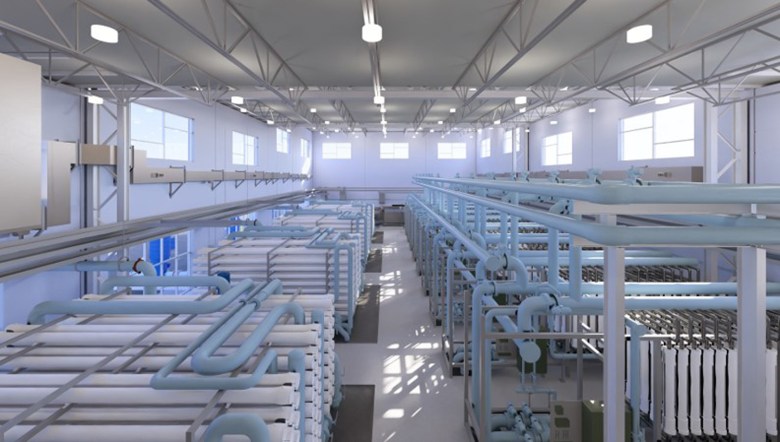 An artist’s rendering of the Pure Water Center, which El Paso Water is building for an innovative reuse process. (Illustration courtesy of El Paso Water)
Gilbert: Yeah, so, Pure Water Center is a new water supply for the city, and we’re going to do it using the ultimate form of water recycling. So, again, what makes this project so exciting is we’re going to use all our local water supply, again, all the water supply that we spend money in pumping, producing, treating in the terms of our two aquifers, when we have river water, the Kay Bailey Hutchison plant, all that water gets used and becomes a wastewater. It’s a local supply. It’s here. We don’t need to import it. We don’t need to pump it. We don’t do anything. It comes to our facility now.
We’re simply going to use several advanced treatment processes to make drinking water out of that, but it’s going to go straight into the distribution system. So, this is a unique first of its kind in the country, for sure. And at this size, I’ll venture to say the world, that we’re taking this ultimate form of water recycling. It’s sustainable. It’s drought-proof. All this wastewater is being generated every single day by our customers. We don’t have to, like I mentioned, build importation pipelines or anything like that.
I’ll say it’s the most cost efficient way to produce a new water supply. And we’re doing it because the technology is available. It’s safe, just period. It’s safe to do it. We’ll be using reverse osmosis, UV, ultraviolet light, still using activated carbon, chlorine. Like, this water is going to be the highest treated water we can produce, but it checks all the boxes. It checks all the boxes in terms of sustainability, financially the right thing to do. It’s a great project for the city and it produces 10 million gallons of drinking water per day for our customers, all from our current sources. And I think that’s a really cool part about it.
Diego: Just one more question on this. Do you think we could see other cities see how it goes in El Paso and then potentially adopt this direct potable reuse technology?
Gilbert: Yes, I do. I think that it’s the perception, and I think that the perception in communities that are ready to take this step into water recycling – because it’s a perception issue. It’s not a technology issue. We can and will produce the safest water from this Pure Water Center because of all the treatment that it’s going to go through. The perception of, “Well, we’re going to drink our own wastewater.” Like some communities are just not ready for that. I’ll say even sophisticated enough to take this ultimate step in water recycling. It really is a level of sophistication in terms of understanding water supply, understanding treatment, trusting your local water utility.
The communities that have that are ready to do this. And I think once they see a city the size of El Paso do it, the confidence is going to grow and everyone will say “Man, that’s a really big city, booming city, filled with a lot of really smart people. If they’re doing it, we can do it, too.”
Diego: Yeah. And on the capital improvement or capital spending question, can you just talk about the stormwater aspect of that? I think there’s quite a bit of investment there too. And we had kind of a rainy season and heard a lot of complaints about flooding and things like that around the city, which I’m sure you’re more familiar with than me. But just wondering if you can kind of touch on how much the utility is investing and maybe some of the big projects as far as stormwater and flood prevention?
Gilbert: Yeah. So, the biggest challenge is – so, a lot of successes with stormwater right now. So, we had a very active monsoon season. We got to see a lot of the projects that we’ve completed all over town work very successfully. Now with that, we do understand – I can hear customers saying, “Yeah, but I still flood on my street.” There’s still some work to be done. And the plan is still in place to get to parts of the city that require these really large projects.
LEARN MORE: Podcast: More on flash flooding in El Paso, how water utility tries to manage stormwater
So, right now, in terms of the stormwater capital improvements program, the Will Ruth project is well on its way. It’s an amazing construction site to go see. If you haven’t seen it, Diego, it’s huge. And we always knew it was going to be large, but when you start to realize it, is quite impressive.
Diego: There in Northeast El Paso?
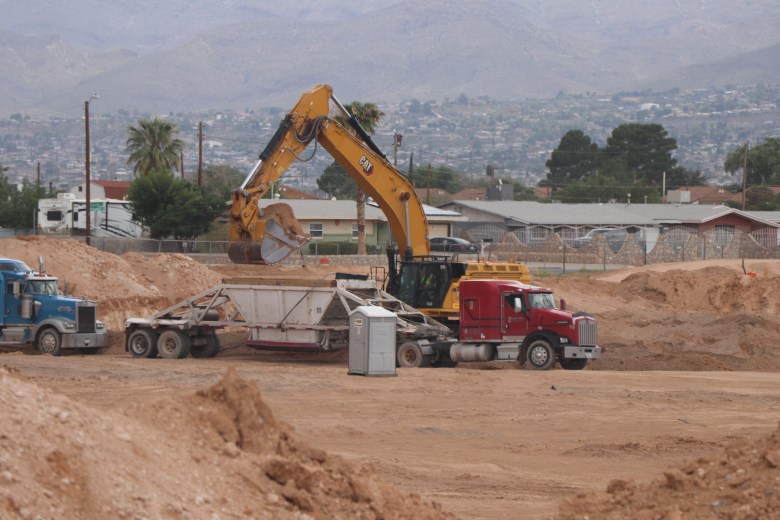 El Paso Water recently began work on the Will Ruth Pond in Northeast El Paso. It’s designed to limit flooding by storing up to 100 million gallons of stormwater. (Diego Mendoza-Moyers / El Paso Matters)
Gilbert: There in Northeast El Paso, yes. Which is going to take hundreds, I think we may even reach thousands of homes out of the floodplain, which is why these projects are being done. You talk about prioritization of stormwater projects. Why does some part of the city get a big project, but over in my part of town it hasn’t? It’s not that we’re not going to get there. It’s a matter of, you know, when we prioritize our projects, we’re looking at maximum impact per dollar. So, we refer to it as benefit-to-cost. This is a strategy that FEMA uses, and it’s used widely throughout really in engineering practice, what’s going to get the biggest benefit for the community for the cost.
So, projects like Will Ruth will do that. Projects that we’ve done in the past have done that. The Palisades Dam, we’re building three new dams up on the Palisades Canyon right there off of Robinson. That’s going to provide a lot of protection for the Billy Rogers Arroyo and all that community downstream, including UTEP. I think no one will argue we have to protect UTEP from a large flooding event up there in the Palisades Canyon. So, this is how we prioritize projects. A lot of successes, a lot of work to go.
But one of the biggest challenges with stormwater is the revenue. And by that I mean what we charge our customers. So, we still get quite a bit of folks, I think, not understanding why we need the stormwater fee, the importance of it. But the maintenance of everything that’s there now is number one. Like, what we have now needs to work when it rains. But then there’s additional projects that we need to build as well to protect communities and neighborhoods out there.
Diego: So, I guess I’m curious your thoughts on the impact on customer bills of all of this capital spending. And I know El Paso Water is about to go through the budget season, so I know nothing’s set. But would your message to customers be, “Hey, there probably will be some increase in bills as a result of all the spending,” but maybe there will be increases in the quality of service? I just wonder what you would tell customers about that. “Hey, we’re spending all this money, but you’re getting something out of it,” right?
Gilbert: So, you’re right about that. So, for sure, they’re going to see better service. They will see their level of service that they have now. The level of service will stay or improve, I think will improve. That’s a big part of it. The reliability of the system, right?
So, folks don’t think about water. They just want water to come out when they turn the faucet. When they flush the toilet, they want to see it disappear. There’s a lot of work that goes into that. And we have to do all of these projects to ensure that we stay there, because the one time that people turn their faucets and there’s no pressure or there’s no water, they’re up in arms, rightfully so. The level of service and reliability of our system is expected to be at the highest. 100%, I’ll say 99.99%, as many nines as you want. It needs to be up all the time. And there’s a lot of work that goes into that. And we have to be very proactive in doing that. And it’s reinvestment of money into existing systems.
So, it’s not just the growing parts, but a lot of our system every day gets older and older and older. And every customer is important to us. It doesn’t matter what part of time you’re in. Parts of town, some parts of town are older than others, obviously, and a lot of money needs to get invested into that, and we need to stay ahead of that. So, yes, with all of this planning of construction to maintain the level of service so that customers can not think about their water, because that’s really the goal. They just want to know that they always have water in good pressure. There’s a lot that goes into that.
We have to stay ahead of it. And yes, with that comes increase in our own staffing, increase in our own abilities, increase in infrastructure. It’s not just the infrastructure, it’s our own staff that we have to invest in as well to have the best engineers, the best scientists, the best accountants, the best customer service reps. Our guys in the field who are in the blue trucks, out there in the hole, fixing the broken pipes, they don’t get enough credit in terms of what they do every day. Working overnight, cold conditions, hot conditions to make sure people can have water as soon as possible. There’s a lot that goes into that.
So, yes, people can expect their bills to be impacted by that. And we’re very transparent with that. Every budget that is adopted by the Public Service Board comes with a five-year financial plan. Now, that doesn’t set the rates for five years, but it just shows based on everything that needs to be done to maintain this level of services for our customers, this is what the financial plan looks like, and these are associated rates. And every year, each Public Service Board reevaluates it every time, and then they set the actual rate. So, yeah, I think we’re very transparent with the rate, our financial plans, how that affects the rates. But yes, our Public Service Board will be presented with our proposal for the budget next month in November. And again, every Public Service Board every year entertains their own – make decisions, set the rate, and off we go.
Diego: Just one more question on that. Long-term, right, El Paso Water has implemented several rate increases. And, I mean, you’ve laid out a lot of the projects, and so it makes sense, right? We’re upgrading our systems and improving and expanding and so forth. In the long run, is there a concern from El Paso Waters’ perspective, “Hey, maybe, bills get unaffordable relative to median income in El Paso?” I just wonder how you think about the sustainability of the rate increases and the ability of El Pasoans to absorb them? Recognizing we want to have a reliable and good water system, right?
I just wonder how you kind of think about the long-term kind of outlook there as far as rate increases and affordability and all that?
Gilbert: So, yes, we are concerned about it, and it’s something that remains every day in all of our conversations, affordability. It’s for these reasons that we’ve developed, over the last couple years, this menu of affordability options. So, we’re manipulating the rate model, the financial models that we have. We’re manipulating them so that customers that use the least amount of water pay the least. That only makes sense.
So, when we talk about our menu of affordability options, that’s what we’re talking about. We want to recognize the folks that are doing their part in using the least amount of water, which also translates to be the folks that have fixed incomes. So, either these are folks with fixed incomes, retired folks, folks that are on tough times, they’re already doing everything possible just naturally to live minimalistically, I’ll say.
So, we want to recognize that with our rates. And if you use ultra-low amounts of water, if you use low amounts of water, the rates now reflect that and they will pay much lesser amounts of water. Now I say that, but rates and what it costs us to produce our services, our water treatment, conveyance, and all that, it’s a zero-sum game. Like it costs us – and we can only, by state law, we can only charge folks what it costs us to provide them service. We are not-for-profit. And I hope that’s clear. I don’t know if folks, if we get lumped in with other utilities, we are not-for-profit.
Diego: City-owned utility.
Gilbert: Yes, we are city-owned. The money that we gained from our customers’ bills, all of that goes back into the system. There is no profit here at all. Everything goes back to cost of service. So, that amount is fixed. So, as we’re charging less to folks that use very low amounts of water, while the rest of it will get absorbed by people who use more water. And, so, they’ll see a larger increase when we do these types of things. And I know it can get a little complicated, but that’s a zero-sum game. We just want to reward folks to help with affordability matters. If you use a little bit of water, ultra-low flow amounts of water, we want to recognize that they should pay the least amount for their water.
Diego: Yeah. And just kind of a pet issue of mine, I’ll mention quickly, is that City Council really declined an opportunity to raise impact fees. Which are these costs that, basically, home builders that are sort of creating some of the costs and demand on the outskirts of the city – I think the amount they pay the utility to extend water and sewer lines isn’t really the actual cost.
And, so I – that’s kind of a pet issue of mine that I’m not really asking a question, but it’s just something that I thought City Council could have taken an opportunity to make some of the entities causing the growth and increasing demand sort of pay more of the cost so the rest of ratepayers don’t.
Anyways, we’ll wrap up here, Gilbert. Just one more question. I think next week Texas voters will vote on a bunch of propositions that are very wide-ranging. One of them has to do with water. I think it would set up, basically, or would allocate $20 billion in state funds for water supply projects around the state.
ELECTION: Texas voters have final say on $20 billion package to secure state’s water supply
I think half would be to fix water infrastructure and leaky pipes and so forth and the other half would be to create new water supply projects. And, so, I just wonder if you can talk about this proposition, how it might affect El Paso and our water situation here? And I know you can’t advocate one way or another. But just wonder if generally you can offer any thoughts on the potential impact on El Paso of having this big pot of money essentially for water projects across the state?
Gilbert: Well, so what it’s going to do for El Paso, it’ll give us a chance to compete for these funds, just plain and simple. So, as we are executing our playbook of additional water supply, of rehabilitation of existing infrastructure, this platform will allow us to compete for these funds. It would be an additional funding source. And yeah, that’s what Prop 4 does. I think El Pasoans, I think they’ll just know that it’ll give us another chance as a community to actively compete for an additional source of funds if this is approved by the voters.
Diego: Yeah. So, basically, if we go approve it, it’s like, “Hey, El Paso Water can apply for various projects you have and maybe get some state funds toward it, maybe not.” That’s basically what it means for El Paso?
Gilbert. Correct.
Diego: Yeah. Cool. Well, this has been a good conversation. I appreciate you fielding all these questions and taking some time and just sharing some thoughts on the water situation in El Paso. I think it’s a thing at the top of mind for a lot of people. So, I appreciate you talking with me about it.
Gilbert: It’s my pleasure, Diego. And again, we appreciate you bringing to light water issues. We want to talk about these because if we don’t, then, different narratives and falsehoods are going to be spread. So, anytime you want to talk about anything water, you can count on us.
Diego: Sounds good. Thanks.
Related
LISTEN: EL PASO MATTERS PODCAST