
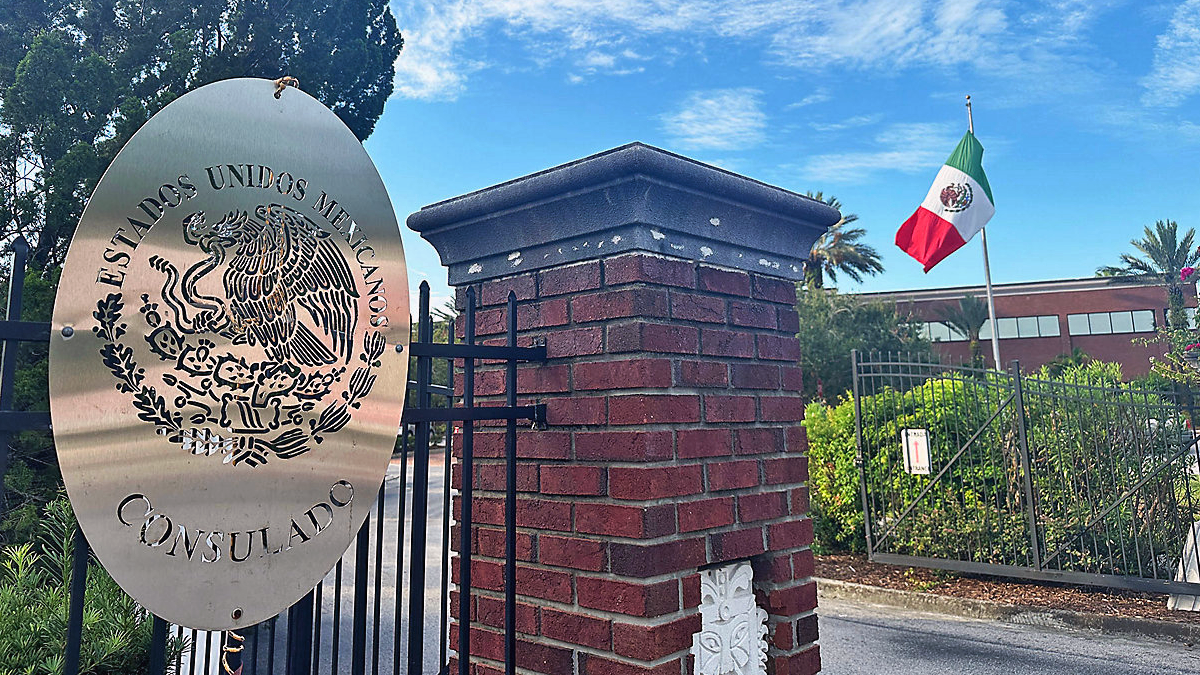
WASHINGTON, May 11, 2026: Last Thursday the State Department announced that it is reviewing the 53 Mexican consulates operating in the U.S. The review comes after the death of two Central Intelligence Agency (CIA) officers on a counter-narcotics operation in northern México. The review of the consulates is part of the Trump administration’s “America First” foreign policy agenda, according to officials.

Consulates are diplomatic offices operated by foreign countries in the U.S. Generally, they assist their citizens with documents and other needs. México, by far, operates the largest number of consulates in the U.S., including several consulate generals in larger cities. El Paso has a Mexican general consulate. Canada, with 12 consulates, has the second largest presence in the U.S. China follows with 5 consulates. Embassies are not included in the count.
The United States has nine consulates in México serving U.S. citizens in the country.
The Mexican consulate in El Paso offers Mexican visas to travelers traveling to México as well as support for Mexican nationals needed documents like a passport, military identification or voter registration cards, birth or marriage certificates and documentation necessary for Mexicans to return the country with their household, among several other services.
The American review of the consulates could lead to the closure of some of them. In addition to the death of the two CIA officers in the car accident, the U.S. government continues to argue that Mexican officials are not doing enough to combat drug trafficking. In late April, U.S. officials indicted Rubén Rocha Moya, the governor of Sinaloa, along with others, for allegedly helping the Sinaloa cartel. Rocha Moya, who has said he has done nothing wrong, resigned as of the end of this month to respond to the indictment, according to his office.
Conservative media contributor Peter Schweizer, who writes for Breitbart, a far-right publication accused the Mexican government of “blatantly interfering in our domestic politics, working with American political advisors to turn legal and illegal migrants inside the U.S. into a political force,” in his recent book. Schweizer also argues that officials in the Mexican consulates seek to influence U.S. elections.
Schweizer has not commented on the rise of dual nationals influencing elections in the U.S. and México.
In response to Schweizer’s accusation, Mexican Ambassador Esteban Moctezuma Barragán denied Schweizer’s accusation on the CBS The Takeout show in early February. Barragán said that the Mexican consulates follow the limits imposed by the Vienna Convention on them.
The 1963 Vienna Convention on Consular Affairs imposes limits on what consulates can do in their host countries. Specifically, Article 55 prohibits consulates from engaging in political activities or interfering in the internal affairs of the host country. One of the remedies Article 55 provides is the closure of a consulate found to be in violation. However, generally Article 55 is not cited when a consulate is ordered to be closed.
Any closure of Mexican consulates would reduce services to Mexican nationals living in the country. It could lead to further tensions between the two governments and México could retaliate by ordering the closure of American consulates in México. The Mexican government has responded cautiously to the review while defending the important roles the consulates play but has also pledged cooperation with the review.
México is now the largest trading partner with America both in imports and exports.
The U.S. government has closed three consulates in recent years involving two extraordinary cases. In 2020, the Trump administration ordered the Chinese consulate in Houston shuttered alleging that it was operating as a “hub of spying.” In 2017, the Trump administration ordered the closure of the Russian consulate in San Francisco and two annexes in Washington and New York. The next year, the U.S. government expelled 60 Russian diplomats and closed the consulate in Seattle following the poisoning of Sergei Skripal on March 4, 2018.
Skripal was a former Russian military officer who operated as a double agent for the British government in the 1990’s through the early 2000’s. His daughter, Yulia Skripal, was also poisoned in the incident. Both survived the assassination attempt.
No word yet on when the consulate review will be completed.
Like Us and Follow Us On Our Social Media!
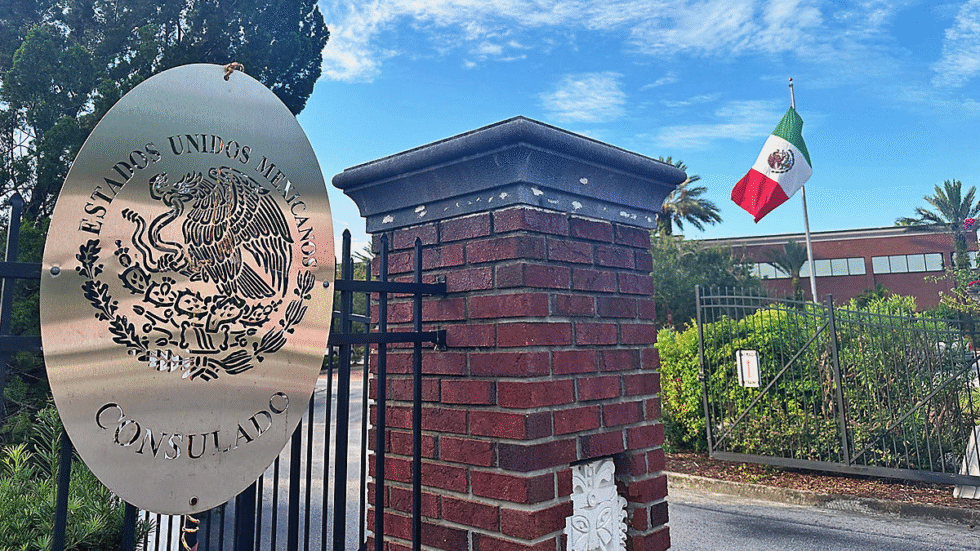
Cover photograph: Entrance to Mexican consulate, Orlando, Florida, file photo.
Visited 18 times, 18 visit(s) today