
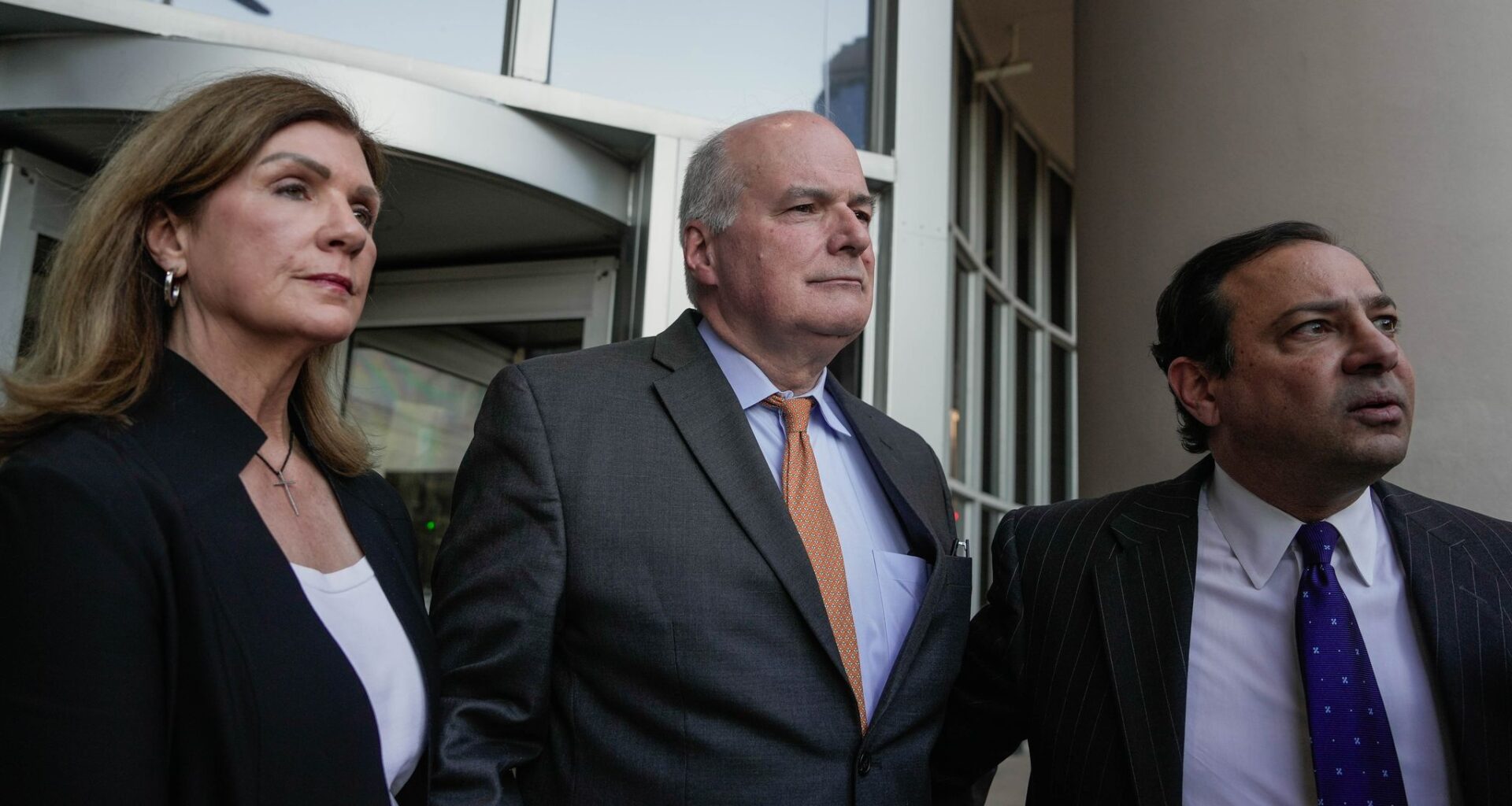
A Houston surgeon accused of improperly preventing his patients from receiving organ transplants claims he was trying to help them and that his actions were consistent with COVID-era transplant guidelines, according to court documents filed last week.
Dr. J. Stevenson Bynon acknowledged in a court filing that he altered a nationwide database to effectively remove five of his patients from the waiting list for liver transplants.
But he claims to have made the changes because his patients were too sick for a transplant. He modified their medical records to improve their chances of receiving a new organ once their health improved, Bynon and his attorneys argued in a motion to dismiss the charges against him in federal court.
“Dr. Bynon is a good, honest, and extraordinarily talented organ transplant surgeon,” Bynon’s attorney, Samy Khalil, said in a statement. “He has saved thousands of lives over 40 years. His intentions were always good, and his actions always lawful.”
The statement went on to say that “not one of his patients was harmed,” and that the government is “stretching the law beyond any reasonable recognition.”
The court filing represents the most detailed explanation Bynon or his attorneys have offered for why he altered the transplant database since the allegations came to light two years ago. Memorial Hermann Health System inactivated its abdominal transplant program in 2024 after discovering that Bynon made “inappropriate changes” to the database, forcing hundreds of patients in need of liver and kidney transplants to be moved to waiting lists at other hospitals.
Bynon, 66, is charged in federal court with five counts of making false statements in health care matters. He has pleaded not guilty.
The indictment accuses Bynon of making false statements that rendered five of his former patients functionally ineligible to receive liver transplants. Two patients later died before they could receive transplants, and a third died after Bynon determined the patient’s anatomy was too complex to perform the surgery, the indictment says.
Bynon was employed by the University of Texas Health Science Center at Houston, which publicly defended him after the allegations first came to light in April 2024. Bynon held dual positions as head of abdominal transplantation at both UTHealth Houston and Memorial Hermann but is no longer serving in the roles.
Bynon claims he followed guidelines
Bynon acknowledged in the recent court filing that he altered his patients’ donor matching criteria in a way that severely limited the donor organs to which each patient could be matched. However, he claimed his actions were consistent with guidance the United Network for Organ Sharing, the nonprofit that oversees the transplant database, put out during the COVID-19 pandemic.
The guidance, which was in effect from 2020 to 2026, was intended to allow patients to continue to accrue time on the waiting list while they had COVID-19, according to the motion. The criteria included setting donor age limits to a minimum of 98 years and a maximum of 99 years, according to the motion, which included a screenshot of the policy from a UNOS newsletter.
A spokesperson for UNOS declined to comment for this story.
The motion does not say whether any of Bynon’s five patients had COVID-19 when he altered their donor acceptance criteria. Bynon added the five patients to the waiting list between February 2023 and December 2023, and his changes to the database made them functionally ineligible to receive transplants for periods ranging from 38 days to 189 days, according to the indictment against Bynon.
Inspection records from the Centers for Medicare and Medicaid Services provide more detailed examples of how Bynon changed transplant records, according to earlier reporting in the Chronicle.
While one patient was hospitalized in November 2023 with sepsis, a life-threatening condition, the surgeon changed the criteria so the patient would only receive an organ offer from a child under 6 years old who weighed between 70 and 200 pounds, according to the documents. Months later, he changed the settings back to less restrictive criteria, the documents say. That patient remained active on the waiting list at the time of the April 4 inspection.
Bynon’s motion claimed that other U.S. hospitals alter donor acceptance criteria — a practice referred to as an “internal hold” — so patients can continue to accrue time on the waiting list while they are too sick for a transplant.
Organ transplant guidelines typically require patients who are too sick for surgery to be temporarily inactivated from the waiting list. Bynon’s motion argues that could have negatively affected his patients’ chances of receiving a transplant in the future, because liver transplant candidates do not accrue time on the waiting list while they are inactivated.
“The longer a liver patient has been active on the waitlist, the more favorable that patient’s place on the waitlist,” the motion said.
Experts previously told the Houston Chronicle that there are legitimate reasons why a doctor would prevent a patient on the waiting list from receiving a transplant. However, several individuals should be informed of the decision, including the patient and the rest of the transplant team.
None of the five patients, their families or their care teams were aware of the changes to their donor acceptance criteria, according to the indictment against Bynon. Each patient continued to receive Medicare benefits and other health services as if they were eligible for the surgeries, according to the indictment.
Issues with the transplant database
Memorial Hermann voluntarily halted all abdominal transplants in March 2024 after it discovered the changes to the transplant database, though it noted the problems were confined to the liver program. The hospital had about 40 patients on its liver transplant waiting list and about 300 on its kidney transplant waiting list. Many of them were moved to waiting lists at other hospitals.
Last year, the Organ Procurement and Transplantation Network, which oversees organ allocation for transplants, levied its most severe sanction against Memorial Hermann by declaring the hospital a “member not in good standing.” The sanction placed the program under increased oversight and limited its influence in crafting transplant policy.
Memorial Hermann reactivated its abdominal transplant program in April 2025 after instituting several changes, including removing physicians’ ability to alter the database. Dr. Mark Hobeika, a former transplant surgeon at Houston Methodist Hospital, was chosen as the program’s new director.
Bynon is also a defendant in a lawsuit that accuses him of altering the organ transplant database in a way that prevented former Memorial Hermann patient Robert Osuna from receiving a liver transplant. The lawsuit is still pending in Harris County District Court.