
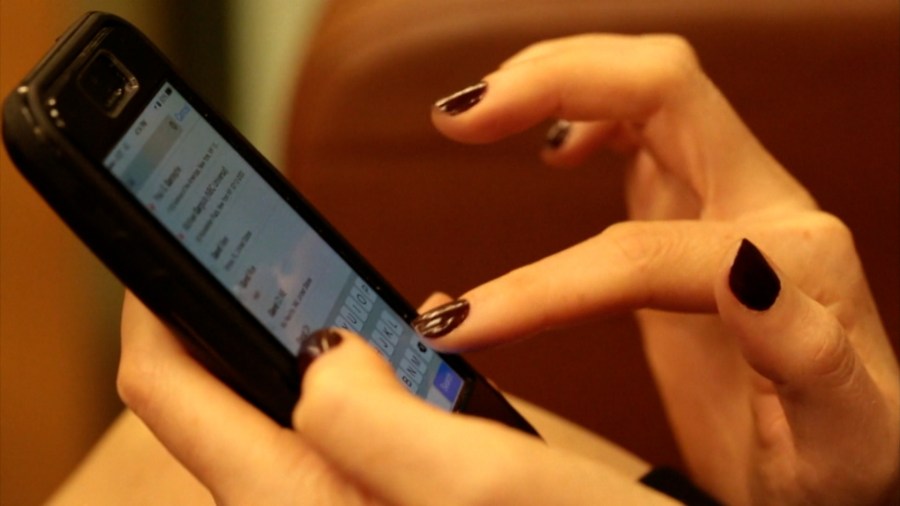
AUSTIN (KXAN) — House Bill 1481, which was signed by Texas Governor Greg Abbott last summer, banned K-12 students from using cell phones and other personal communications devices during the school day.
The 2025-26 school year was the first in which the ban was implemented. The law applies to public schools and open-enrollment charter schools. Schools and districts had to create policies to either store students’ devices or prohibit devices on campus.
Leaders and educators got an update on the implementation of that cell phone ban during Monday’s Texas House of Representatives Committee on Public Education meeting.
Texas students’ cell phones banned from schools under new law
Four women from across Texas — Vivian Burleson, President of the Texas Classroom Teachers Association, Deb Caldwell, Chief Operating Officer at North East ISD, Dr. Bridgitte Whaley with West Texas A&M University, and Patricia Alvarado Barnes, Director of Library and Media Services at Dallas ISD — spoke to representatives about the “implementation and associated rulemaking” of HB 1481 during the last panel of the committee meeting on Monday.
They all shared that the cell phone ban had mostly positive impacts for students and teachers in their education systems, though some reported slight issues with implementation and consistency among the adults.
Burleson said, based on results from an informal survey sent to TCTA members, that the ban has been mostly positive, but noted that the law could be refined.
She said 75% of respondents to the survey fully supported the ban, and when it came to the remaining 25%, most said they somewhat supported it but felt students should be allowed to use their phones during non-instructional time or in emergencies.
“Given these results, we believe that overall the legislation has been a success, but we would like to work with you on ways to potentially refine the law to ensure that districts are enforcing the law appropriately and in a way that does not unduly burden the teacher or cut into classroom time.”
Burleson also noted that enforcement can be an issue, with about 38% of respondents saying their workload or stress had increased due to having to enforce the ban. However, 31% said there was no change in their workload or stress level, and 30% said their workload or stress level had actually reduced thanks to the ban.
Caldwell shared a similar sentiment, though she stated that North East ISD’s board adopted a policy different than what the Texas Education Agency recommended. The policy adopted was instead based on parent and student feedback, and a difference in how the ISD interpreted “school day,” which it defined as instructional time in the classroom rather than the first bell of the day to the last. Caldwell added, though, that the board adopted a new policy in April that is more aligned with TEA’s guidance, and it will go into effect next school year.
Dr. Whaley shared testimony based on research she did on a rural high school outside of Fort Worth during the 2024-25 school year, which showed that teachers were in favor of the ban, and found that the challenges lay in enforcement and consistency among some teachers.
“Specifically, my results showed that there was increased student engagement, improved focus in the classroom, enhanced participation,” Whaley said. “There were stronger relationships and less behavior problems and issues, and less social media drama.”
“The absence of smartphones reduced visible socioeconomic differences between students which helped create a more equitable and unified learning environment,” she continued. “Challenges reported include enforcement and consistency amongst the adults.”
Alvarado Barnes told committee members that not only was the law implemented with ease and without widespread resistance, but that it also resulted in “unexpected and remarkable effects” in Dallas ISD libraries.
She shared that from the first day of school through March 31, Dallas ISD students checked out 1,084,837 books — more than 200,000 additional books compared to the same time period the previous year, which was a 24% increase.
“HB 1481 has helped our students rediscover what deep reading actually feels like,” Alvarado Barnes said.
“Some have asked whether removing phones from the school day means students are less prepared for a technology-driven world,” Alvarado Barnes added. “The answer for my libraries is the opposite. Our libraries have become spaces in Dallas ISD for digital literacy, for coding, robotics, and digital media creation. This year alone, thousands of our students have engaged in hands-on lessons in research, inquiry, 3D printing, and podcasting, all in the library, all without personal cell phones.”
Copyright 2026 Nexstar Media, Inc. All rights reserved. This material may not be published, broadcast, rewritten, or redistributed.
For the latest news, weather, sports, and streaming video, head to KXAN Austin.