
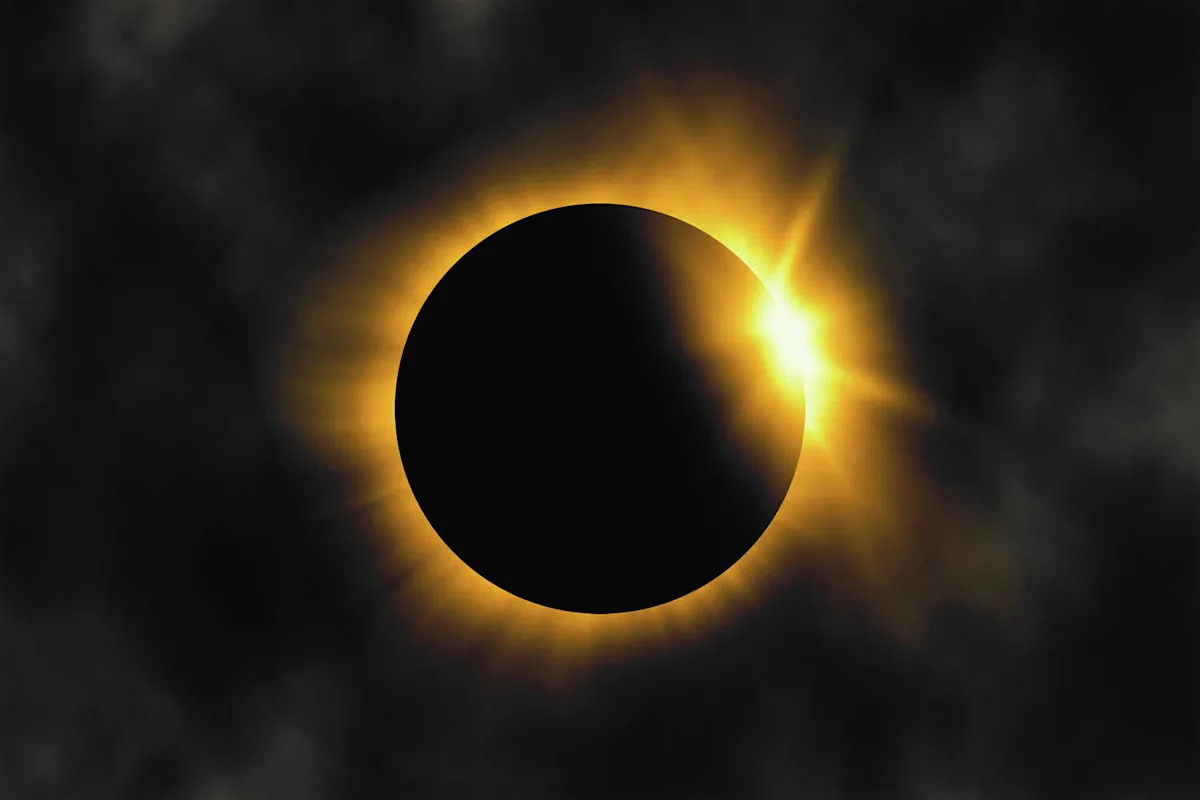
More than half a century from today, on May 11, 2078, a total solar eclipse will darken part of Texas in the middle of the day.
The rare celestial event is expected to sweep across the southern United States, with the extreme southern tip of Texas getting front-row seats to totality, the brief period when the Moon completely blocks the Sun. There’s just one catch: the wait will be a long one.
A total solar eclipse occurs when the Moon passes directly between Earth and the Sun, fully covering the Sun’s bright face and casting a shadow onto Earth. For people inside the narrow path of totality, daylight briefly fades into twilight, and the Sun’s outer atmosphere, known as the corona, becomes visible, weather permitting. It is also the only type of eclipse during which viewers can briefly remove their eclipse glasses once the Sun is completely covered.

Texans watch the April 9, 2024 total solar eclipse. Another total solar eclipse is expected to cross part of the state on May 11, 2078. (Ariana Garcia)
The last total solar eclipse visible in Texas occurred on April 8, 2024, marking the first time the path of totality crossed the state in 146 years. The previous total eclipse to cross Texas took place on July 29, 1878.
Unlike the 2024 eclipse, which carved a wide path through cities, including Dallas, Fort Worth, Austin and San Antonio, the 2078 eclipse will be limited to the Rio Grande Valley before moving over the Gulf of Mexico and into the Southeast. Cameron and Hidalgo counties are expected to see the most significant coverage, including Brownsville, McAllen, Harlingen and South Padre Island.
After leaving Texas, the Moon’s shadow will continue across the Gulf of Mexico before reaching states including Louisiana, Mississippi, Alabama and Georgia.
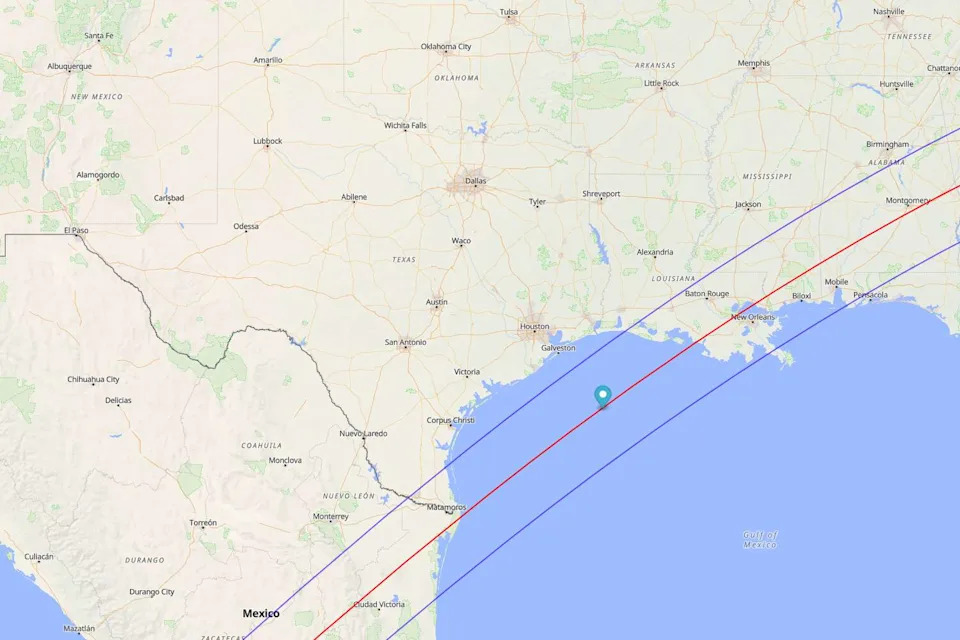
A map shows the projected path of totality for the May 11, 2078 total solar eclipse, which is expected to cross the Rio Grande Valley before moving over the Gulf of Mexico. (NASA)
Texans will not have to wait until 2078 for another major eclipse event. On Aug. 13, 2045, the path of totality for another total solar eclipse will briefly clip the northeastern corner of the Texas Panhandle, though most of the state, including Houston and Dallas, will only experience a partial eclipse.
A partial solar eclipse occurs when the Sun, Moon and Earth are not perfectly aligned, causing only part of the Sun to appear covered.
Houston is also expected to see an annular solar eclipse on Nov. 15, 2077. During an annular eclipse, the Moon appears slightly smaller in the sky and does not fully cover the Sun, creating a bright “ring of fire” around the Moon’s silhouette.
More Space
Sentimental | A Friendswood nurse’s legacy is now written on the moon
History | Artemis II breaks Apollo 13’s distance record with daring moon flyby
Exploration | That Houston fireball? It dropped meteorites scientists can now study
Weird | Not a UFO: Massive balloon touches down in West Texas
For the latest and best from Chron, sign up for our daily newsletter here.
This article originally published at A rare celestial event will darken Texas skies on this date in 2078.