
AUSTIN, Texas — Texas public schools have lost over 76,000 students since last year, marking the steepest enrollment drop since the COVID-19 pandemic.
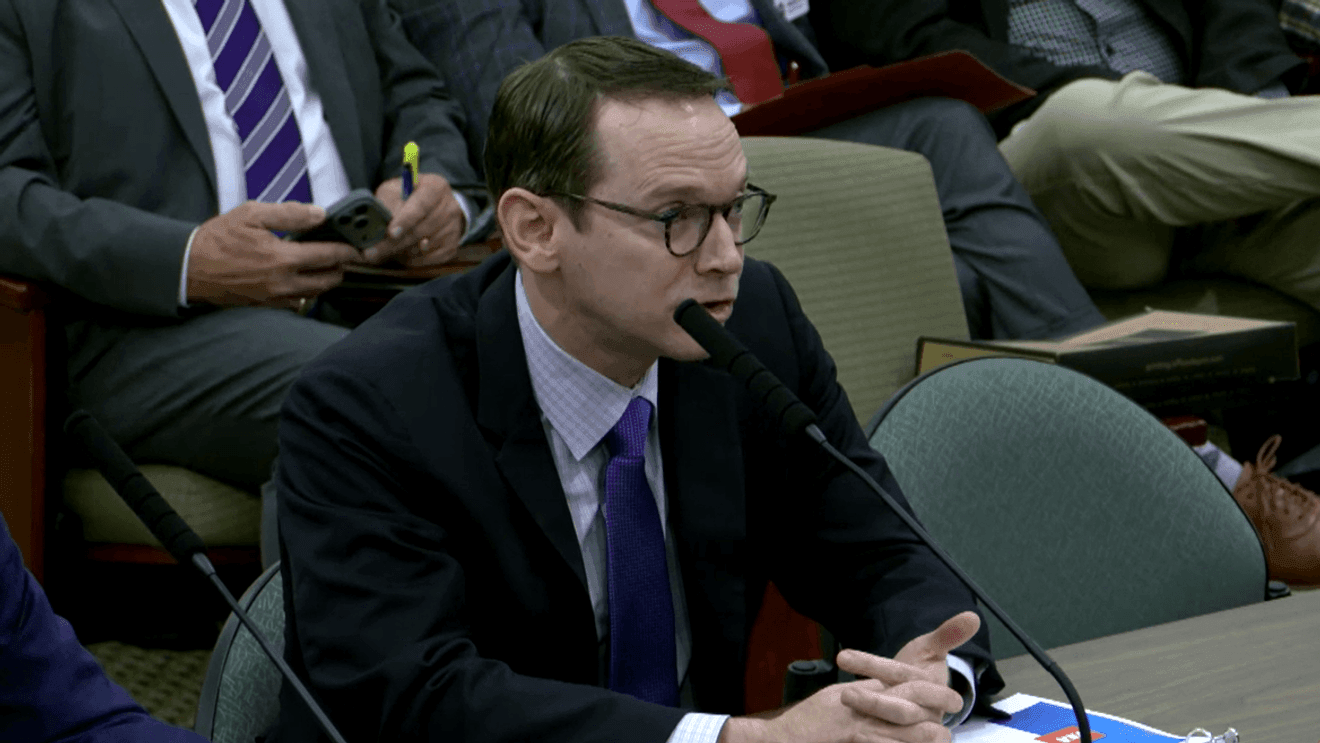
Texas Education Agency Commissioner Mike Morath shared the enrollment data with lawmakers on Monday during a hearing hosted by the Texas House Committee on Public Education.
“We are down students,” Morath said, unable to point to a specific explanation for the drop. “We cannot tell you the precise cause of this. We just know that it has occurred.”
According to TEA data, the state’s public schools enrolled 76,613 fewer students during the 2025-26 school year than the previous school year. Currently, Texas public schools enroll 5.4 million students, a number that has fluctuated since the start of the decade.
The drop is the first overall decline since the 2020-21 school year, when 122,354 students left public school during the pandemic.
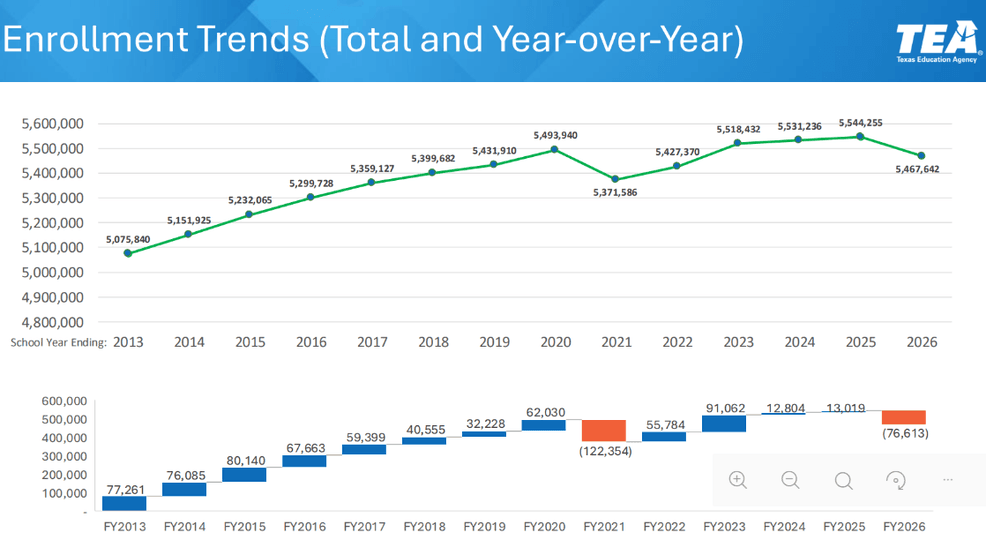
The drop is the first overall decline since the 2020-21 school year, when 122,354 students left public school during the pandemic.
Falling enrollment has already sounded alarms for districts like Austin ISD.
“We have 10 schools shutting down in Austin. We will not be the same community after that happens,” said State Rep. and gubernatorial candidate Gina Hinojosa (D-Austin). “We need a plan to understand why that is happening and figure out if there is something we can do as a state to ease that burden,” Hinojosa said.
Monday’s hearing centered on the current state of public schools.
Lawmakers questioned education leaders from across Texas about enrollment trends and school funding. Some pointed to families moving to alternative options, like private and charter schools, as well as a declining birth rate.
“Unless we want to change that and people start having more kids, you’re going to have less school chairs because you have less kids. That’s sort of how math works,” State Rep. James Frank (R-Wichita Falls) said.
David DeMatthews, professor at the University of Texas at Austin’s College of Educations, said on the surface, statewide numbers do not tell a complete story.
“It’s not one Texas story. This is a story of 1,100 or so school districts navigating this statewide teacher shortage challenge, resource challenge, student declines, all kind of on their own and in different ways,” DeMatthews said.
He said the consequences of enrollment declines can be more severe for some districts.
“It means that each district has a different set of costs and those that have the highest needs are going to face kind of the greatest consequences as we see enrollment decline,” he said.
Fewer students can mean less funding for districts, potentially limiting resources as the state faces stagnant test scores.
TEA data shared on Monday shows slight improvements in the number of 3rd and 8th grade students who meet or exceed their grade level in STAAR testing for reading since 2019. The data, however, also shows declines in the number of 3rd and 8th grade students who meet or exceed their grade level in STARR testing for math since 2019.
During the hearing, State Rep. John Bryant (D-Dallas) asked Morath, who took office in 2016, about the state’s test scores.
“Are you satisfied with the outcomes?” Bryant asked.
“No sir, the reason I signed up to do this work is to see as rapid improvement as possible for as many kids as possible,” Morath responded.
Enrollment decline is among the issues lawmakers are seeking to address ahead of the legislative session that begins next year.