
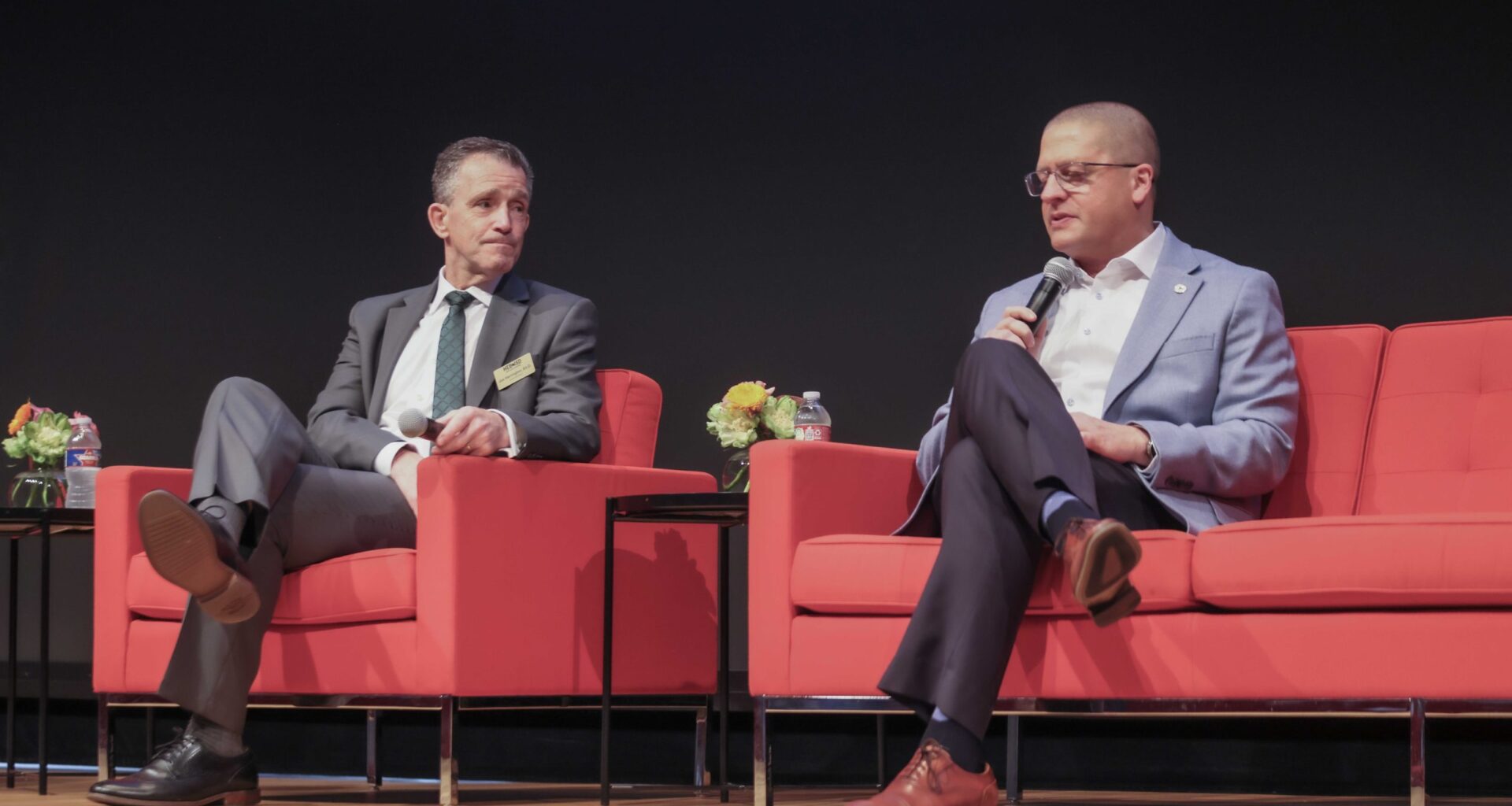
Superintendent Peter Licata said his first month leading Fort Worth ISD made one thing clear: Schools, students and teachers need more money.
Licata, who opened Rev Partnership’s 2026 State of Education Celebration on May 8, said the state intervention gives FWISD leaders a chance to make difficult decisions quickly.
“This is an opportunity to turn the system upside down,” Licata said. “We’ve already cut $26 million in the first week through payroll and staffing in the main building. That’s not where it belongs. It belongs in our schools.”
The comment came during a regional education event focused on teacher quality, teacher retention and the growing pressure on school districts to reduce uncertified hires. Rev Partnership, a regional nonprofit focused on improving student outcomes in Tarrant County, hosted the event at the Kimbell Art Museum.
The message from education leaders was direct: Tarrant County students need strong teachers, and school districts need better systems to recruit, train, pay and keep them.
“At the end of the day, our kids aren’t learning,” Licata said. “And that’s a problem.”
The event centered on what Rev Partnership leaders called the most important in-school factor for student success: teacher quality. Citing national research, Rev leaders said students assigned to strong teachers can see dramatically different academic outcomes than students assigned to ineffective teachers.
Tarrant County teacher turnover reached about 21% in 2025, above the Texas average, according to state data. That cost the region an estimated $128 million in recruiting, hiring, training and onboarding expenses, according to a Rev Partnership analysis.
Elizabeth Brands, board chair and founder of Rev Partnership, said the organization’s work began with a simple idea: Tarrant County’s 17 independent school districts working together to improve outcomes for students.
The work focuses heavily on teacher workforce and early learning, Brands said. She noted that districts were already working on higher education partnerships, teacher incentive programs and grow-your-own pipelines before the Texas Legislature passed a new teacher-pay bill, which included new requirements and incentives related to teacher preparation and compensation.
Under the new law, districts must eliminate uncertified teachers by the 2027-28 school year. Uncertified new teacher hires in Tarrant County rose from about 1% in 2017-18 to a peak of 18% in 2023-24 before dipping to 15% in 2024-25, according to state data.
The challenge is not only improving the quality of the teacher workforce, but also increasing the number of people entering the profession, Brands said.
Tarrant County districts hire about 2,400 new teachers annually, while regional educator preparation programs produce just under 2,000 new teachers, according to state data.
“It’s math,” Eagle Mountain-Saginaw ISD Superintendent Jerry Hollingsworth said. “It’s fewer teachers in the pipeline and that’s one of the big challenges that exists.”
District leaders said they are responding in different ways.
Arlington ISD Superintendent Matt Smith said his district focused on teacher compensation, lesson-planning support and professional learning after asking why teachers were leaving the profession.
“The most important thing in a school district is the relationship between the student, the teacher and the content in the classroom. Hands down,” Smith said. “Everybody else comes in second to all of that.”
Arlington ISD approved 4% pay raises for four consecutive years before the state made new investments in teacher compensation, Smith said. The district also brought in an outside group to audit lesson planning after teachers said they needed clearer resources.
“Compensation does matter,” Smith said.
Hurst-Euless-Bedford ISD Superintendent Joe Harrington said his district focused on listening to teachers while maintaining high academic expectations. HEB ISD is one of the five highest-performing districts in Tarrant County, according to STAAR results.
“We’re going to continue to take care of our people, because they are us,” Harrington said. “I taught 17 years before I moved into administration. I still see myself in that classroom.”
In Kennedale ISD, Superintendent Chad Gee and staff invested in early childhood education, including roughly $6 million to create a campus designed specifically for pre-K through first grade students. The district’s kindergarten readiness numbers have improved since the investment, Gee said.
“We have put a substantial investment into our staff,” Gee said. “We put substantial time and effort into training.”
Other districts highlighted the Teacher Incentive Allotment, a state program that allows districts to pay teachers more when they earn designations tied to student academic growth and teacher evaluation systems.
Everman ISD Superintendent Felicia Donaldson said her district has participated in the program since 2022 and generated about $1.5 million for teacher incentives.
“You can never pay teachers enough,” Donaldson said. “Their time, their dedication. It’s not enough and we don’t have enough resources to do so.”
Castleberry ISD had 31 teacher designations last year and added 26 more this year, Superintendent Renee Smith-Faulkner said. With about 220 teachers, the district now has about 60 designated teachers, she said.
“We’re advertising that we’re home of $100,000 teachers,” Smith-Faulkner said.
Lake Worth ISD Superintendent Ena Meyers told attendees that teacher quality is not just a staffing issue — it is a student issue.
“Behind every accountability rating, every data point and every performance metric is a child,” Meyers said. “A child who only gets one third grade year, one senior year, one opportunity to discover their gifts, their voice and their future.”
Meyers, who recently became Lake Worth ISD’s superintendent under a state takeover, said public schools cannot rely on individual teachers working miracles without strong systems around them.
Leaders must invest in coaching, instructional materials, leadership development and sustainable support systems, Meyers said.
“Great teachers change lives,” Meyers said. “Not sometimes, not accidentally, but consistently.”
Matthew Sgroi is an education reporter for the Fort Worth Report. Contact him at matthew.sgroi@fortworthreport.org or @matthewsgroi1.
At the Fort Worth Report, news decisions are made independently of our board members and financial supporters. Read more about our editorial independence policy here.
This <a target=”_blank” href=”https://fortworthreport.org/2026/05/11/education-leaders-look-to-teacher-quality-as-key-to-tarrant-county-student-gains/”>article</a> first appeared on <a target=”_blank” href=”https://fortworthreport.org”>Fort Worth Report</a> and is republished here under a <a target=”_blank” href=”https://creativecommons.org/licenses/by-nd/4.0/”>Creative Commons Attribution-NoDerivatives 4.0 International License</a>.<img src=”https://i0.wp.com/fortworthreport.org/wp-content/uploads/2021/04/cropped-favicon.png?resize=150%2C150&quality=80&ssl=1″ style=”width:1em;height:1em;margin-left:10px;”>
<img id=”republication-tracker-tool-source” src=”https://fortworthreport.org/?republication-pixel=true&post=540599&ga4=2820184429″ style=”width:1px;height:1px;”><script> PARSELY = { autotrack: false, onload: function() { PARSELY.beacon.trackPageView({ url: “https://fortworthreport.org/2026/05/11/education-leaders-look-to-teacher-quality-as-key-to-tarrant-county-student-gains/”, urlref: window.location.href }); } } </script> <script id=”parsely-cfg” src=”//cdn.parsely.com/keys/fortworthreport.org/p.js”></script>