
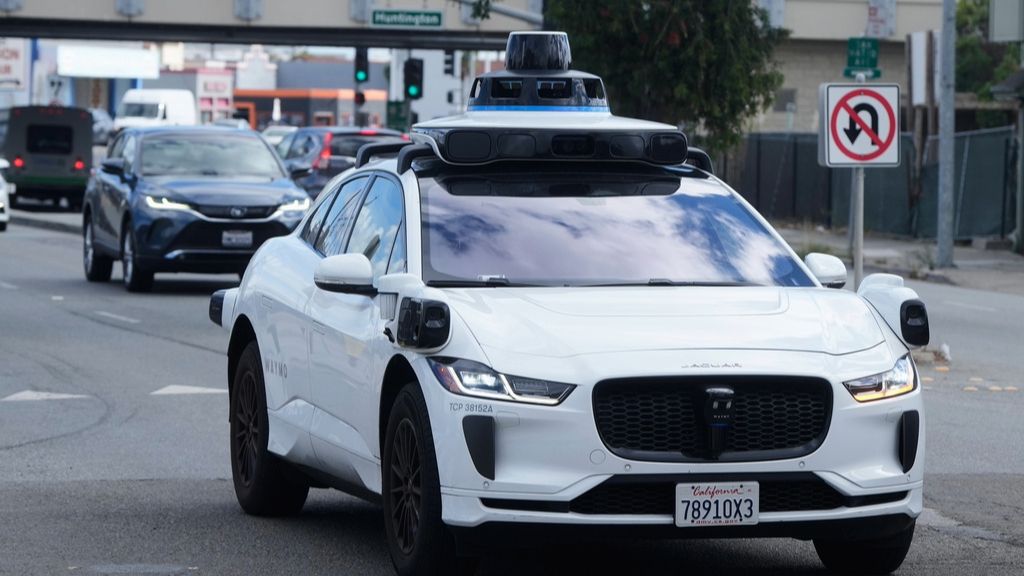
TEXAS — Just like human drivers, autonomous vehicles (AVs) have to follow the rules of the road: use turn signals when changing lanes, seatbelts for all passengers and no speeding, among other safety practices.
But with no driver behind the steering wheel, AVs are also subject to some different laws that humans don’t have to follow.
Beginning May 28, AVs now have to abide by Texas Senate Bill 2807.
“It creates a required authorization for commercial operation of automated vehicles on Texas roads,” said Alison Ross, the senior government relations coordinator for the City of Austin. “It puts a lot of that authority on the DMV.”
The new law follows other updates within the past few years regulating AVs in Texas.
Their green light to operate began in 2017 with Senate Bill 2205, marking the beginning of an enormous boom of Waymo AVs in Austin, followed by other companies like Tesla robotaxis, and most recently, Zoox.
House Bill 3026 was passed four years later, which approved the removal of traditional vehicle features like a steering wheel and brake pedals for AVs designed to operate completely by themselves.
SB 2807, passed last year, is the newest law in AV regulation. Along with the Texas Department of Motor Vehicles (TxDMV) authorizing AV operations—including passenger vehicles and freight/semi-trucks—the department is also responsible for investigating crashes and other incidents involving AVs.
Part of the work is done with a new group created by SB 2807, AVRAC.
“The DMV has created an Automated Vehicle Regulation Advisory Committee,” said Ross, also noting that the City of Austin has two representatives sitting on the committee.
The new law also lays out that AV companies must share their first responder interaction plans with the Texas Department of Public Safety (DPS).
These plans lay out how first responders should interact with an AV in the event of an emergency. DPS stores the plans, while the DMV carries out the authorization.
So far, 10 companies in Texas have submitted plans to DPS: May Mobility, Bot Auto, Aurora, Kodiak AI, Stack, Waymo, Nuro, Zoox Robotaxi, Zoox Test Fleet and Tesla.
As of April 20, only the first six of those companies have been authorized by the DMV. Companies have until May 28 to get authorized.