
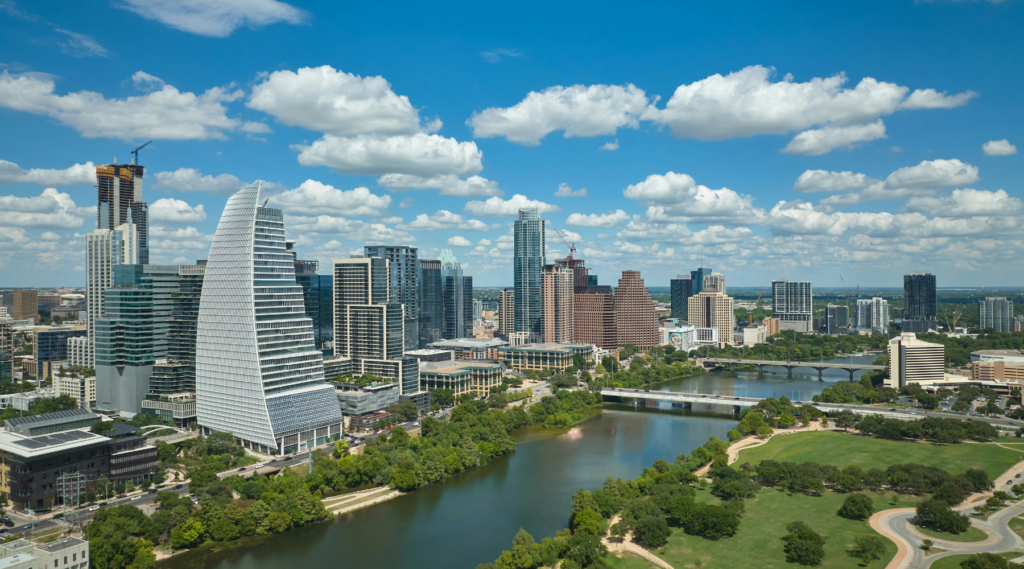
AUSTIN, Texas. — I have often found myself looking at the Austin skyline and wondering how a city once known primarily for its music and hospitality became the silicon heart of the agriculture world, yet here we are in 2026, and the shift feels as natural as the changing of the seasons does. It is a strange-yet-wonderful juxtaposition to see a student in a Texas FFA jacket walking down Congress Avenue.
Maybe they’re on their way to a venture capital meeting, or perhaps a coding workshop – either way, it’s increasingly more likely that they’re carrying with them the heritage of the land within a laptop full of soil-density algorithms.
Soil to Silicon (and Back Again!)
The rise of Austin as an innovation titan is not just about the proximity of big tech giants. To assume that would be doing locals a disservice. More than that, it’s about a specific kind of creative friction that happens when you put software engineers in the same room as fourth-generation ranchers. We are seeing companies redefine the digital supply chain beyond simple data tracking to create human-in-the-loop automation that keeps the producer firmly in the driver’s seat, which is why so many students are now looking toward the capital city for career development, recognizing that the future of the farm is being written in the same city where the latest apps are coded.
There are an increasing number of agriculture scholarships that bridge the gap between traditional land-grant universities and that tech startup landscape once limited to silicon valley. A dual interest made manifest in agronomy and data science, ensuring that the next generation of producers is just as comfortable analyzing a cloud-based yield report as they are checking a fence line in the heat of a July afternoon.
As Austin continues to solidify its reputation as a center for Ag-Tech innovation, a new wave of students and young professionals are descending on the city for seasonal workshops and venture capital summits. For these temporary stays, standard dorms or long-term leases aren’t always practical. The market for short-term rentals Austin has adapted to this influx, offering furnished spaces that cater to digital nomads who are working to digitize the farm-to-market supply chain.
https://unsplash.com/photos/grain-silos-stand-tall-against-a-clear-blue-sky-TuyEaMQauUg
The Legislative Connection
There is also a distinct political dimension to this growth, since these decisions dictate the pace of innovation across the state. Many students are finding that legislative internships are the perfect way to understand the intersection of policy and technology, providing a front-row seat to the debates over water rights, carbon credits, and high-speed rural connectivity.
It feels as though we are standing on the edge of a new frontier, one where the old divisions between city and country are starting to fade. As I watch these young producers navigate the streets of Austin, I am reminded that the heart of agriculture has always been about adaptation – and right now, there is no better place to adapt than right here in the heart of Texas.
-CozyCozy