
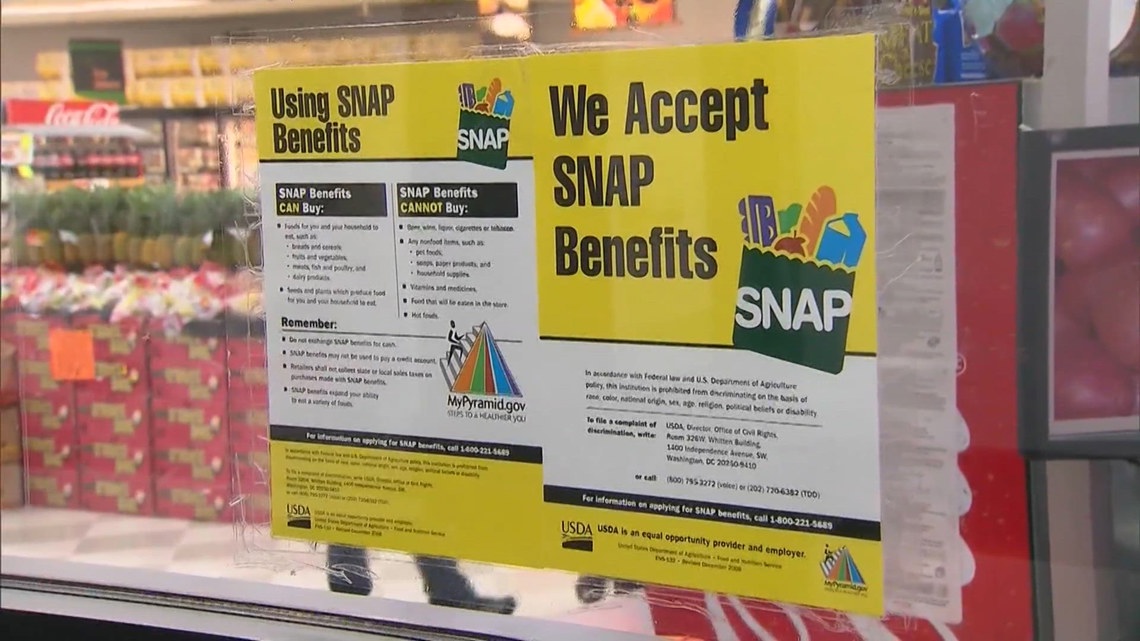
Feeding Texas says stricter eligibility requirements and policy changes are contributing to the drop, putting added pressure on local food pantries.
TEMPLE, Texas — Food banks across Texas are raising concerns as demand for food assistance continues to rise while SNAP participation declines statewide.
Advocates say the trend is alarming, especially as many families continue to struggle with high grocery prices and the rising cost of living.
According to Feeding Texas CEO Celia Cole, food banks are seeing “record need” across the state, despite a significant drop in SNAP enrollment since last year.
“When the bill passed last year, it made some really significant changes to SNAP,” Cole said. “What we’re seeing in the data is there’s been a drop in participation in SNAP of about 9% since that bill was enacted.”
The decline comes as food insecurity remains a major issue in Central Texas.
In Bell County, nearly 69,880 people are considered food insecure, with a food insecurity rate of 18.4%. The county also faces an annual food budget shortfall of more than $42 million.
In McLennan County, more than 47,000 people are food insecure, with an annual food budget shortfall topping $28 million.
Statewide, SNAP participation has dropped by more than 10% since mid-2025, according to advocacy groups and policy organizations tracking enrollment data.
Advocates point to several recent policy changes impacting benefits, including expanded work requirements and restrictions on what SNAP recipients can purchase.
Under current rules, most adults ages 18 to 64 without children under 14 are limited to three months of benefits over a three-year period unless they work or participate in training programs for at least 20 hours a week.
Texas also recently implemented restrictions preventing SNAP benefits from being used to purchase candy and sweetened beverages.
Cole says Feeding Texas believes many eligible Texans may now be struggling to remain enrolled in the program.
“The main concern we have is that the expanded work requirements may be making it harder for eligible Texans to stay enrolled, even if they’re trying to do everything they can,” Cole said.
Food banks say the loss of SNAP benefits can create a much larger burden for families and local pantries alike.
“For every meal that we put on the table, SNAP puts nine meals on the table,” Cole said.
Cole added that food banks are also dealing with lower inventories after several pandemic-era food assistance programs ended or were reduced.
Now, Feeding Texas is encouraging people to donate, volunteer, and share their experiences with policymakers.
“If you can donate, please donate. If you can volunteer, please volunteer,” Cole said. “It’s going to be really important for people to let their elected officials know that this program is just critically important.