
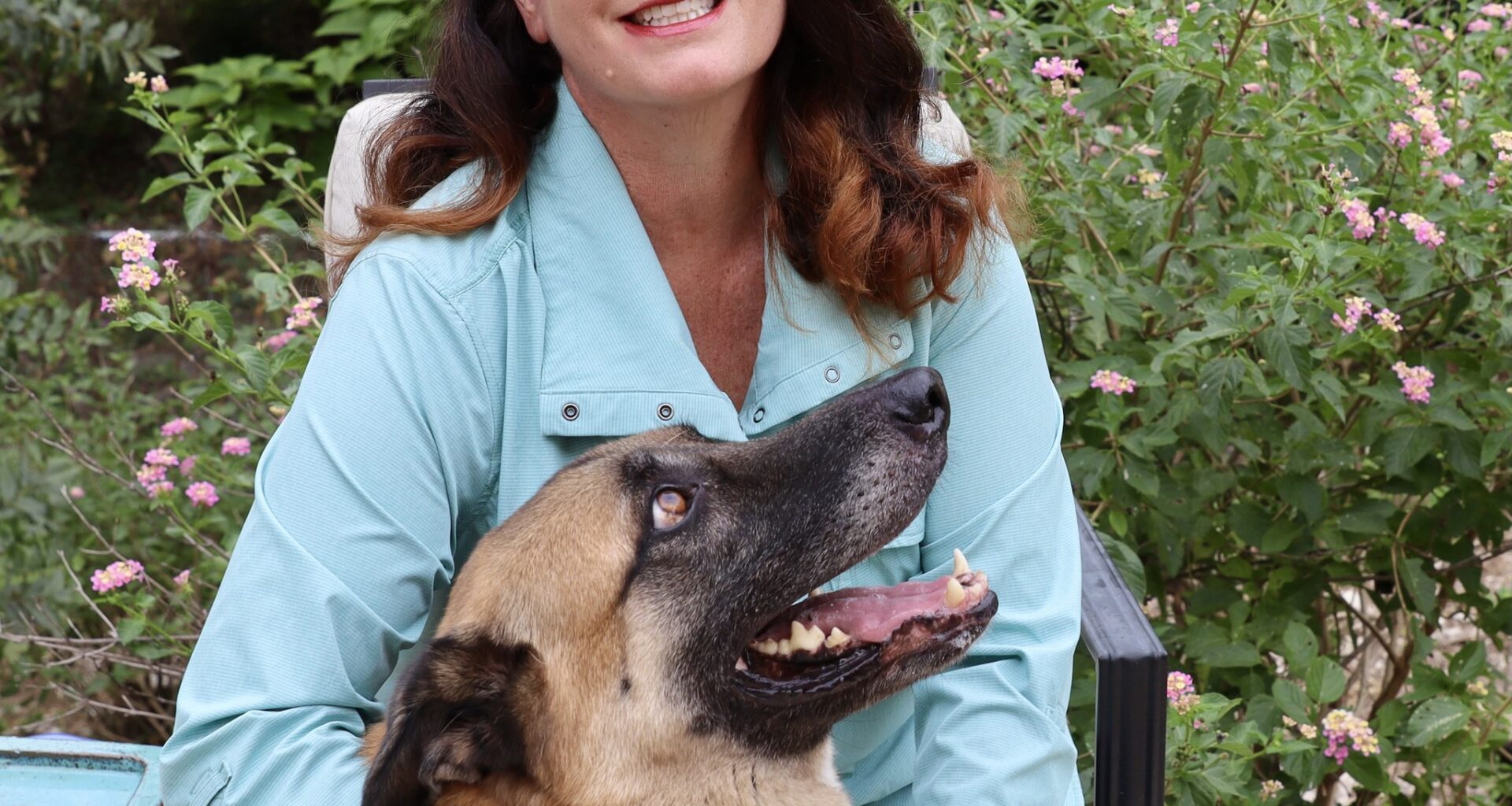
Nature author and educator Jennifer Bristol wrote “Wild Women for Good: Stories of Conservation in Texas.”
Jennifer Bristol
The daughter of two prominent Texas conservationists, Jennifer L. Bristol has become something of a natural star in her own right during the past few years.

Once director of Texas Children in Nature for Texas Parks & Wildlife, Bristol is now the author of three popular books, “Parking Lot Birding,” “Cemetery Birding” and, most recently, “Wild Women for Good: Stories of Conservation in Texas” (Texas A&M University Press).
Article continues below this ad
Her deep knowledge and fresh, unforced style made her a frequent source for this newspaper and other publications. A colleague of the late, legendary birder Victor Emanuel, she created and directs the Victor Emanuel Nature Scholarship Fund to send underserved youth to birding and nature immersion camps.
On a personal level, during the COVID-19 pandemic, Bristol and Emanuel unlocked the lifelong potential birder in me with heaps of gentle guidance on outings and gracious advice from afar.
After reading “Wild Women” — a series of biographical sketches of some of the state’s most effective and influential conservationists — I caught up with Bristol to talk about her latest work as the spring migration season faded.
How Texas women shaped conservation efforts
First State Park Board, circa 1923.
Texas Parks and Wildlife
Michael Barnes: Is it safe to say we have Texas women to thank for our parks system and our culture of land and nature conservation?
Article continues below this ad
Jennifer L. Bristol: Yes. The first example we have is San Jacinto Battlefield that was saved and shaped into a memorial park by the Daughters of the Republic of Texas. As the Federation of Women’s Clubs emerged, they too had a strong focus on parks and conservation.
In 1921, knowing the Federation was already considering local parks, Governor Pat Neff selected three Federation leaders to serve on the first State Parks Board. Those three women understood the assignment and rallied the Federation’s 50,000 members to support the creation of a state park system.
Beyond Lady Bird Johnson and Laura Bush
Former First Lady Laura Bush announces a grant from the Laura Bush Foundation to the Blackshear Elementary School library on Monday May 18, 2015.
Austin American-Statesman
People know about the conservation work of Lady Bird Johnson and Laura Bush, but you introduce dozens of less well-known leaders.
Article continues below this ad
Perhaps because we are in the heart of the spring migration and I am fresh off my twelfth effort on the Great Texas Birding Classic — yes, there is a birding competition — I am thinking of Madge Lindsay. Madge worked for Texas Parks & Wildlife Department and was tasked with coming up with a number of ways to increase nature tourism. She came up with the Birding Classic, and went on to help establish seven World Birding Centers in the Rio Grande Valley. Birding now generates $24 billion for the Texas economy.
Water has also been on the top of my mind lately. I think about all the women who fought to preserve San Antonio’s sole source of drinking water — the Edwards Aquifer. It really is an incredible story of a matrix of unsung heroes.
Conservationists, environmentalists and naturalists
Terry Hershey and Helen Drummond at the first Audubon Texas-Terry Hershey Women in Conservation Awards.
Helen Drummond
Please explain the difference between ‘environmentalist’ and ‘conservationist,’ and why it is sometimes more effective to use one term over the other?
Article continues below this ad
I try not to get too wrapped around the nuance in the book. However, some people would turn red in the face if you called them an environmentalist, but might beam with agreement if called a conservationist. A conservationist is more about using the land and natural resources in a sustainable manner. Environmentalists want that too, but also want to protect the land, water and species from human abuse or overuse. And then there are the naturalists.
Connie Hagar in her heels and dress collecting a bird to band it, date unknown.
Mary and Jeff Bell Library, Texas A&M University-Corpus Christi
Yes, the naturalists! One of the qualities that made so many of these women so effective was they became citizen naturalists, who were broadly respected for their hard-won personal knowledge.
For many of the early women, such as Corrie Hooks or Connie Hagar, getting a degree in science was not a path open to or welcoming to them. It wasn’t always easy to be accepted as an expert without formal education credentials.
Article continues below this ad
However, their love of nature was so profound. They utilized their own powers of observation and personal study. They also believed in sharing that knowledge in formal and informal settings. Thea Platz, founder of the Texas Master Naturalist program, astutely stated that “two of women’s superpowers are teaching and connecting.”
How women influenced Texas Parks and Wildlife
I was particularly fascinated by the women who periodically brought fresh perspectives to the staff and board of Texas Parks & Wildlife Department, which at times put much more emphasis on wildlife — hunting and fishing — than parks.
There are two women whose stories are intertwined in this question — Terry Hershey and Carolyn Vogel. Terry was appointed by Governor Ann Richards to the TPWD Commission in the 1990s. She was a strong advocate for parks, but also a champion of private lands. At her request, TPWD initiated a review of conservation easements. Carolyn was given the task and ushered in the era of conservation easements and the land trusts to manage them. To date, the land trusts have conserved more than 2 million acres in Texas, almost three times the total acres of Texas State Parks.
Article continues below this ad
The Bristol family’s conservation legacy
You modestly acknowledge the enormous impact of your parents, Valarie and George Bristol, on Texas parks and preserves. What was it like growing up with those influences and how did that affect your career as a nature educator and author?
Some of my friends joined their family’s business out of college. I guess you could say our family business is conservation. While working for Bastrop State Park, I made the decision to endeavor to connect the next generation with nature. I figured the best way I could contribute to securing my parents’ legacy was by ensuring the next generation shared that love of nature and would care for the spaces they helped protect.
How birding helped drive conservation in Texas
I can’t let you get away without asking how birding — you’ve written two popular books on the subject — often led the way for conservation of habitats.
Article continues below this ad
The first major conservation effort in Texas was to save the colonial nesting birds along the Gulf Coast from the millinery industry in the late 1890s. Two young women stepped forward to organize the first Audubon Society in the state. Since that moment, women have been championing avian conservation — albeit, often out of the limelight. Today, many of the heads of the Audubon chapters in Texas are women, including Lisa Gonzales, executive director of Audubon Texas. Protecting the birds from collisions with glass-clad buildings through bird-friendly design is something I’d like to see more of in the future.
Why conservation is different in Texas
Please remind our readers why Texas uniquely requires so much effort to acquire and maintain parks, and why land conservancies play such a huge role.
Since the Texas Revolution, lawmakers here have favored private property rights. That concept was further strengthened during the Reconstruction era after the Civil War. Because Texas is still 95% privately owned, we have to be innovative when it comes to conservation. Part of that innovation came in 2023 when the Texas legislature and voters passed the Centennial Fund which set aside $1 billion to purchase new state parks. That same year many counties and cities voted on bond packages to purchase parks or water conservation lands.
Article continues below this ad
During COVID-19 people were moving to Texas in droves. The pandemic was also a catalyst that shone light on our public land deficiency and the public’s desire for more space to be outdoors.
Readers respond to “Wild Women for Good”
Since the book came out, have your readers introduced you to the stories of other extraordinary women leaders in the field of conservation?
Article continues below this ad
I am pleased when readers mention someone they wish would have been included — I know we could only scratch the surface. I think I am more pleased when a young woman who attended a talk or read the book approaches me to share that they are inspired by the stories and share how they are engaging with conservation efforts — or would like to be.