
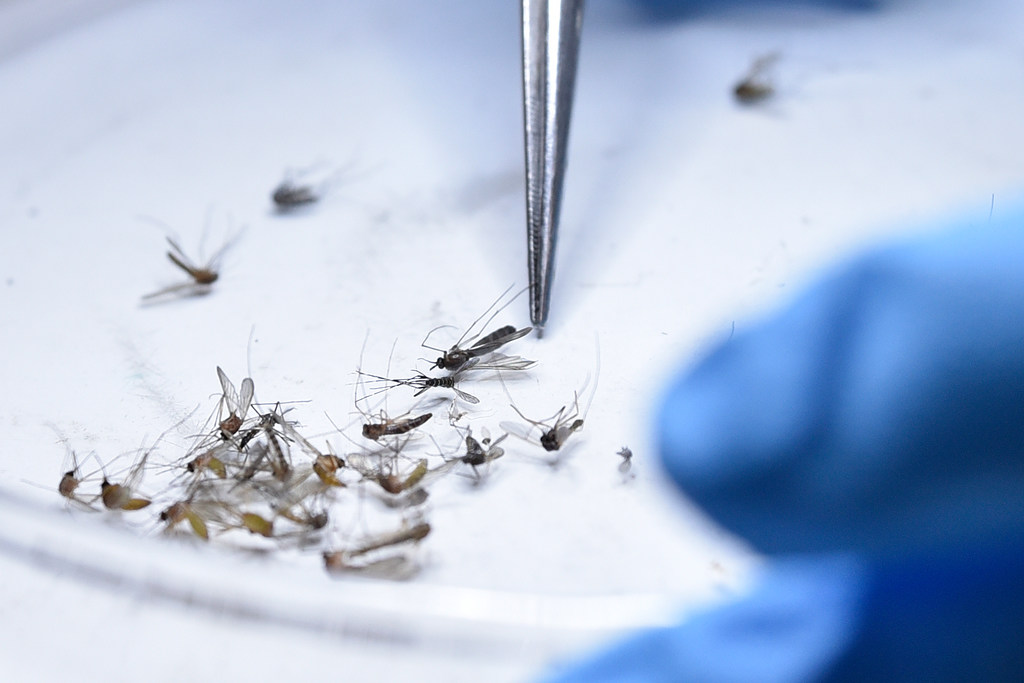
Mosquitoes carrying the West Nile virus were found in Fort Worth and Grand Prairie this week, and some North Texans are wondering how to stay safe.

West Nile is most common in the summer months, specifically May to October, so North Texans must be prepared to prevent contracting the virus, said Dr. Philip Huang, Dallas County Health and Human Services director.
Article continues below this ad
“It’s crazy that something as seemingly innocuous as a mosquito bite can cause severe illness and even death,” Huang said.
What is the West Nile virus?
West Nile is a mosquito-borne disease transmitted to people via bites, and according to the CDC, is the leading mosquito-borne disease in the U.S. But mosquitoes contract the disease from infected birds, Huang said.
Most people bitten by West Nile-positive mosquitoes never develop symptoms. For the 20% who do, Huang said almost all will have milder symptoms, though one out of every 150 people develop serious complications.
Article continues below this ad
Make Dallas News a preferred source so your search results prioritize writing by actual people, not AI.
Add Preferred Source
These mild symptoms include fevers, headaches, joint pain, nausea, diarrhea or body aches. Fatigue and weakness from the virus can last weeks or months, according to the CDC.
Chris Van Deusen, director of media relations for the Texas Department of State Health Services, said children, elderly people, pregnant women and those with compromised immune systems are more susceptible to develop severe symptoms.
According to the CDC, humans do not often transmit the disease to one another. On rare occasions, the virus can be transmitted through blood transfusions, childbirth and organ transplants.
Article continues below this ad
What can be done to prevent West Nile?
The best way to prevent the virus is to avoid getting bit by mosquitoes.
Van Deusen said this starts with “denying mosquitoes any breeding habit,” which means ensuring backyard spots from flower pots to kiddy pools are drained or treated. He added that mosquitoes can lay eggs in as little as a tablespoon of standing water.
Sabrina Vidaurri, Tarrant County Public Health’s associate director of health protection and response, recommends walking around homes to check for any standing water. If found, she says an effective mosquito prevention method is breaking up Mosquito Dunk larvicide products and sprinkling them across lawns. She added that residents should monitor French drains, as these often accumulate standing water.
Article continues below this ad
Dallas County Health and Human Services encourages residents to practice the “four Ds:”
DEET: applying EPA-registered insect repellant
DRESS: wearing long, loose fitting clothing
DRAIN: eliminating or treating any standing water
DAWN TO DUSK: staying indoors when mosquitoes are most active
Residents looking to know more can visit the DSHS website at dshs.texas.gov to find information about the virus and how different groups can protect themselves from contracting it.
How is West Nile treated?
There are no preventative vaccines or medicines to treat the virus, hence why public health officials emphasize prevention.
Article continues below this ad
The CDC recommends people treat mild symptoms with rest, hydration and over-the-counter pain relievers. Those who develop severe symptoms must be hospitalized.
How common is West Nile in North Texas?
The virus is “very prevalent” in North Texas and across the U.S., Van Deusen said.
CDC data indicates 127 cases of the virus were reported in Texas in 2025. Data from DSHS revealed that Dallas, Tarrant, Denton, Rockwall and Collin counties reported human cases of the virus in 2025.
Article continues below this ad
Last year, Dallas County reported seven neuroinvasive cases and three non-neuroinvasive cases. At least one of these cases resulted in the death of an elderly man with preexisting health conditions.
According to data from Tarrant County Public Health, 11 neuroinvasive and six non-neuroinvasive cases of the West Nile virus were reported in 2025, and 53 neuroinvasive cases and 18 non-neuroinvasive were reported in 2024.
How are public health officials preparing for West Nile season?
Van Deusen said the state of Texas’ priority is ensuring residents are aware of the virus so they can take precautions. The responsibility of controlling mosquitoes falls largely on local officials, aside from large-scale problems requiring state intervention.
Article continues below this ad
He explained DSHS tracks cases of the West Nile virus, as the condition is required to be reported to the state. The department compiles a weekly report of cases.
Vidaurri shared that Tarrant County assists incorporated municipalities as they place static and temporary traps throughout their cities. The county identifies the mosquito species trapped and sends them to the North Texas regional lab to be tested.
Once positive sites are identified, cities are responsible for treating affected areas with larvicides. The county handles unincorporated areas.
Huang explained that Dallas County prepares for West Nile season by testing mosquitoes throughout the year, just as Tarrant County does. If positive mosquitoes are found, the surrounding areas are sprayed.
Article continues below this ad
Huang encouraged residents to monitor the arbovirus surveillance dashboard on the department’s website.
Will West Nile be common in North Texas this summer?
It is not yet possible to say what West Nile season will look like this summer, Van Deusen said, as infectious diseases are “notoriously difficult” to predict.