
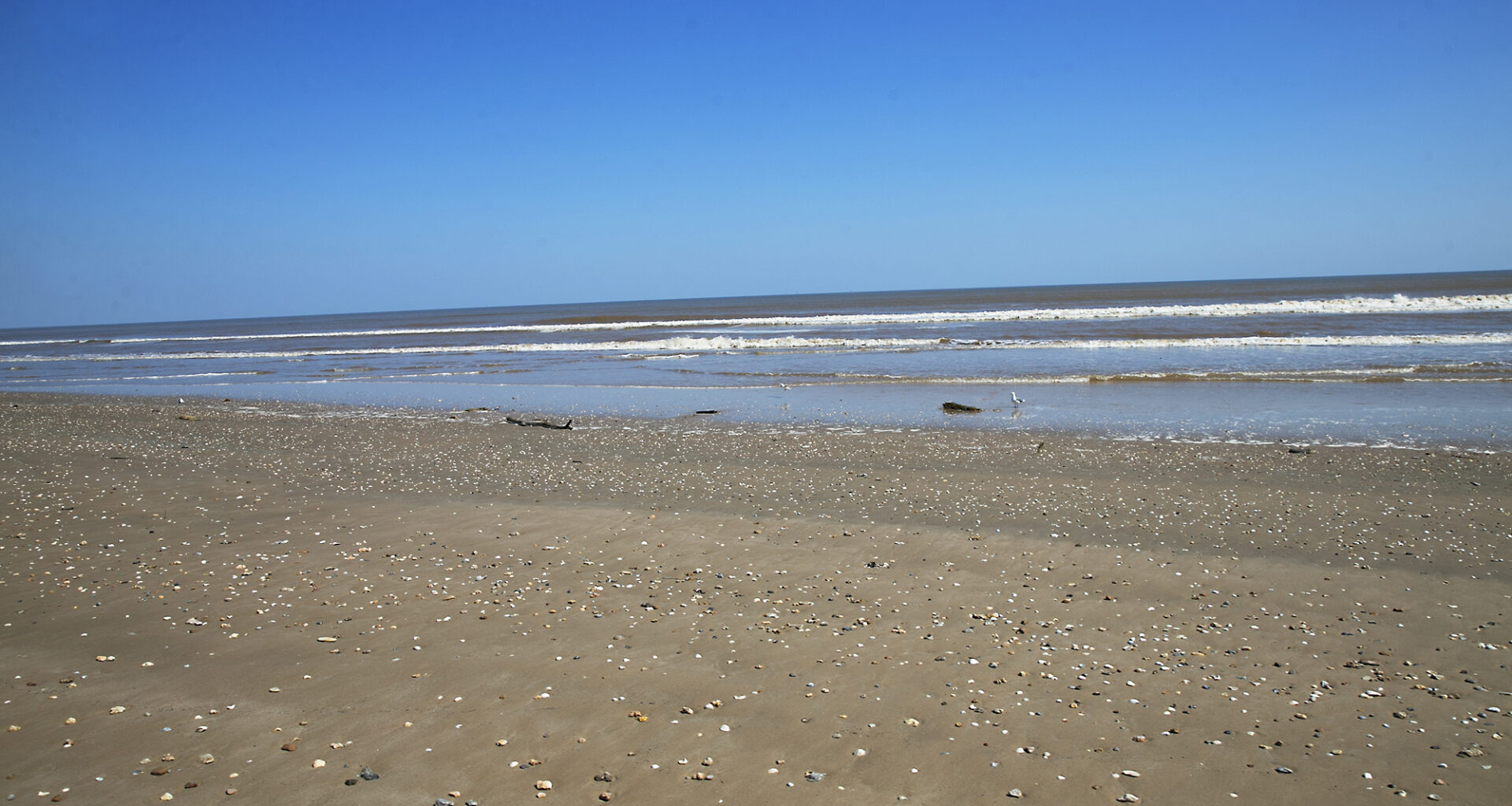
Work on a major restoration project for one of the hardest-hit beaches along the Texas coast has officially begun.
The Texas General Land Office announced this week that work the bulldozers are rolling on its joint project with Matagorda County and the U.S. Army Corps of Engineers, an $86.3 million stabilization and nourishment project for Sargent Beach. The popular coastal recreational spot about 75 miles southwest of Houston has been battered by multiple storms over the past decade, including hurricanes Harvey and Beryl. The funding was originally announced last December.
As the lead partner, the Corps will build five nearshore breakwaters—strategically placed physical barriers, often piles of stones, that help break up wave energy and reduce coastal erosion—along the affected area. It will also build a 2,600-foot terminal rock groin (a similar structure that sits perpendicular to the shoreline) on the north side of Mitchell’s Cut, a short channel between Espiritu Santo Bay and western Matagorda Bay.
Located between the San Bernard National Wildlife Refuge and Matagorda Bay, the beaches around Sargent are often cited as a “hidden gem” for Texans seeking to avoid the heavier crowds of Galveston, Port Aransas, and even Surfside. (Or at least they were; the Corps closed much of the area to the public in September 2025.) According to the GLO, the area also has one of the highest historical erosion rates along the Texas Gulf Coast, ranging from nearly 43 feet per year near Mitchell’s Cut to 20 to 23 feet east around FM 457, where the famous “corkscrew bridge” is located.
The GLO estimates that work on the breakwaters and terminal groin will be completed in March 2027, when the beach nourishment phase will begin. The Corps will dredge approximately 1 million cubic yards from a sediment impoundment basin near the mouth of the Colorado River, which “will stabilize the shoreline, slowing the impact of significant erosive forces in the area and preventing additional land loss,” the GLO said in a news release.
This second phase of the project, the beach nourishment, is estimated to be completed by late August 2027.