
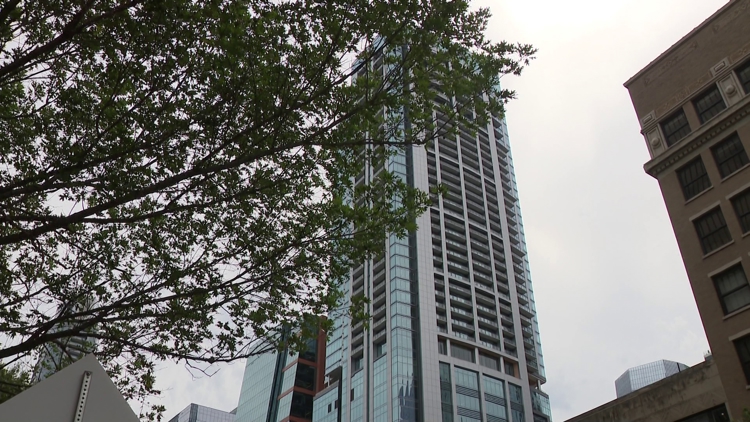
A portion of the tallest building in Texas is set to open to the public later this summer, adding new hotel rooms, restaurants and luxury amenities to Austin’s rapidly changing skyline.
The development comes as a new downtown report shows Austin continues to attract visitors, businesses and major investments — even while a sizable amount of office space remains vacant.
According to the 2026 State of Downtown Austin report from the Downtown Austin Alliance, more than 160,000 people visit downtown Austin every day.
“We spend a lot of time thinking about managing this growth,” said Davon Barbour, president and CEO of Downtown Austin Alliance.
One of the most visible signs of that growth is Waterline, the skyscraper now recognized as the tallest building in Texas. Officials said the lower portion of the tower — which includes a hotel, restaurants and public-facing amenities — is expected to open in August.
Renderings released by developers show plans for “1 Hotel Austin,” featuring 252 guest rooms, 60 luxury suites and two restaurants.
The hotel’s signature restaurant, Alteño Austin, is led by James Beard Award nominee Chef Johnny Curiel, whose Michelin-starred Denver restaurant Alma Fonda Fina has earned international acclaim.
On Waterline’s 16th floor, which will also the hotel’s rooftop, the restaurant Watr will host an open-air destination with a Japanese-leaning menu.
A café and wine bar named Neighbors will also be located within the hotel.
“I think it’s a fabulous product,” Barbour said. “I think it embodies the urban-meets-nature spirit of Austin — the colors, the amenities. This is exactly what our visitors and our residents want.”
While tourism and hospitality continue to grow downtown, the report also highlights an ongoing challenge in Austin’s office market.
According to the Downtown Austin Alliance, office vacancy rates downtown have averaged around 20% over the past several years.
For some, those numbers may appear concerning. But experts say the trend reflects the balance between supply and demand as new office towers continue to come up.
“On one hand, that looks pretty tough,” said Lance Sallis, a lecturer at the University of Texas at Austin McCombs School of Business. “But if you think about vacancy in downtown, the health overall, it’s really a function of supply and demand.”
Sallis, who has worked in Downtown Austin’s office space market since the 1980s, said long-term projects like Waterline were planned years before the current slowdown in office leasing.
“While it may deliver at a tough time in the market, there will be times where the demand is going to well exceed the supply,” Sallis said. “Rental rates will be great there. I would not have a big worry about that building.”
Barbour said companies are still showing strong interest in downtown Austin office space despite higher vacancy rates.
He pointed to recent announcements from companies like Cisco and PNC Bank expanding their downtown presence, including PNC’s planned regional headquarters at ATX Tower.
“There are companies that continue to double down on downtown,” Barbour said.
Even as Austin works through a shifting office market, city leaders and business advocates say downtown remains a major destination for both business and tourism — with new developments like Waterline expected to further reshape the skyline in the years ahead.
Officials with the hotel inside Waterline said reservations are already being accepted for future guests.