
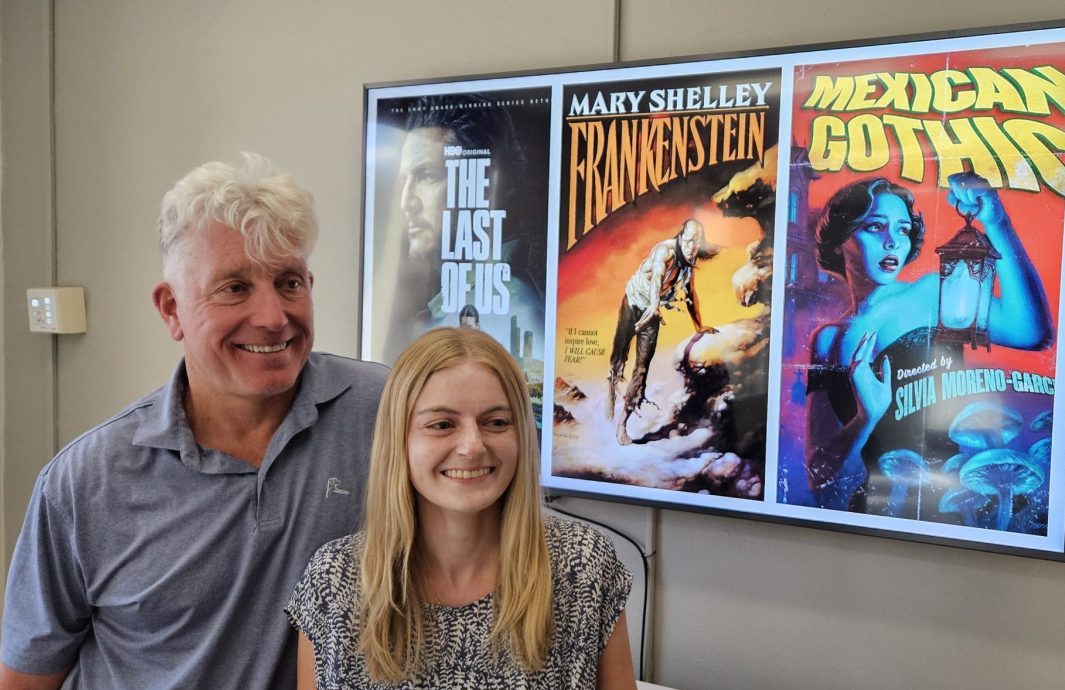
Talk about scientific concepts with most college underclassmen and their eyes will glaze over in a few minutes because many may not understand how it affects them on a daily basis, a University of Texas at El Paso professor said.
An experimental course that will be offered at UTEP in spring 2026 wants to change that attitude by combining science and popular culture. It will analyze how subjects born of science – from Frankenstein’s monster to genetic mutations – can generate fears about power, identity and technology.
“Monster-ology: At the Borders of Literature and Science,” will be co-taught by Brianna Anderson, assistant professor of English, and Kendal Hirschi, professor and chair of the Department of Biological Sciences. They will use films, comic books, novels, TV episodes and science writing to make science more relatable.
Registration for spring courses at UTEP started Oct. 27 and the professors, in honor of Halloween, would like to scare up about 50 freshmen and sophomores who want to explore the intersection of science, culture and ethics as they sharpen their research, communication and critical analysis skills.
“I think the monster narratives are a really good way to think about issues like climate change and pollution because often the monster is created from radiation, or the government’s spilling something into a river and a monster comes out,” said Anderson, who clearly has seen her share of 1950s science fiction movies.
THINGS TO DO: Halloween, Día de los Muertos celebrations around El Paso
A 2023 study by researchers at the University of Wisconsin-Madison showed that new college students with a better understanding of how Science, Technology, Engineering and Mathematics impacts their lives are more likely to stay in STEM degree plans. This was especially true for students from racial and ethnic groups underrepresented in STEM.
At the same time, perceptions of the difficulty of a science course could lead to lower grades, but overcoming fears of communication in those classes could slightly increase class performance, according to a 2019 study from the National Library of Medicine.
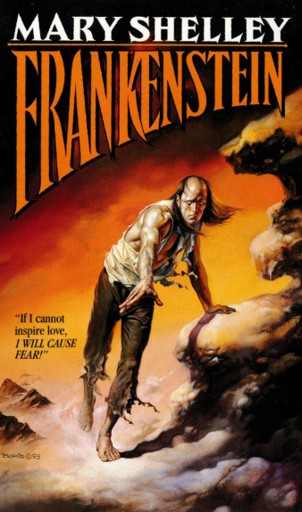 Mary Shelley’s 19th century novel “Frankenstein” will be among the media used in UTEP’s spring 2026 “Monster-ology” course that aims to make students more comfortable with science and the arts. (Courtesy image)
Anderson said today’s big issues cannot be solved by science or humanities alone. She said both are needed along with strong consideration of ethics and fairness. These issues could include the rapid and complex evolution of technology.
Hirschi, whose research background is in plant molecular biology, planned to include some basic biology and microbiology in the course, but in a way that gets students excited about science.
“I think we can make it really fun for the (students) to think about science fiction, science and cultural issues all at the same time,” Hirschi said.
They used Mary Shelley’s 1818 novel “Frankenstein” as an example of how science can go astray, and how they will tag-team the topic. Shelley’s creature was the result of a scientist who pieced together a body from cadavers and then, through electricity and a scientific process, brought it to life.
Hirschi said he planned to discuss how close science is to making Frankenstein’s monster today with the help of cloning, genetic engineering and tissue regeneration. He also will talk about safeguards from government regulations to the levels of acceptance from the public and the scientific community.
The biologist likened it to today’s gene-editing technology that can modify DNA to develop new therapies, cure genetic diseases and, in one case, create designer babies. He mentioned the disgraced Chinese scientist who altered the DNA of several human embryos seven years ago. That scientist was fined, sent to prison and condemned internationally for “illegal medical practice.”
Anderson plans to discuss why the basic premise of Shelley’s novel has survived for more than 200 years through an analysis of the original text and its core themes including the dangers of humans playing God, and the responsibilities of the creators.
“(The story) plays on the anxieties about science, it’s anxieties about race,” Anderson said. “All those sorts of things that are still very much present.”
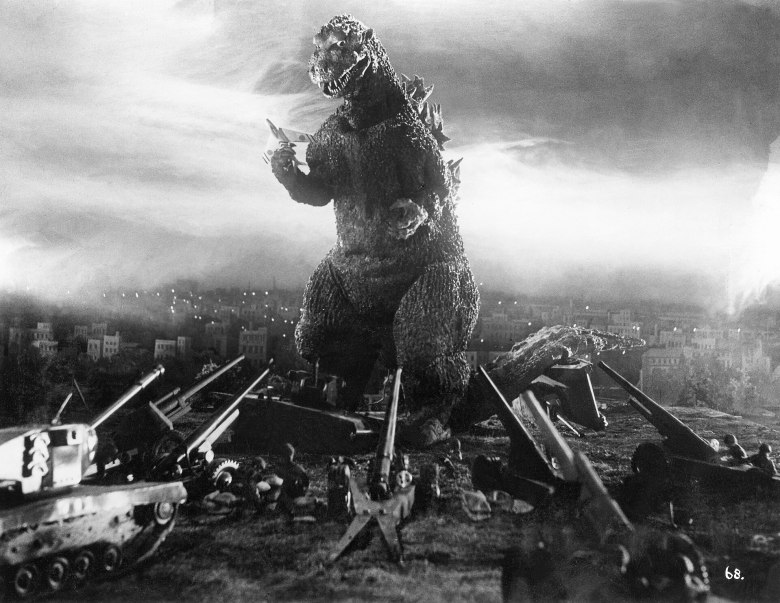 Godzilla is a prehistoric sea creature who was awakened and mutated by a nuclear bomb tested in the Pacific Ocean. (Courtesy photo)
Anderson said the course will show how science can be used to scare and inspire society. She used “Farmhand,” a monthly comic book that launched in 2018 and ran for seven years, as an example. The series told the story of a farmer whose cash crop was fast-healing, ready-to-use body parts. What started as a benefit to humanity changed after a different strain of the plant’s body parts began to take over and corrupt the human hosts.
The professors plan to cover topics from genetically modified foods to Godzilla and concepts in “Black Mirror,” the science fiction anthology television series that explores the dark side of technology.
By the end of the course, students should have a better understanding of current scientific debates and how to use literary analysis techniques.
Hirschi said he instigated the collaboration. He previously worked at Rice University where a science professor co-taught a “Monster”-type course. Hirschi wanted to replicate it at UTEP and found a kindred spirit in Anderson.
“Monster narratives are a way to tackle the consequences of science gone wrong and uncontrolled human ambition, but they also encourage us to think about how we can do things more ethically and work together to build better futures for everybody,” Anderson said.
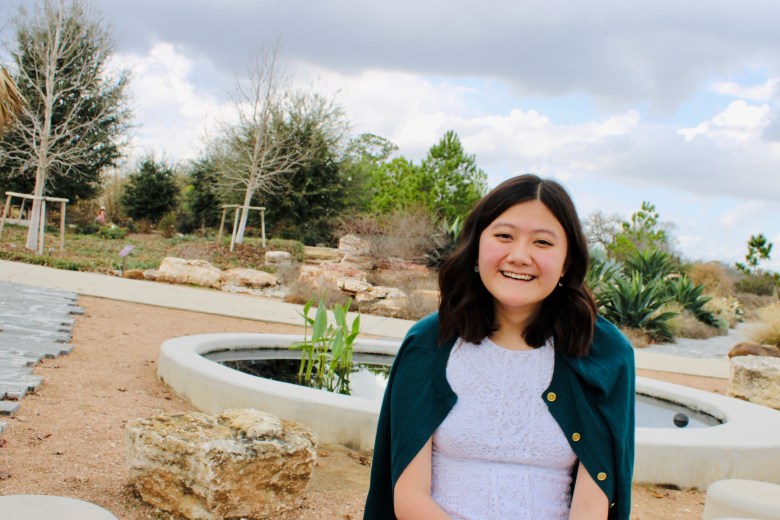 Ling DeBellis, a doctoral student at Rice University who has developed material for the institution’s course that combines biosciences and the humanities, said she has seen the evolution of students to embrace the benefits of both subjects. (Photo courtesy of Ling DeBellis)
Ling DeBellis, a health psychology doctoral student at Rice, has designed material and been a guest lecturer for Rice’s “Monster” course, which combines biosciences and the humanities. It has been offered for at least five years.
She said most of the students who take the Rice course are upperclassmen in health-related majors. She said she has seen how they evolve to see the potential benefits of a humanities perspective. Participants move from thinking solely about their next research paper to the human experiences of medicine.
While the goal is to have a balance of science and humanities students, DeBellis said that it is difficult to register enough art and English majors because most are not interested in science. She said the science/humanities combination creates initial discomfort, but most people get over it quickly.
“Once you start digging into it, you see that art and science actually do go hand-in-hand together,” DeBellis said.
Related
LISTEN: EL PASO MATTERS PODCAST