
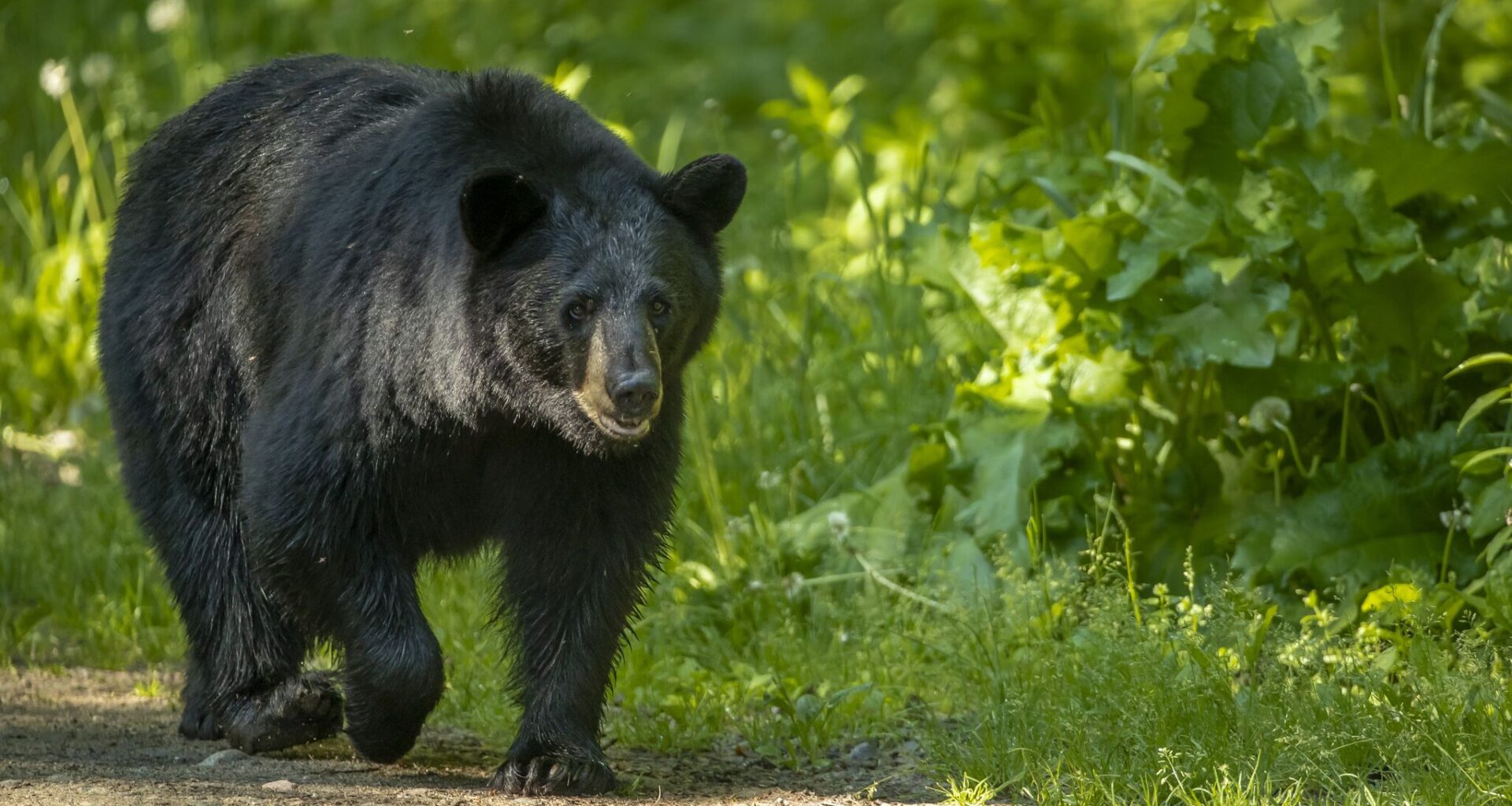
I’ll start this story with one I’ve told before: the time I “killed” a black bear.
Back in 2014, while driving on I-84 in New York, a creature scurried onto the highway at full speed as I approached. I couldn’t do anything but strike the animal head-on and hope traffic around me adjusted. It did, but the animal bounced off my car and nicked another before resting dead on the side of the road.
I quickly pulled over and called police, and maybe 15 minutes later a state trooper took me back to the scene, revealing a black cub who likely had wandered from its parent.
It’s rare to be responsible for the death of a black bear, but it happens more commonly up north where the black bear population is larger. According to the documentary series Nature, black bears exist in around 40 U.S. states, and World Population Review estimates higher populations in Alaska, California, Maine, Idaho, Oregon and Washington. There are approximately 7,000 black bears in New York and 20,000 in Pennsylvania, which was close to me when I unfortunately collided with my victim.
But there aren’t as many in Texas. In fact, World Population Review estimated 75 total in the Lone Star State; if that’s true, I’ve seen about 3 percent of them. That’s because a few years back I stopped mid-trail at Big Bend National Park as a mother and her cub passed to head up the mountain.
The same bear showed up once more, as a game camera captured him knocking over a deer feeder last week in Anderson County, per KLTV in Tyler. This doesn’t mean the black bear population is about to explode in East Texas; for one, a bear needs a second bear to make a third, and officials have not spotted that second bear.
The black bear speces is threatened in Texas, meaning it’s against the law to hunt, harass or kill them. Per the Texas Parks and Wildlife Department, killing a black bear could result in penalties of up to $10,000, plus more fines, jail time and the loss of hunting privileges. If you do come across a black bear, you should do the following: