
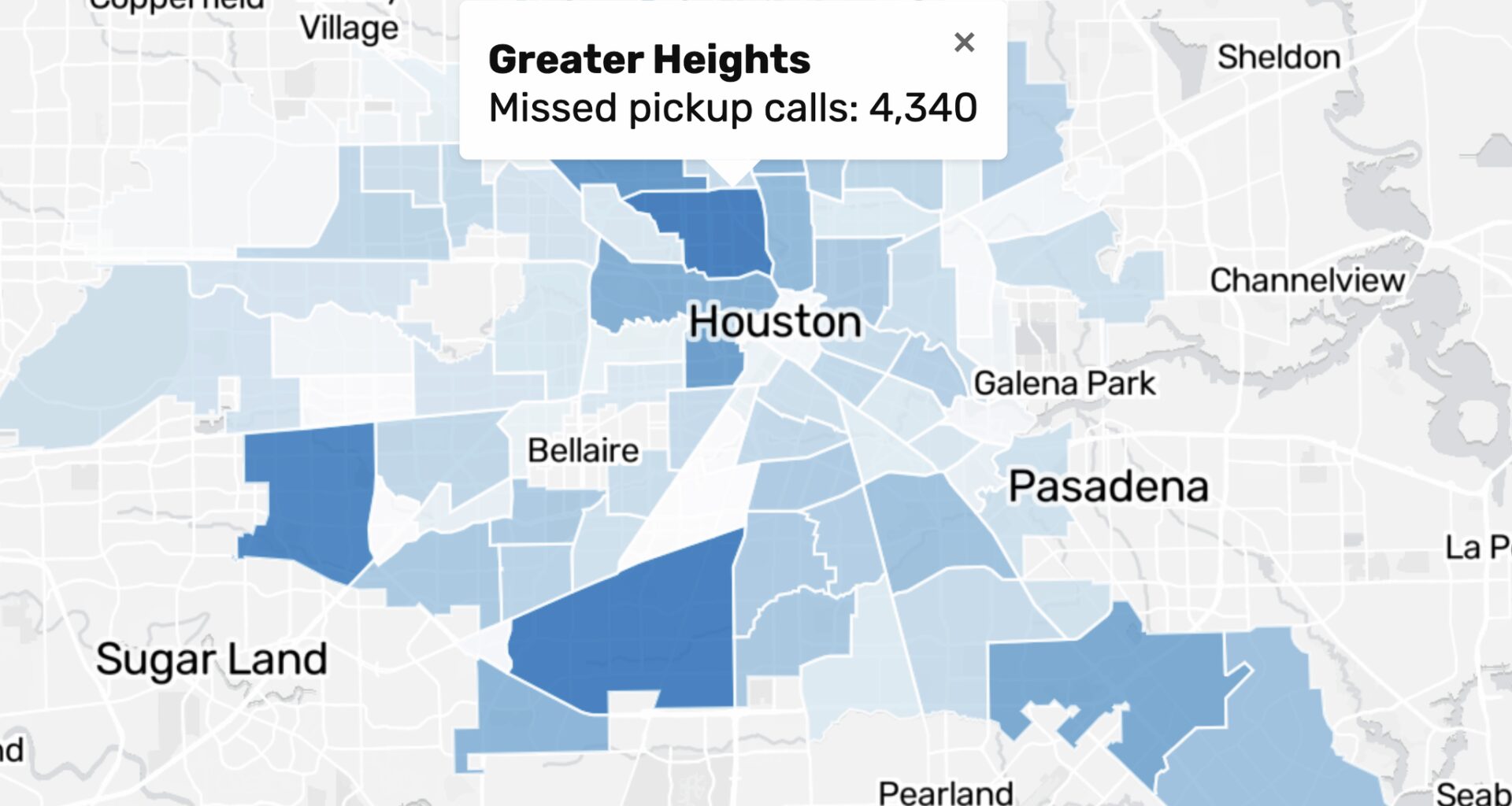
Houston takes longer to address solid waste service requests, resolves far more of them late, and struggles more with providing its core services of trash, recycling, heavy trash and yard waste pickup than peer Texas cities, a Houston Chronicle analysis of 311 data shows.
The findings come as Mayor John Whitmire proposes charging city trash customers a $5 monthly fee as part of a plan to close a $180 million deficit in his budget for the coming fiscal year. Whitmire pitched the plan as a way to help the city’s long-strained solid waste department, but has said little about how services may improve.
Houstonians sought help with solid waste services nearly 500,000 times from 2023 through 2025, according to the Chronicle analysis of 311 solid waste requests in Houston, San Antonio, Dallas and Austin.
Houston did not receive the most calls per capita. But the Solid Waste Management Department had far more trouble answering the requests it received, the analysis shows.
Article continues below this ad
San Antonio, Dallas and Austin typically resolved calls in two to three days. Houston closed cases in a median of eight days.
NEEDED FIXES: Whitmire’s $7.5B Houston city budget adds trash fee, but lacks specifics on Solid Waste improvements
The cities set target dates by which they aim to resolve 311 requests. In Houston, nearly half of all solid waste calls were resolved late, rising from 40% in 2023 to 57% last year.
Dallas and San Antonio were late on 6% and 8% of their cases, respectively. Target dates for service requests in Austin were not available.
Article continues below this ad
Many missed trash and recycling calls in Houston were resolved within four business days, the city’s goal. But a third of trash calls and 44% of recycling calls were addressed late. So were 57% of heavy trash complaints, despite the city allowing seven business days to resolve them.
Most of the comparatively few calls for missed yard waste pickup are answered on time, the data shows.
A city employee sharing information through Houston’s open records portal described “issues” with the city’s 311 data that could affect the number of cases listed as unresolved, such as some cases needing to be manually closed in the service request system. The comments were unsigned, and no city staff answered the Chronicle’s follow-up questions about the issue.
A spokesperson for Whitmire also did not return a request for comment. Whitmire’s team has not answered the Chronicle’s requests for comment since August.
Article continues below this ad
Complaints in Houston also were more likely to berelated to the department’s core services – trash, recycling, heavy trash and yard waste pickup. About 46% of the city’s 311 calls were about missed pickups.
San Antonio and Dallas dealt primarily with cart issues. Pickup delays ranked second – at 31% and 34% of calls, respectively. Austin’s data could not be analyzed by category.
Many Houstonians have given up on reliable trash service.
Doug Smith used to post signs in busy intersections each month, reminding his Alief neighbors to put out heavy trash and yard waste for their scheduled collection days.
Article continues below this ad
He stopped this year. It was pointless, he said, as Solid Waste wasn’t on time anyway.
Heavy trash – bulky items that don’t fit in city trash cans – can sit for three months, he said, becoming a “horrible eyesore.”
On the Northside, trash and recycling cans often block the area’s narrow roads for days awaiting pickup, and sometimes get hit by cars, said Northside/Northline Super Neighborhood president Deb Martin.
Yard waste bags can sit out so long they degrade and rip open, clogging the area’s ditches when it rains and worsening flooding, Martin said.
Martin worries about low-income neighbors’ ability to pay the new fee, but said she suspects they would be more comfortable doing so if they knew it would fix poor service.
Article continues below this ad
“There’s not a lot of definition behind how this is going to improve trash pickup,” Martin said.
Improvements unclear
Council Member Sallie Alcorn said the Chronicle’s 311 analysis showed an obvious need for changes at the solid waste department.
“These calls just illustrate a need for an overhaul,” said Alcorn, who chairs the council’s budget committee.
Upcoming city department budget workshops, she added, should show specific improvements that could be made. Those discussions will conclude with a council vote in June on Whitmire’s proposed $7.5 billion for the fiscal year that starts July 1.
Council Member Julian Ramirez said the numbers in the 311 analysis were unacceptable. Houstonians could be more open to paying the proposed fee, he said, if the city releases more details on how solid waste services would improve.
“I encourage the administration to come forward with some operational changes as they seek to make the case for a $5 administrative fee per month,” Ramirez said.
Thus far, the Whitmire administration has not specified many planned improvements to solid waste services, though the council voted last week to continue a $2.2 million renovation at one of the city’s three waste transfer stations. These are regional sites where city trucks deposit waste to be hauled to the landfill.
A study the administration commissioned on solid waste said improvements to department operations would take years and would require the city to hire hundreds more staff and add hundreds of vehicles to its fleet.
The study also concluded residential customers should pay about $32 per month, rising to $45 in 2031.
Whitmire administration officials instead propose taking 6 years to incrementally raise the fee to $25 per month. But the mayor has not publicly committed to exceed $5 per month.
The fee is only part of a broader restructuring in Whitmire’s budget, however.
The mayor proposes moving solid waste from the general fund to the city utility system within Houston Public Works – funding Solid Waste mostly with residents’ water bills instead of taxes.
Critics of the idea say the changes could weaken the city’s ability to address enormous water and sewer needs, particularly if the new trash fee does not increase over time.
Smith, the Alief resident, said he is pleased Whitmire didn’t start with a higher fee – and said he’s willing to pay an extra $5 per month to help make trash service more reliable.
Smith is confident Whitmire’s plan will help, saying administration officials have told him and other Super Neighborhood leaders the city will be able to use the new revenue to issue bonds to buy more waste trucks.
Martin, the Northside civic leader, is less sure. Residents have begun to wonder, she said, why they can’t have a more reliable government.
“(Trash pickup’s) built into the DNA,” Martin said. “It keeps life moving and consistent, the continuity. It keeps streets clean, and it just keeps the order. Before law and order, there’s order.”
About the data in this story
The Houston Chronicle analyzed 311 service requests submitted to the Austin Resource Recovery, Dallas Sanitation Services, Houston Solid Waste Management and San Antonio Solid Waste Management departments from January 2023 to December 2025.
Reporters grouped Houston, San Antonio and Dallas’ trash-related requests into four categories:
Missed pickup, which includes missed garbage, recycle, heavy trash, yard waste, brush and bulk pickup across San Antonio, Dallas and Houston
Dead animal pickup
Cans and carts, which includes residential can and cart maintenance and delivery
Other, which encompasses all other case types that could not be uniformly matched across the metros
Detailed breakdowns Austin’s case types are not publicly available.
To determine whether a case was resolved late in Houston, San Antonio or Dallas, reporters compared its target resolution date to the date that case was closed. Target resolution dates were not publicly available in Austin’s data.