
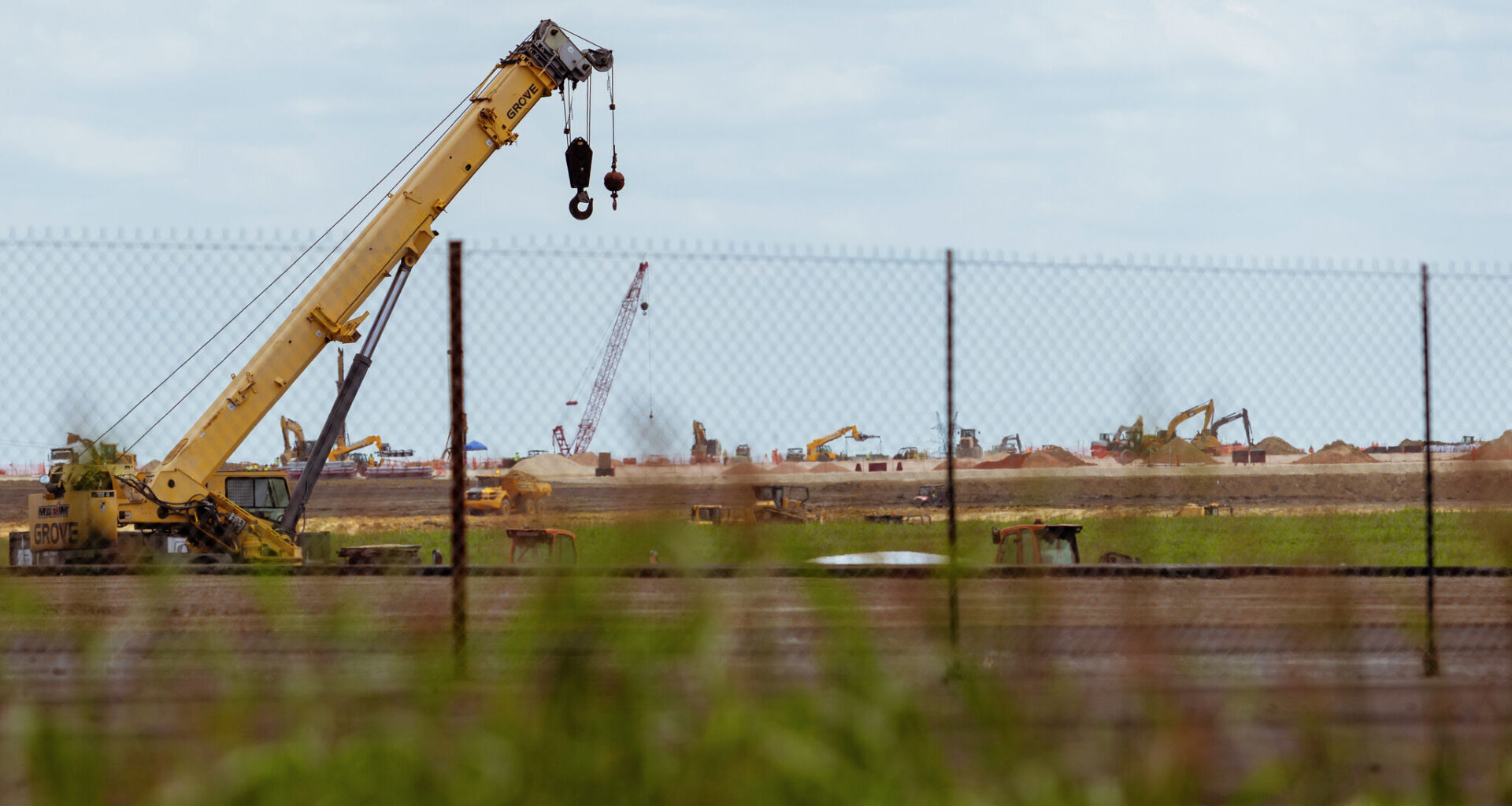
Construction continues on OpenAI’s Stargate Milam County data center in Burlington. It’s set to be completed later this year. Hill County has approved a one-year pause on the construction of new data centers in unincorporated areas.
Leila Saidane/For the Texas Tribune
A rural Texas county has approved a one-year pause on the construction of new data centers in unincorporated areas, citing public safety and public health concerns.

The 3-2 vote by county commissioners in Hill County, roughly 55 miles south of Fort Worth, appears to be the first by a Texas county to issue a moratorium on the rapidly expanding industry.
Article continues below this ad
Residents and local officials had aired concerns about how a proposed 300-acre development by the Dallas-based developer, Provident Data Centers, in north Hillsboro could affect the quality of life in the rural county through noise pollution and consuming large amounts of water and electricity.
“The data center folks have found a sweet spot in the state that has limited regulations, limited enforcement, limited code and they’re coming faster than we can keep up with,” Hill County Commissioner Jim Holcomb said. “I think it’s imperative … that we tap the brakes and we get our arms around what we’re faced with and do the research, do the studies.”
Holcomb, who voted for the pause, said the move was in “no way, shape or form a push to impair anyone’s right to do with their own property what they want to do with it.”
San Antonio Express News Logo
Make us a Preferred Source on Google to see more of us when you search.
Add Preferred Source
County Judge Shane Brassell said the temporary pause will allow officials time to study the effects of data centers before projects move forward.
Article continues below this ad
Representatives of data center developers pleaded with the county to reject the moratorium and said they are bringing money to the county for schools and roads. Holcomb said that many developers called him the night before, as late as 10 p.m., asking him to vote down the moratorium.
It’s not clear how many data centers have been proposed for Hill County. Brassell said he knows at least eight are in the works because he hears through word of mouth about farmers who have sold their land to data center developers, but he added that developers aren’t required to disclose their plans to the county.
Before commissioners voted during last week’s meeting, County Attorney David Holmes cautioned them that they risk being sued by passing a moratorium. “You’re damned if you and damned if you don’t,” Holmes said.
The decision comes amid a growing statewide battle over Texas’ data center boom, particularly in rural counties where projects are rapidly moving into unincorporated areas with no zoning. In neighboring counties, residents increasingly have voiced frustration that projects are advancing faster than public understanding or oversight.
Article continues below this ad
Other Texas counties, including Hays and Hood counties, have explored similar moratoriums. In Hood County, where at least eight large data center projects are pending, efforts to slow development drew pushback from state leaders.
Houston-area state Sen. Paul Bettencourt sent a letter to Texas Attorney General Ken Paxton on the day of the Hood County vote, saying counties have no constitutional or statutory authority to impose development moratoriums and asking Paxton to investigate counties that passed one. Hood County commissioners rejected the pause.
Robert Paterson, a University of Texas at Austin professor who specializes in land use and environmental planning, said it’s unclear whether counties have the authority to adopt such moratoriums because Texas doesn’t have “a good test case.”
But Paterson said the county is on “good grounds” legally because its moratorium has an end date and county leaders expressed a need to study data centers’ potential risks to public health and safety.
Article continues below this ad
Hill County moved ahead despite the risks, County Judge Brassell said. Brassell and at least two commissioners expect the county to face lawsuits from data center developers and perhaps the state as well.
Brassell said the court still felt a responsibility to put guardrails in place during what he called a “land rush” — even if it meant being the first county to test the limits of Texas law. He said he has talked to many county judges, and they were waiting for someone to take this step first.
“Our hope and prayer was that (state leaders) take that vote as not a sign of defiance of the law, but as a plea for help to get some regulations in place to help protect our citizens,” Commissioner Holcomb said.
Article continues below this ad
The Texas Tribune is a nonprofit, nonpartisan media organization that informs Texans about public policy, politics, government and statewide issues.