
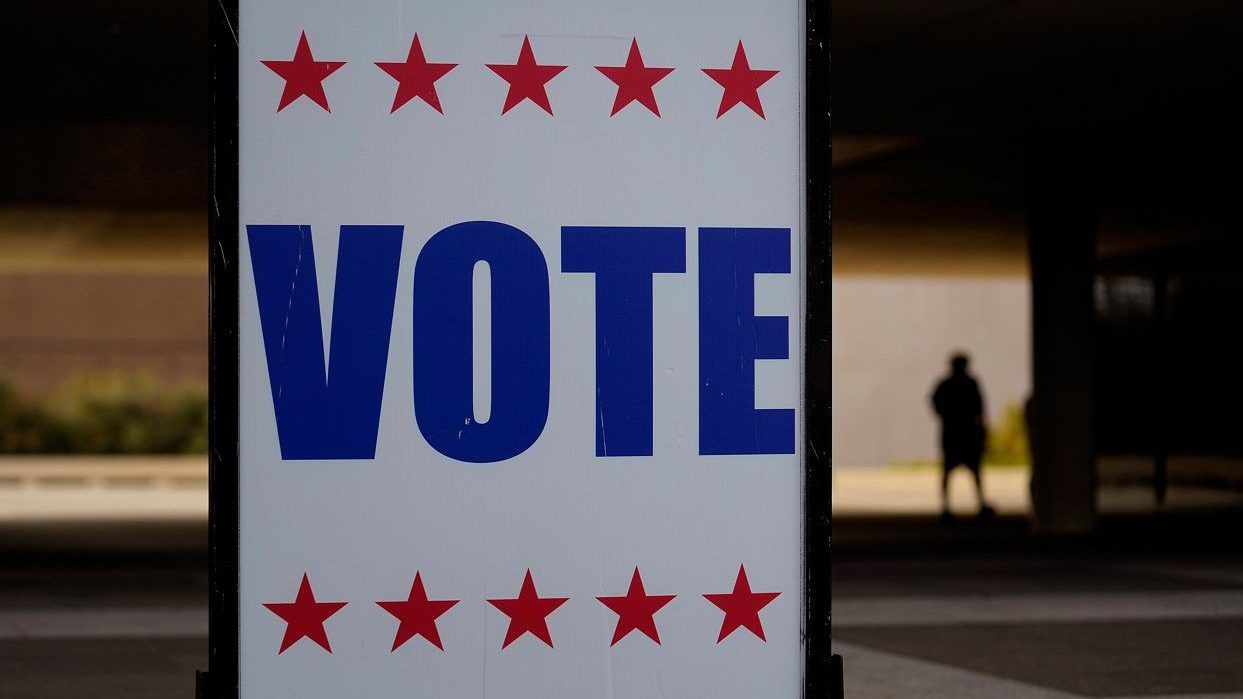
Early voting for the primary runoff elections is here. Beginning Monday, May 18, Texans across the state will finalize their party’s nominees for November’s crucial midterm elections, and there are some major races up and down the ballot. Here are five key races to watch on Election Day, May 26.
Senate race
This year’s marquee race is the battle for the U.S. Senate where incumbent U.S. Sen. John Cornyn, R-Texas, is battling for a record-tying fifth term. The Democrats have already chosen their candidate in state Rep. James Talarico, D-Austin, and now, Republicans must decide between Cornyn and Texas Attorney General Ken Paxton as their nominee.
More than $120 million have already been spent on this primary, according to media tracking firm AdImpact, making it the most expensive primary battle in history. And that was before the runoffs, where an additional $20 million have been spent.
Much of that has gone toward grueling attack ads with Cornyn attacking Paxton for his extramarital affairs and allegations of abuse of office. Paxton has fired back that Cornyn is out of touch with Republican voters and is insufficiently supportive of President Donald Trump. The president had teased an endorsement in the race after the primary in March but has still not made his pick public, saying he likes both candidates.
Cornyn was the top vote-getter in March when he surprised election watchers by edging out Paxton 42% to 41%, but both failed to get the more than 50% of the vote to win outright under state law. U.S. Rep. Wesley Hunt, R-Houston, the third major candidate in the race, received 14% of the vote. Paxton’s team is confident that he is the preferred candidate of the most engaged GOP voters — the type who most likely turn out in a primary runoff.
A University of Houston poll recently showed the race is tight, with Paxton leading Cornyn 48% to 45% with 7% of voters undecided. With a margin of error of 2.83%, those undecided voters could swing the election.
Attorney general
With Paxton seeking higher office, Republicans had a slew of candidates seeking to replace him as attorney general. In March, the two top vote-getters were state Sen. Mayes Middleton, R-Galveston, and U.S. Rep. Chip Roy, R-Austin.
Roy, a conservative firebrand in Congress, was largely seen as the frontrunner for much of the race. But in March, it was Middleton who got the most votes winning 39% of the votes to Roy’s 31%.
Since then, Middleton has taken poll position, barnstorming the state and giving himself the moniker “MAGA Mayes” to show his loyalty to Trump — often suggesting that Roy is insufficiently supportive of the president and other conservative favorites, like Paxton. Roy once called on Paxton to resign after allegations of abuse of office.
Roy, for his part, has run political ads showing the president praising him and has pitched himself as a conservative independent willing to take on political establishments in Washington and Austin. He’s parodied Middleton as “Mecca Mayes,” accusing him of authoring a bill that would allow the building of cities that allowed Sharia law. Middleton’s campaign has said that distorts the language of the bill.
Middleton leads Roy 48% to 39% in the University of Houston’s latest poll. But 13% of voters said they were still undecided.
Texas’ 35th Congressional District
Voters in Congressional District 35 are picking nominees for both parties. On the Republican side, state Rep. John Lujan, R-San Antonio, is facing off against Air Force Veteran and small business owner Carlos De La Cruz.
Lujan was the top vote-getter and says he knows the newly redrawn district well because some of it overlaps with his current state legislative seat. But De La Cruz, whose sister Monica De La Cruz represents Congressional District 15 in South Texas, has been endorsed by Trump.
The Democratic side of the race had flown under the radar until early May, when news outlets began reporting on comments by frontrunner Maureen Galindo that were criticized as antisemitic. Since then, Galindo, who pitched herself as the progressive in the race, has lost an endorsement from one of her former opponents who had backed her after the primary. And her runoff opponent, the more centrist Johnny Garcia, has gained support from U.S. Reps. Joaquin Castro, D-San Antonio, Greg Casar, D-Austin, and Lloyd Doggett, D-Austin — all progressives with ties to the district.
The district was redrawn last year to favor Republicans. If it had been in place for the 2024 presidential election, Trump would have won by 11 points. But much of that support is based on Latinos in the district, who Democrats are hoping to win back after backlash against Trump’s immigration and economic policies.
To do so, national Democrats are hoping for a more centrist candidate, making the outcome of this runoff crucial.
Texas’ 33rd Congressional District
It’s “predecessor versus” successor in this heated runoff.
Former U.S. Rep. Colin Allred is taking on the woman who succeeded him in Washington: U.S. Rep. Julie Johnson, D-Dallas.
On the last day to file for office in Texas last year, Allred dropped a second bid for U.S. Senate and instead filed to run in the newly drawn Congressional District 33 which contains much of his old Congressional District 32, now represented by Johnson.
Johnson, who had already filed to run for the new district, has blasted Allred for that decision saying his bid to return to the U.S. House is Allred’s “backup plan” and blasted him for trying to push a woman out of office.
Allred has returned fire, accusing Johnson of profiting from stocks she’s traded while in Congress and saying she is hypocritical for denouncing Trump’s immigration crackdown while buying stock in companies that contract with federal immigration authorities. Johnson has responded that stocks she bought in tech company Palantir, which contracts with ICE, were managed by a third-party investor and have since been sold.
Allred got the most votes in the March primary with 44% of ballots cast compared to Johnson’s 33%.
Texas’ 18th Congressional District
In another grueling Democratic runoff, it’s youth versus experience, as two incumbents face off for a Houston district.
Voters in Congressional District 18 sent U.S. Rep. Christian Menefee, D-Houston, to Washington in January after being without representation for 10 months following a delayed election after the death in office of the late U.S. Rep. Sylvester Turner last March.
But by then, Republicans had redrawn the district to pit the incumbent against veteran lawmaker U.S. Rep. Al Green, D-Houston, who was drawn into the district’s new lines. Green, who has been in Congress since 2005, has pitched himself as an experienced lawmaker who has fought back against Trump and brought funding to the district.
Menefee, who previously served as Harris County Attorney, says he’s a fresh, new voice who has also tangled with Trump — and won. He’s criticized Green for picking fights he can’t win and says he would be more strategic in Congress. Green has derided Menefee as a “neophyte.”
The two were neck-and-neck in March with Menefee getting 46% of the vote to Green’s 44%. Former Houston City Council Member Amanda Edwards dropped out of the race but still drew 8% of the vote.
The latest University of Houston poll, which correctly flagged Menefee as the lead candidate in its polls leading up to the primary, has Menefee ahead 50% to 43%. But 7% of voters remained undecided.