
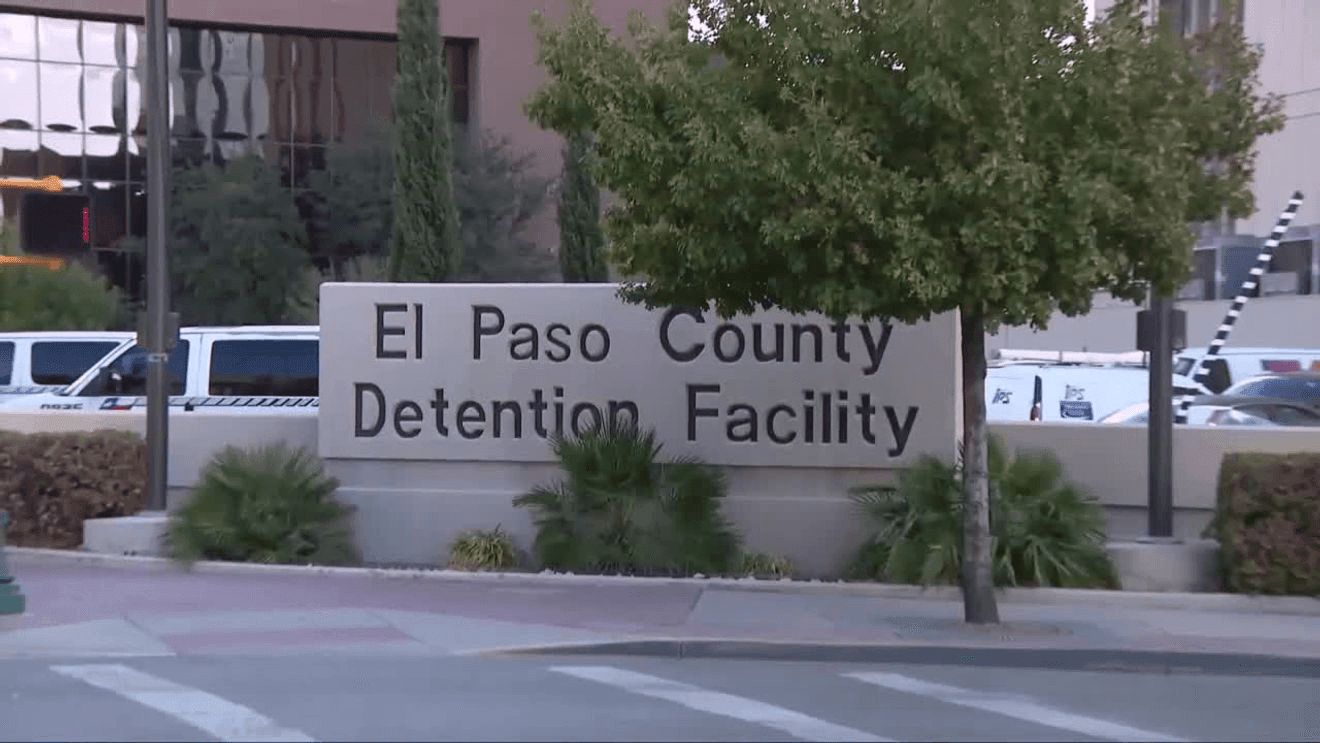
EL PASO, Texas (KFOX14/CBS4) — El Paso County commissioners said they are being forced to comply with Senate Bill 8, warning that the law’s costs and staffing demands could further strain the El Paso County Sheriff’s Office.
County leaders received a breakdown of how Senate Bill 8 is affecting the sheriff’s office.
The law requires counties with more than 100,000 residents to collaborate with U.S. Immigration and Customs Enforcement.
It also allows the sheriff’s office to issue warrants to undocumented migrants while they are in custody.
County officials said they had no say in how the law is being implemented.
“Unfortunately, we’re stuck in between a rock and a hard place because the state legislature has mandated that we do this,” El Paso County Commissioner David Stout said.
Stout said state programs and ICE-related requirements have already cost the county millions of dollars.
“Close to 70% of the county’s budget is spent on programs and services that the state forces us to provide, and they give us no funding to reimburse for the costs,” he said.
When it comes to immigration enforcement by itself, it has cost us between 40 and 50 million dollars over the last five to six years.
RECOMMENDED: New state law brings ICE warrant training to El Paso County
The deadline for compliance with Senate Bill 8 is Dec. 1, 2026.
Under the law, counties must enter a 287(g) agreement with the federal government, described as a formal partnership.
Emily Schmalz reports on how El Paso County Sheriff’s Office could be impacted by SB8
The county had three options to choose from:
The Jail Enforcement Model – designed to identify and process removable migrants — with criminal or pending criminal charges — who are arrested by state or local law enforcement agencies.The Task Force Model – allows law enforcement agencies to enforce immigration laws during their routine policing duties under ICE oversight. The Warrant Service Officer program – allows ICE to train, certify and authorize state and local law enforcement officers to serve and execute administrative warrants on migrants in the agency’s jail.
The Sheriff’s office requested that the county select the Warrant Service Officer model.
El Paso County Deputy Chief Sheriff Emmanuel Soria said the model is the least intrusive option available and would allow ICE to serve warrants in the jail through what was described as a low-burden program with an eight-hour training requirement.
But Soria said the sheriff’s office has not received key details from ICE.
“We still have yet to get direction from ICE in terms of how this training is gonna take place, where it’s gonna take place, and how many officers we’re gonna use to do this type of model that we selected,” Soria said.
Soria also said the county is eligible for a $120,000 state grant that can be used over two years to cover unreimbursed operational costs, including personnel, jail housing, training and equipment, but said other costs would fall on the sheriff’s office.
RECOMMENDED: Maryland sheriffs vow to fight bill banning 287(g) agreements with ICE
“We don’t have the staffing to be doing immigration work,” Soria said.
The more we extend ourselves in terms of immigration, it’s gonna take resources.
Alan Lizarraga, communications manager for the Border Network for Human Rights, said collaboration with ICE adds pressure to the county budget and diverts resources from other public safety needs.
“It’s very important that we take into notice that collaboration with ICE at this time is not supporting the real community safety of all of us,” Lizarraga said.
It’s crushing budgets, it’s leading to departments having to put extra people in not dedicated time to actual crimes and actual things that the community needs.
The sheriff’s department said it will move forward with implementation while it waits for final details from ICE.
Attached is the presentation:
Sign up to receive the top interesting stories from in and around our community once daily in your inbox.