
Austin-based robotaxi company Avride has added new crashes to its tally, according to the most recent data reported to federal regulators.
Waymo, whose fleet has grown to 300 vehicles in Austin and plans to expand its service area, now has a crash count of 75 in Austin. That’s up from just under 70 incidents in last month’s crash data, which reflected incidents from June through March 16. Tesla Inc.’s Austin crash count now stands at 17, up from 15 last month. Zoox reported no new crashes involving its purpose-built robotaxi in Austin, leaving its total crashes at one previously reported collission with a Toyota Highlander.
Waymo and Tesla did not respond to a request for comment.
The latest crash report data includes details of a high-profile crash in which a Avride’s Hyundai Ioniq 5 struck and killed a duck near Mueller Lake Park. Shortly after the March crash, the company did not clarify whether the vehicle was operating in autonomous mode or if the safety monitor was controlling the car. Now, data shows the vehicle had been operating at a speed of 15 mph in autonomous mode when it struck and killed the animal.
Apart from that incident, the remaining crashes involved property damage only. In one March crash in Austin, an Avride vehicle operating in autonomous mode attempted a left turn when a pickup truck ran a red light and struck the robotaxi, according to the data. Both vehicles were damaged, and the pickup left the scene.
In another Austin crash, an Avride vehicle stopped at a red light was rear-ended by a van, though neither vehicle was damaged.
NHTSA’s probe into Avride covers incidents involving robotaxis “executing lane changes into other vehicles and failing to avoid vehicles or objects in the roadway.” In one Dallas crash, an Avride struck a road sign lying in its lane, damaging the vehicle. In another, an Avride collided with a passenger vehicle attempting to cross two lanes into a parking garage, causing damage to both vehicles but no injuries.
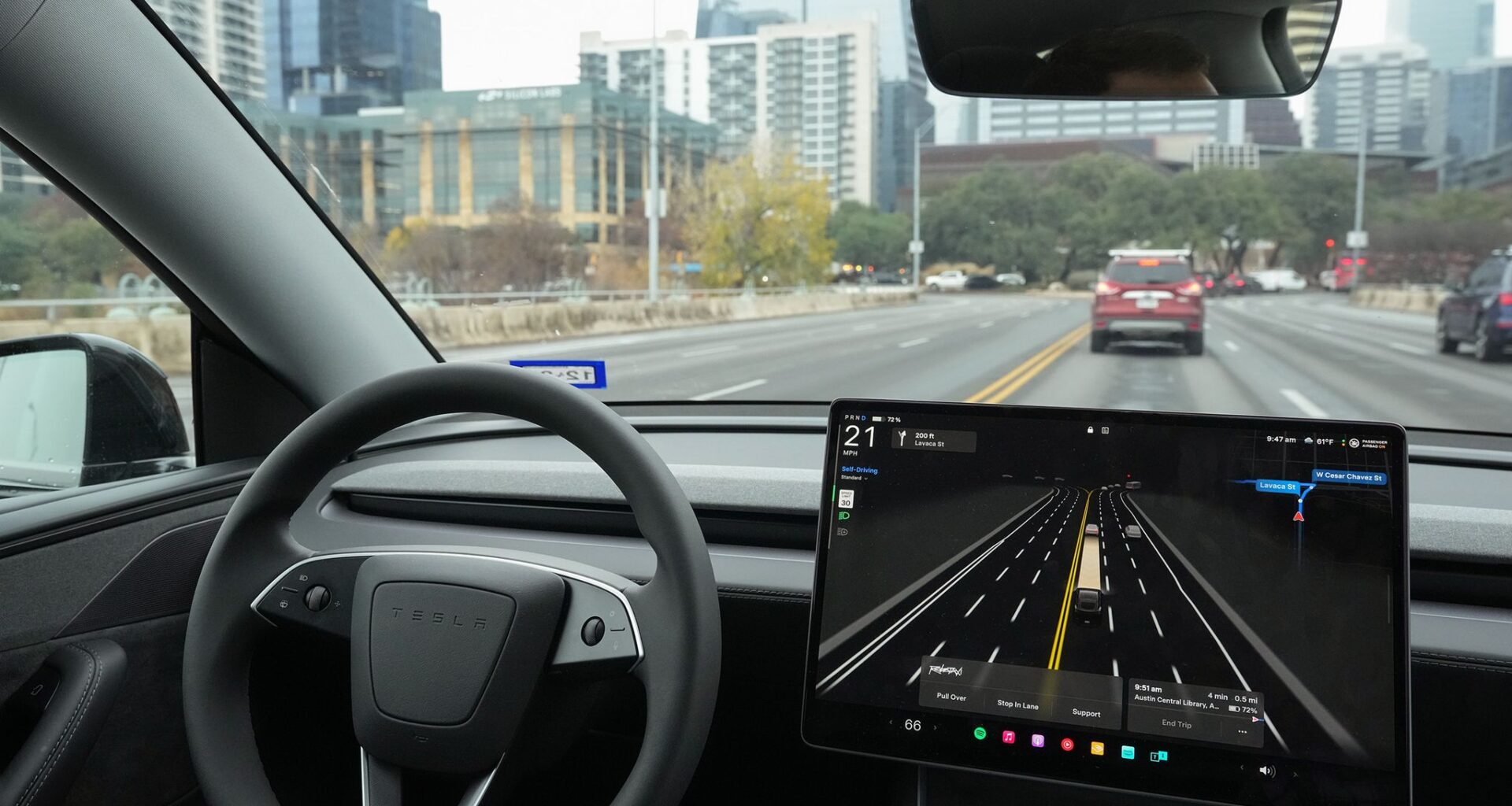
Meanwhile, Tesla updated its crash reports to include narratives, a change from the redactions that had been in place since the company launched its robotaxi service in Austin nearly a year ago. The reports show Tesla has used remote operators in rare cases, including a July incident in which a Tesla stopped on the right side of a street. After a safety monitor requested assistance, a teleoperator took control and drove the vehicle onto a curb and into a metal fence.
In a January incident, a safety monitor requested support with vehicle navigation from a teleoperator, after which the robotaxi made contact with a temporary barricade for a construction site at approximately 9 mph, scraping the front-left fender and tire.
Last month, Tesla boasted that it had no new crashes to report. But now, updated data shows two crashes that occurred in March.
In one instance, Tesla’s Model Y was rear ended by a passenger vehicle behind the robotaxi while stopped in a left turn lane with a yellow light. A separate crash at a stop sign also involved the Tesla robotaxi getting rear ended. In both of the March crashes, a safety monitor was in the robotaxi, despite Elon Musk’s earlier promise that there would be no safety drivers this year.