
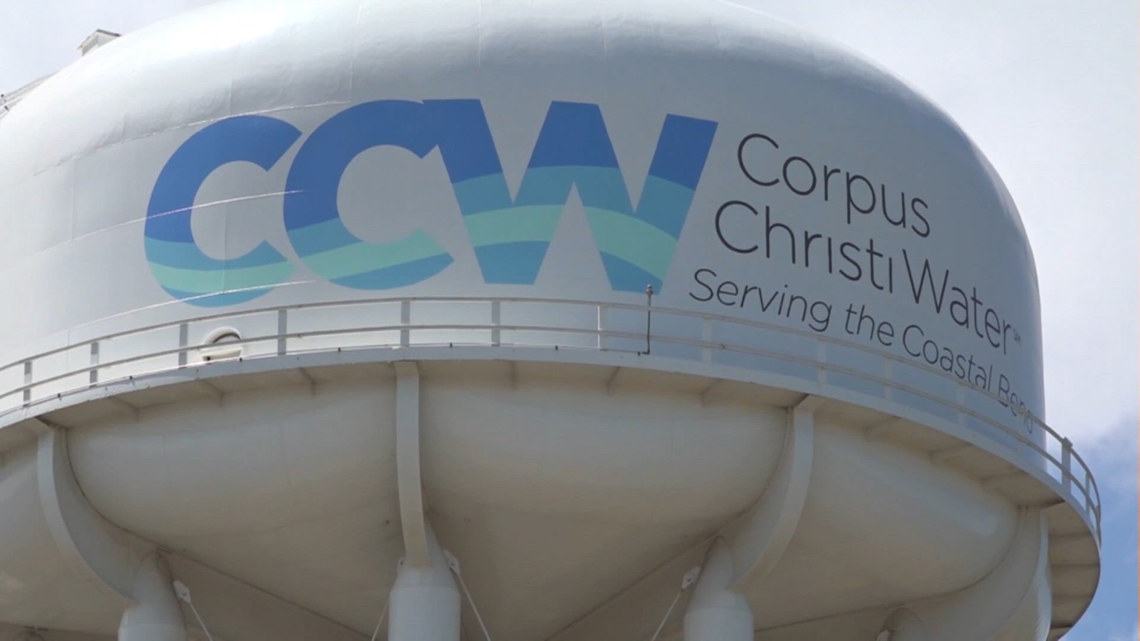
Recent rainfall is buying the Coastal Bend more time before tougher water restrictions kick in. The city is now giving a December timeline for a level one emergency.
CORPUS CHRISTI, Texas — Recent rainfall is buying the Coastal Bend more time before tougher water restrictions could take effect in Corpus Christi City Council.
City leaders announced Tuesday the projected timeline for Corpus Christi to enter a Level One water emergency has been pushed back from September to December following recent rain across the region.
At the same time, city council delayed a key vote tied to proposed changes in the city’s drought contingency plan after concerns were raised by apartment owners and managers over how multi-family properties would be treated under the updated policy.
The vote would have been the first of two required readings needed to approve new curtailment policies during a Level One water emergency.
Under the proposed changes, the monthly water baseline for residential customers would increase from 7,000 gallons to 8,000 gallons per month. With the required 25 percent curtailment applied during a Level One emergency, the monthly allocation for residential customers would increase from 5,250 gallons to 6,000 gallons.
The discussion during Tuesday’s council meeting quickly shifted toward apartment complexes after Councilman Eric Cantu voiced concerns over how apartment residents would be classified under the updated policy.
“For them to be under commercial just because they are apartments, because in reality, we all cannot just afford a home or mortgage. That’s their home, apartment,” Cantu said. “I don’t feel we should leave them out. There are 50,000 doors, homes, apartment in Corpus Christi, that’s a lot of people.”
Under the proposed policy, apartment complexes would be classified as commercial accounts rather than residential accounts, meaning they would fall under a different surcharge structure during water restrictions.
For residential customers, the proposal includes:
A $4 surcharge per 1,000 gallons used above the 6,000-gallon allocationAn $8 surcharge per 1,000 gallons used above the 8,000-gallon baseline
For commercial accounts, the proposal would add a $4 surcharge per 1,000 gallons used above an *individually assigned allocation.
Cantu said apartment owners raised concerns that residents living in multi-family housing should receive similar treatment to single-family homeowners.
“They had a lot of good points,” Cantu said. “They didn’t feel they should be under commercial. They feel the minimum should be under 6,000 gallons per unit, per home. I feel the same way.”
A meeting between city staff and the local apartment association had been scheduled for last week ahead of Tuesday’s vote, but it was postponed and rescheduled for Wednesday, one day after the council meeting.
“For the simple reason they are not expecting us to approve it until they are heard,” Councilwoman Carolyn Vaughn said during the meeting.
Mayor Paulette Guajardo also supported delaying the vote, saying city leaders need to ensure the plan works for all parties involved.
“Let’s make sure we have a plan that works on both sides,” Guajardo said.
City council is expected to revisit the proposed drought contingency changes after discussions with apartment representatives. The vote was moved to the next council meeting on June 2.
More from 3NEWS on KIIITV.com:
Subscribe to our YouTube channel for your daily news and exclusive extended interviews.
Do you have a news tip? Tell 3!
Email tell3@kiiitv.com so we can get in touch with you about your story should we have questions or need more information. We realize some stories are sensitive in nature. Let us know if you’d like to remain anonymous.