
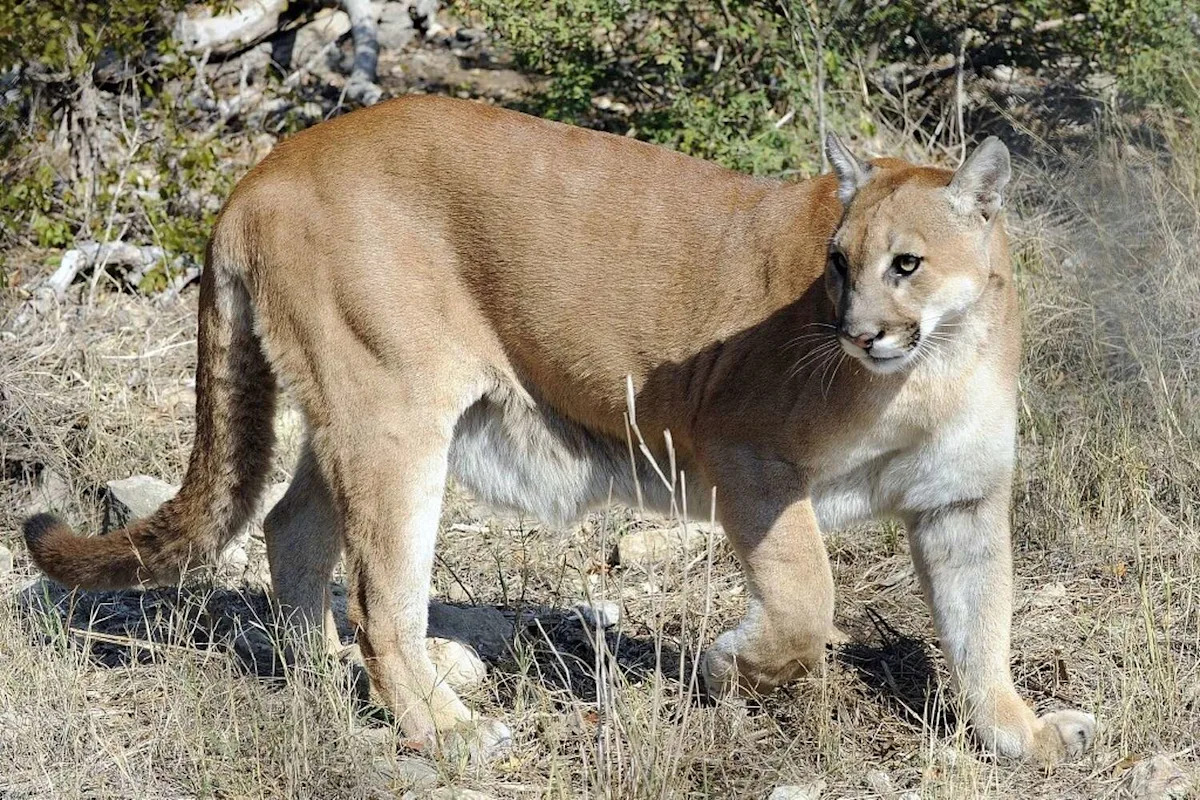
More rules could soon be coming for mountain lion hunting in Texas as wildlife officials push to answer a basic question they say the state still cannot fully answer: How many mountain lions are actually out there?
Under a proposal from the Texas Parks and Wildlife Department, hunters would be required to report harvested mountain lions within 24 hours through the Texas Hunt and Fish app or website. Hunters would also need to submit a premolar tooth-a small tooth behind the canine-along with a tissue sample within 60 days so biologists can confirm the animal’s age and sex.
The proposal is part of a broader effort outlined in TPWD’s newly released Texas Mountain Lion Research and Monitoring Plan, a sweeping 10-year roadmap aimed at improving the state’s understanding of one of Texas’ most elusive predators.
Texas doesn’t know how many mountain lions it has
Mountain lions once ranged across nearly the entire United States, but today are largely confined to the western portion of the country. In Texas, breeding populations are primarily concentrated in the Trans-Pecos region, South Texas brush country and portions of the western Hill Country.
Despite the animal’s iconic status, TPWD acknowledged in its research plan that Texas still lacks reliable statewide population estimates for mountain lions. Researchers described the big cats as highly secretive animals capable of traveling long distances across rugged terrain, making them difficult to study and monitor.
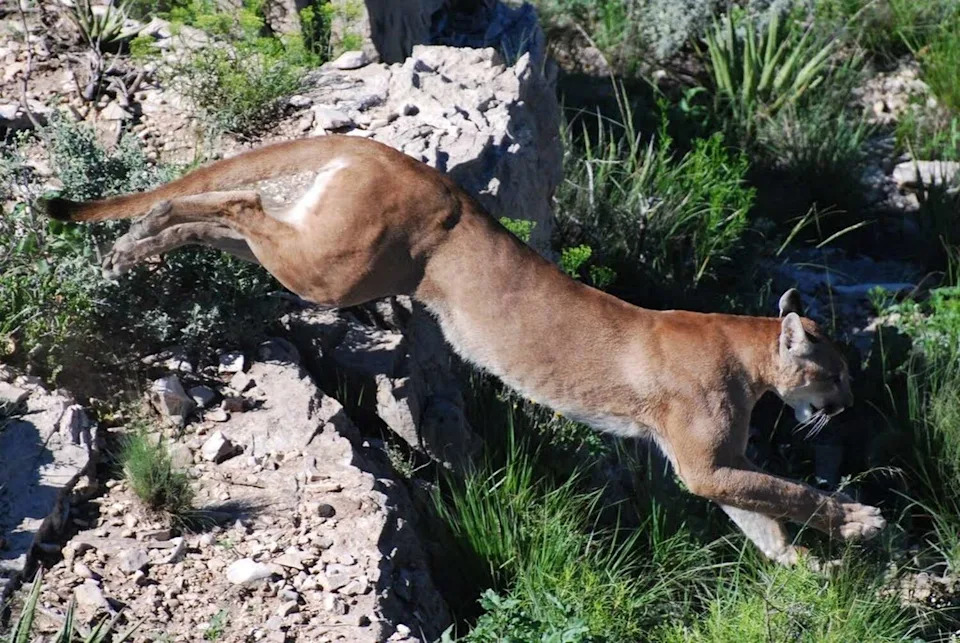
Mountain lions are primarily found in West Texas, South Texas brush country and parts of the Hill Country. (Texas Parks and Wildlife Department)
Texas also stands apart from most Western states because it has historically maintained relatively few regulations on mountain lions. TPWD said the state currently has no harvest limits and maintains “the most flexible mountain lion regulations of any state.”
Agency officials stressed that the proposed reporting system is not intended to end hunting or trapping of mountain lions, but to gather enough biological data to better understand population trends over time.
Officials said harvest data that includes the age and sex of mountain lions could help researchers estimate populations across large areas at a relatively low cost. TPWD noted the agency has previously relied on voluntary reporting, but too few hunters participated for the data to be useful in monitoring efforts.
“Mandatory harvest reporting has proven to be a valuable tool for monitoring mountain lions in other Western states as well as several other species in Texas,” officials said.
Texas pushes for expanded mountain lion research
According to the monitoring plan, TPWD hopes to use harvest data alongside genetic sampling, camera surveys, GPS collar studies and mortality tracking to better understand mountain lion survival rates, reproduction, movement patterns and population connectivity across Texas landscapes.
The plan also highlights concerns about habitat fragmentation, conflicts with livestock producers and the possibility that isolated populations-particularly in South Texas-could face long-term genetic challenges. Researchers noted that mountain lions in Texas can have enormous home ranges, with some animals traveling across multiple counties and even crossing the Texas-Mexico border.
Under the proposed rules, hunters could either collect and submit the biological samples themselves or request that a TPWD biologist collect them. The report would only require the county where the animal was harvested, not a precise location.
Texas recently tightened mountain lion hunting rules
The proposal follows other recent changes to mountain lion regulations in Texas. In 2024, the Texas Parks and Wildlife Commission approved the state’s first ban on canned mountain lion hunts and adopted trap-check requirements that prohibit mountain lions from being held in traps for more than 36 hours. Before those regulations, there was no requirement that traps or snares targeting mountain lions be routinely checked.
TPWD also formed stakeholder advisory groups to help develop the statewide monitoring plan.
The agency is accepting public comment on the proposed mandatory harvest reporting rules through May 27. Comments can be submitted online or by email to Jonah Evans, TPWD’s nongame and rare species program leader.
The Texas Parks and Wildlife Commission is scheduled to hear public comments beginning at 9 a.m. on May 28 at TPWD headquarters in Austin.
More Parks & Wildlife
Adorable | Houston Zoo’s baby monkey reveal is perfect for Astros fans
Politics | Historic Houston-area ranch under threat from new data center project
Unique | A bizarre worm with Texas history is making headlines again
Adventure | Chasing bluebonnets? Texas has a new map for that
For the latest and best from Chron, sign up for our daily newsletter here.
This article originally published at Texas proposes major new rules for mountain lion hunting.