
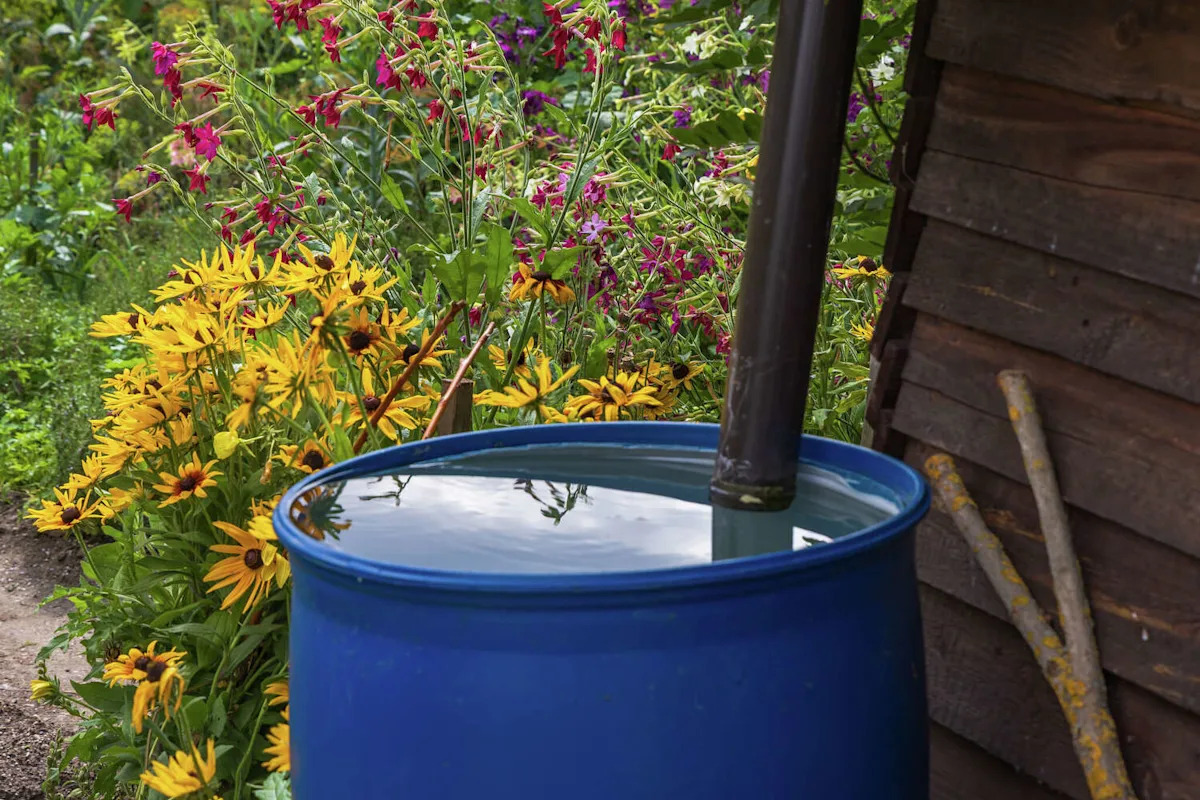
The conversation around water drying up around Texas is top of mind for many living in or moving to the Lone Star State (whether they’ve been here for six months or six generations). There’s lots of forward thinking solutions, like gray water reuse or direct potable reuse, but there’s one solution encouraged both by Texas law and often overlooked by homeowners: rainwater harvesting. So, what are the laws and rules around rainwater collection in Texas?
You might think that collecting rainwater would prevent it from seeping into the ground and, thus, refilling the aquifer. But Texas generally sees long periods of drought followed by pockets of heavy, often flooding, rains. This means a lot of that water may not make it to the aquifers as it passes over soaked earth as runoff.
So, collecting rainwater is a way to have a store of what’s quickly becoming liquid gold in the Lone Star State to avoid wasting drinkable, treated system water – for things like watering or irrigating lawns.
“Rainwater harvesting is one of the world’s oldest water supply methods and it is currently enjoying a revival in popularity,” the Edwards Aquifer website states, noting it’s been a source of collecting water for landscaping for decades. “Collecting rain also reduces flooding and can help utilities reduce peak demands during summer months.”
Is collecting rainwater illegal in Texas?
Not only is rainwater harvesting legal in Texas, it’s encouraged by lawmakers desperate to keep water supplies in lock step with prolonged drought conditions and a booming influx of residents. Texas Tax Code allows for sales tax exemptions on rainwater collection equipment, and homeowners’ associations (hyper localized regulators with often persnickety rules) are legally bared under Texas Property Code from banning rainwater harvesting systems.
In fact, a 2011 bill passed in the Texas legislature demands that rainwater harvesting systems be worked into the design of all new state buildings, according to a report from the Texas Water Development Board.
Texas actually encourages rainwater harvesting – and some cities even pay residents to do it
Rainwater harvesting isn’t just encouraged, or even required at times, at the state level. Major Texas cities will highly incentivize rainwater harvesting at varying scales. San Antonio, for example, offers free trainings and guidance or installing rain gardens or rain collection barrels as easier first steps into harvesting rain as both water conservation and flood management tools.
Many city public water suppliers, like San Antonio Water System, even offer a rebate if you shell out for the big-time water harvesting system, a cistern that stores more than 500 gallons of rainwater. It’s for the more committed who likely have some experience in collecting rainwater, if you’re on the residential side, but SAWS will pay $1 per gallon of storage capacity, with a minimum of 500 gallons and a max one-time rebate of $2,000.
This article originally published at Is it illegal to collect rainwater in Texas? What the law says.