
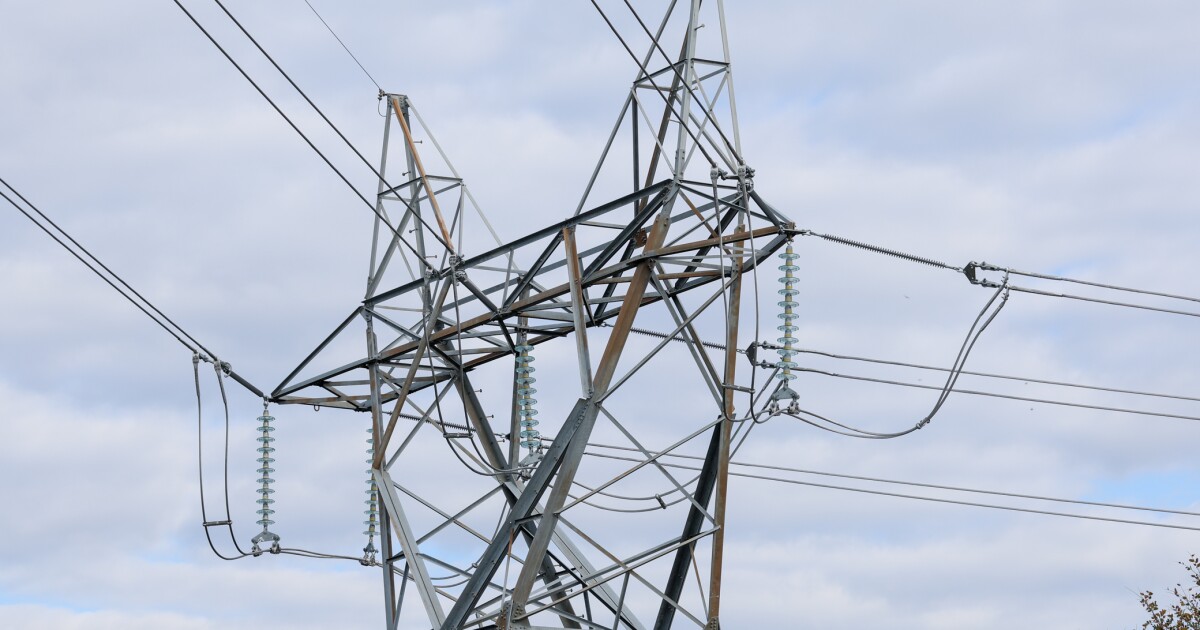
Austin City Council Members are set to decide on whether to pursue a new natural gas power project without a public debate or public vote on Thursday.
Any discussion between City Council and representatives of Austin Energy, the city’s electric utility, will take place during executive session, where the mayor and council go behind closed doors.
Opponents of the plan, including environmentalists and people from neighborhoods where the project be located, are questioning both the need for the new gas generators and the secrecy around the council vote.
“They’re literally asking for a blank check, which rate payers are the ones that will be on the hook for,” said Kaiba White, climate policy specialist for Public Citizens Texas. “It’s everybody who pays an Austin energy bill that will pay this price.”
The location and full cost of the potential new gas “peaker” plant is remains unknown. The gas generators the city utility proposes to buy could be housed in new facility, or installed in existing city power plants.
Austin Energy, the city’s electric utility, says the project is necessary to fight high energy costs and guarantee reliability into the future.
Gas peakers are natural gas power generators that can start up quickly and run when demand for energy is at its peak and energy costs are highest.
Austin Energy says that is exactly what the utility needs to confront booming energy demand, much of it from planned data centers, and overloaded transmission lines.
The congestion on those power lines makes bringing electricity in from other parts of Texas increasingly expensive, sometimes adding up to $150 million in extra cost to Austin Energy consumers in a year.
Citing state laws that allow the utility to keep competitive information secret, Austin Energy has not formally disclosed how much it hopes to pay for the new gas peaker, though estimates suggest the total cost for a new peaker plant could run around $1 billion.
Austin Energy executives and Mayor Kirk Watson say publicly disclosing the amount that the city is willing to pay would put the utility at a disadvantage in negotiating with potential gas turbine manufacturers.
“It’s very much a seller’s market and we’re just trying to work as many angles as we can with these sellers,” Austin Energy CEO Stuart Reilly told the city’s Electric Utility Commission on May 11.
In a work session on Tuesday, Mayor Watson said his plan for Thursday’s discussion and vote was to talk about the purchase of equipment for the peaker plant in executive session, take a vote on it, then “come out and announce the outcome of that vote.”
How Austin Energy makes the case for more gas
Under the utility’s current clean energy plan, Austin Energy aims to cover all of its customers’ electricity use with carbon-free energy by 2035.
Given that goal, White said adding more natural gas units to the utility fleet of generators “does not pass the sniff test.”
Austin Energy says more gas may in fact help.
That’s because Austin Energy buys, sells and generates more electricity than its customers actually consume.
In Austin Energy’s service area, the utility provides power to customers by generating its own electricity, signing long-term “power purchase agreements” with outside energy companies, and buying electricity on the spot market when customer demand outstrips the supply the utility has secured.
All these transactions are overseen by the Electric Reliability Council of Texas, the state’s power grid operator.
Since Austin Energy retired some of its older gas generators years ago, the utility says it has been paying a premium for the electricity it brings into its service area from other parts of the state.
The reason is that there is a limit to the amount of electricity state transmission lines can carry, and they are starting to reach it.
Once electricity traffic jams start forming on transmission lines, that congestion raises the cost of moving power into Austin Energy’s service area. In some years it has added more than $100 to ratepayers’ bills annually.
The utility says that creating more gas generation within its local service area will reduce that transmission congestion and level out those local price spikes.
The plan, according to proponents, will save Austin Energy customers money and could allow the utility to import more wind and solar from far flung parts of the state at a lower cost.
Peakers “don’t displace renewables and they don’t displace batteries,” said Lisa Martin, Austin Energy’s chief operating officer.
Martin said the utility still plans to covers all of its own customers’ energy use with renewables by 2035, even while generating some electricity with natural gas.
In that way, she said, the utility will still meet its climate goals.
“We want to use the peakers as our last resort,” Martin said. “They’re the ones that serve as the essential insurance to solve the problems that the other resources cannot.”
Opponents call the plan costly and polluting
Austin Energy says peaker plants are necessary because locally sourced gas generation will reduce the number of “reliability risk hours.”
Those hours are defined as times when rising power demand and tightening supply increase the risk of local outages.
Opponents suggest Austin Energy is overstating the risk of local power shortages and high prices and overselling the need for gas power to combat that risk.
In the presentation to the city’s Electric Utility Commission on May 11, Martin said the utility currently experiences between 30 and 50 reliability risk hours a year.
But, according to Austin Energy’s forecasting, the number of those risky hours could raise to 575 annually in the absence of new gas generation.
It’s a forecast some find hard to swallow.
“I’m really having trouble with that [estimate],” said Al Braden, the vice chair of the Electric Utility Commission. “That’s like six percent of the time we could be curtailing people [of energy]. That doesn’t happen.”
Martin said she stands by the utility’s forcast for high risk days given growing energy demand.
Braden and others have argued that more large-scale batteries might answer demand during high-risk periods that don’t last longer than several hours.
While not opposing all new gas generation outright, Braden proposed a third-party analysis of Austin’s power needs at the May 11 meeting.
That proposal lost by a vote of 8 to 3.
The shadow of the blackout
Not surprisingly, both sides in the debate have evoked 2021’s Winter Storm Uri to make their case.
During that freezing week, electricity demand outstripped supply across Texas for days. That caused millions to go without power and caused some utilities to declare bankruptcy after they had no choice but to buy expensive electricity.
But, in Austin, the city’s fleet of fossil fuel generators kept chugging along.
That did not stop Austinites from having their power cut.
All utilities on the ERCOT grid were mandated to cut electricity use as grid operators struggled to balance supply and demand statewide.
As opponents to the new gas plan point out: If the state grid fails again, no number of additional local power plants will stop similarly mandated outages.
But, while they did not keep the lights on for all Austinites, Austin’s power plants did create a financial windfall by selling energy to the state grid at a premium.
The city made millions during the crisis while some other utilities went bankrupt.
“Uri is the test case,” said Watson, who supports the plan for new gas peakers. “There’s enormous financial exposure if we don’t add the peakers […] when you have one of those [winter storm] events.”
Regardless of whether the plan is approved Thursday, the debate is likely to continue.
The public discussion over where to build those generators, if approved, is likely to be a long one.
While the utility has offered a list of 14 possible locations for all new energy projects, it is unclear whether new gas peakers would be installed at existing city power plants or occupy their own space in a new location.
Austin Energy said even if new gas generators are approved by council they will not likely be up and running until 2030.