
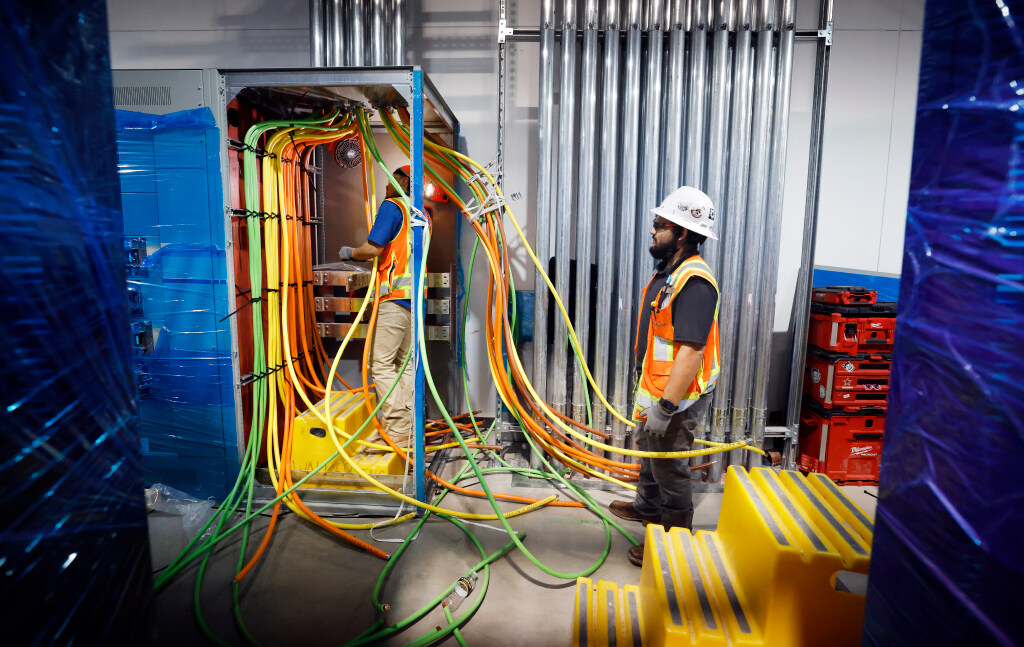
Texas has emerged as the country’s leader for data center readiness, according to a new study, with the Lone Star State set to rake in billions from the industry’s rapid expansion.
Texas is the state most equipped for artificial intelligence infrastructure, according to a new data center readiness index benchmark by AI-services and regulatory firm Labrynth. Oregon, Illinois, Florida and Georgia rounded out the the top five.
Labrynth is an AI-focused firm that develops technology and consulting tools for heavily regulated industries, with the goal of helping companies and governments navigate rules more quickly and efficiently.
The company’s new benchmark examines energy supply, grid reliability, water supply, permitting, workforce and more to determine how states are prepared to support the massive wave of AI data center development.
Texas has emerged as the nation’s fastest-growing data center hub, driven by abundant power, incentives and available land. That growth is helping propel Dallas to the top of the global market: The city was named the world’s No. 1 primary data center market, surpassing established hubs in Atlanta and Virginia, according to a report released Wednesday by commercial real estate firm Cushman & Wakefield.
The corridor between Austin and San Antonio is rapidly emerging as a major cluster, with more than 70 projects planned between Temple and San Antonio and roughly 5,600 megawatts under construction in the Austin and San Antonio metro areas. The region leads rankings for secondary and tertiary markets.
Companies including OpenAI, Tesla, Google, Apple, Meta and Microsoft are projected to spend more than $650 billion on AI infrastructure this year, with total investment expected to top $3 trillion by 2029, according to BloombergNEF.
Texas’ grid manager, the Electric Reliability Council of Texas, estimates the state’s energy needs could climb more than 70% by 2031, largely because of data center growth. The grid operator expects data centers alone to require more than 22,000 megawatts by 2030.
While the boom is bringing construction jobs and economic activity, it is also raising mounting concerns about power use, water supply and the strain on local communities, prompting some governments to explore restrictions or temporary moratoriums as Austin weighs its own approach.
Eaarlier this week, Texas Agriculture Commissioner Sid Miller called for a statewide temporary moratorium on large data center developments until state officials assess the impacts on the state’s electric grid, water supplies, agricultural land and rural communities.