
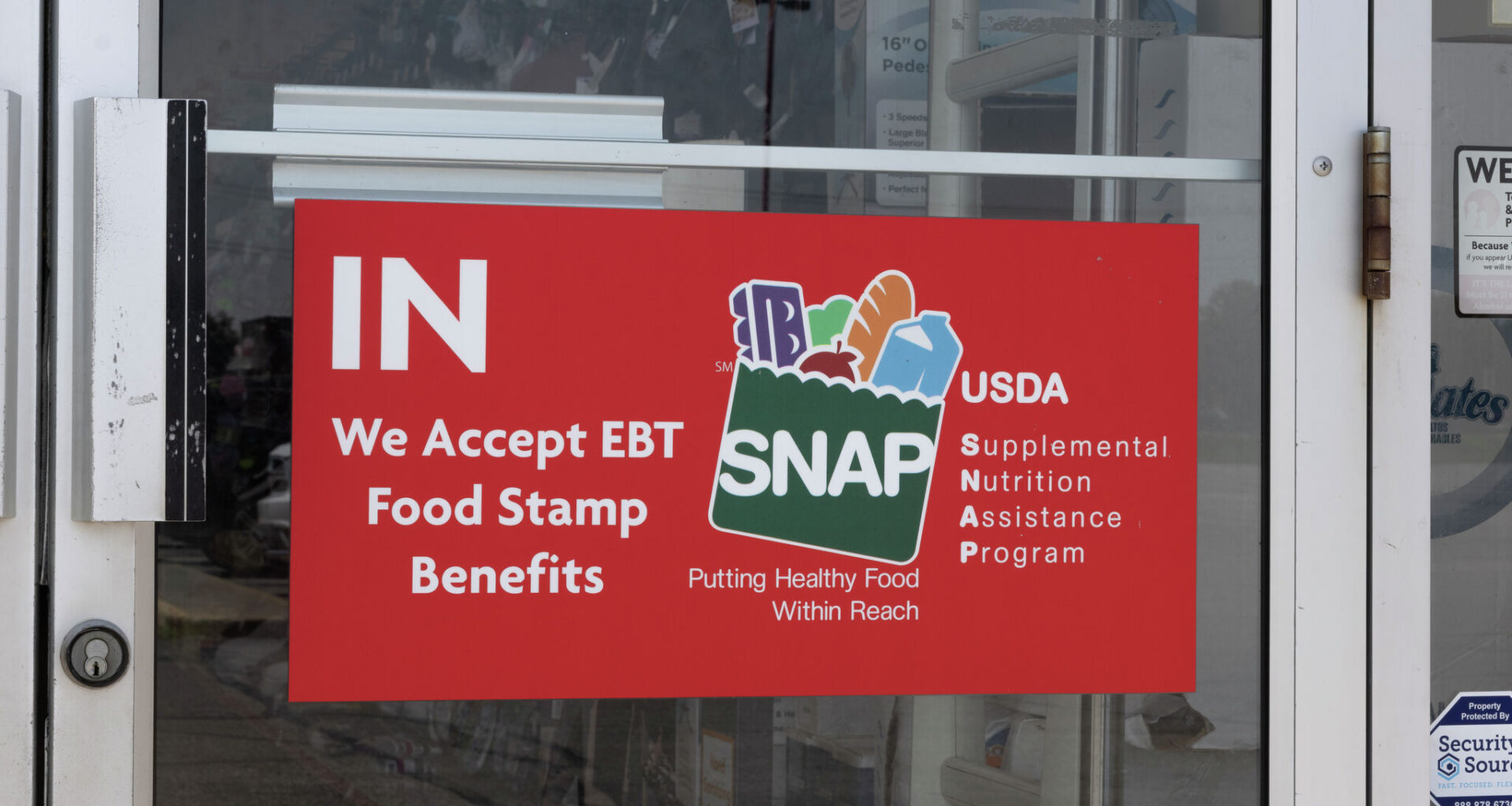
SNAP and Food Stamps provide benefits to help the budgets of disadvantaged families.
jetcityimage/Getty Images
More than 3 million Texans rely on food stamp benefits to help pay for groceries. However, that number could dwindle. Hunger advocates warn that upcoming federal changes could make it harder for some families to access food assistance.

The “One Big Beautiful Bill Act” (OBBBA) introduced the largest overhaul and reduction in the history of the Supplemental Nutrition Assistance Program (SNAP), cutting roughly $187 billion over 10 years. Key changes to the program include new work requirements, stricter time limits and shifts more costs to states. It went into law last summer.
Article continues below this ad
Feeding Texas, the statewide network of food banks, shared its concern about the impacts the SNAP changes will have on food access across Texas during a virtual news briefing on Wednesday, May 20. Feeding Texas noted that food banks alone cannot absorb reductions in SNAP support. Texas food banks currently distribute more than 700 million pounds of food annually through a network of more than 4,000 community partners, yet for every meal provided by food banks, SNAP provides nine.
SNAP changes under the One Big Beautiful Bill Act
Time limits and work requirements are now enforced for adults ages 55 to 64 and parents of children over age 14, according to the U.S. Department of Agriculture (USDA). Since December 2025, Texas parents and household members must now work 30 hours a week or prove they are exempt. Previously exempt groups—such as veterans, individuals experiencing homelessness, and former foster youth—are also subject to these stricter rules.
Article continues below this ad
Able-bodied adults (18-65) without dependents must also now work or attend a work program for at least 80 hours per month to receive benefits, the Texas Tribune reported. Many legal residents and non-citizens who were previously eligible are no longer eligible for SNAP benefits. Adjustments to the USDA’s Thrifty Food Plan are also restricted, limiting future benefit increases during periods of inflation.
Furthermore, a share of both food and administrative costs is being shifted from the federal government to state governments starting on October 1, 2026. Texas will be responsible for 75% of SNAP administrative costs–an estimated additional $117 million annually, according to Feeding Texas.
Beginning October 1, 2027, states with SNAP payment error rates (PER) above 6% will be required to pay between 5% and 15% of SNAP benefit costs. Based on Texas’ current PER of 8.32%, the state could owe approximately $709 million in benefit cost-sharing obligations. In contrast, SNAP fraud in Texas remains extremely rare, with less than 0.1% of SNAP households found to have committed an intentional program violation in fiscal year 2025.
Article continues below this ad
“SNAP is one of the most effective anti-hunger and economic support programs in the country,” Celia Cole, chief executive officer of Feeding Texas, said. “…Texas is working diligently to get the payment error rate below the 6% threshold, but we’re advocating for a realistic timeline to do so without jeopardizing food access to millions of children, seniors and working families or harming the state’s food economy.”
SNAP changes affecting Texas families
Feeding Texas told MySA that food banks across Texas are already seeing more demand as food costs rise, and it expects that need to grow if SNAP benefits are reduced or become harder to access. Feeding Texas added that it’s especially concerned about the impact on children, seniors, and Texans with disabilities who rely on SNAP to help meet basic needs.
Right now, about 1 in 6 Texas households are facing food insecurity, and families with children continue to experience disproportionately higher rates of need, according to Feeding Texas. In many communities, food banks are still serving at levels comparable to those during the height of the pandemic.
Article continues below this ad
“We’re seeing more first-time visitors seeking help, while many existing clients are needing assistance more often because their budgets simply are not stretching far enough,” Feeding Texas said.
State data shows that the number of Texans receiving food assistance dropped 14% in a year, according to the Texas Tribune. There were nearly 500,000 fewer eligible Texans participating in SNAP than in April 2025.
“The best path forward would be for Congress to provide states a two-year delay on the cost-share requirement, a flexibility that has already been granted to Alaska, Florida and others,” Cole said. “Texas has a demonstrated track record of achieving and maintaining lower error rates over time. Technology upgrades, staff training and policy improvements do not happen overnight, but we’re confident Texas can reduce its PER below the federal threshold with a realistic implementation timeline.”