

North Texas parks systems are seeing the fruits of their labor as officials are recognized for investing in green space and partnering with organizations to expand accessibility to the outdoors.
In this year’s ParkScore index, released May 20 by the Trust for Public Land, Fort Worth’s parks system moved up 14 places from 2025, landing at 58th best in the nation this year.
Arlington’s network of parks was ranked 45th best in the 2026 index. Last year, Arlington was ranked at 46th best.
Trust for Public Land is a nonprofit organization that works with local governments to protect publicly owned land and increase community accessibility to parks. Every year, the organization releases an analysis on the best park systems across the 100 most populous cities in the United States.
Between September 2025 and March 2026, the organization collected data to score those cities, private organizations and their parks based on access, investment, acreage, amenities and equity.
Fort Worth rose 14 spots this year thanks to the city’s partnership with Fort Worth ISD and recent investments into new parks.
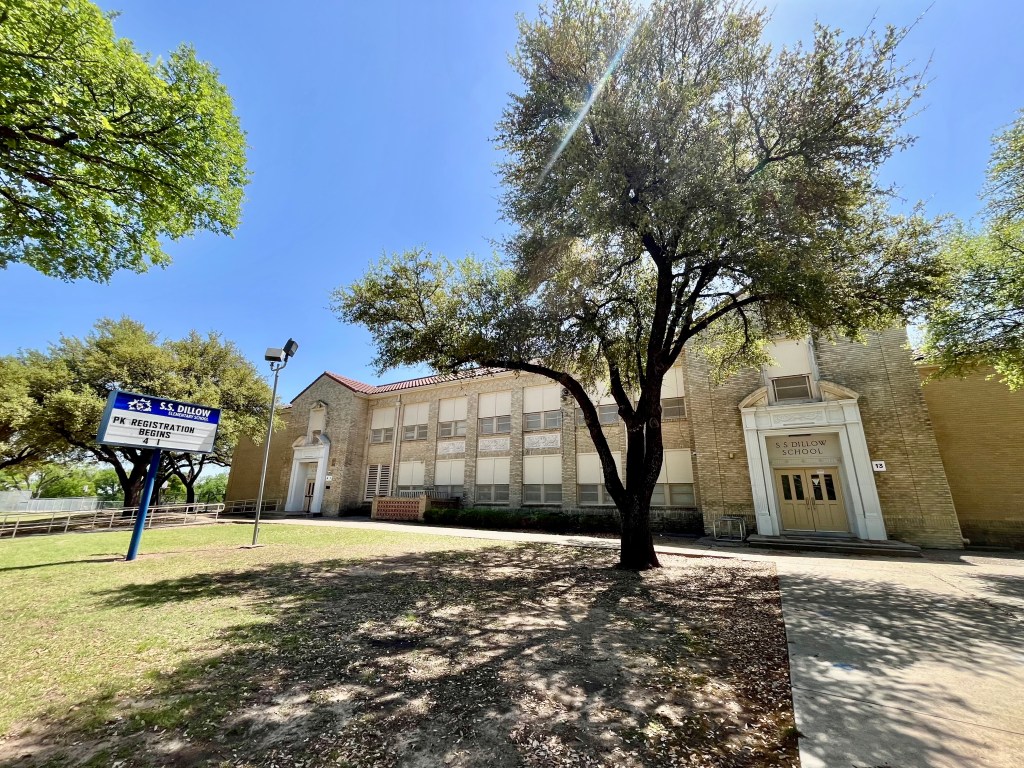 S.S. Dillow Elementary pictured April 10, 2025, is set to become a city park following the school’s demolition. (Matthew Sgroi | Fort Worth Report)
The city partnered with the district last year to open 77 schoolyards to the public after school hours and on weekends.
That allowed for thousands of Fort Worth residents to have access to a public green space within no more than a 10-minute walk, Trust for Public Land Texas state director Molly Morgan said.
Public partnerships are critical when funding for acquisition is hard to come by, Morgan said.
“Land is expensive,” she said. “That’s a great example of how you already have infrastructure there; you don’t have to purchase the land.”
Making parks accessible within no more than a 10-minute stroll addresses what Morgan described as “park deserts.”
About 73% of Fort Worth households now live within that distance to a park, according to the study.
“We’re in a city market, and so sometimes access is a little harder to get in places that are denser,” Morgan said.
About 6.5% of Fort Worth’s land is reserved for parkland, the data shows.
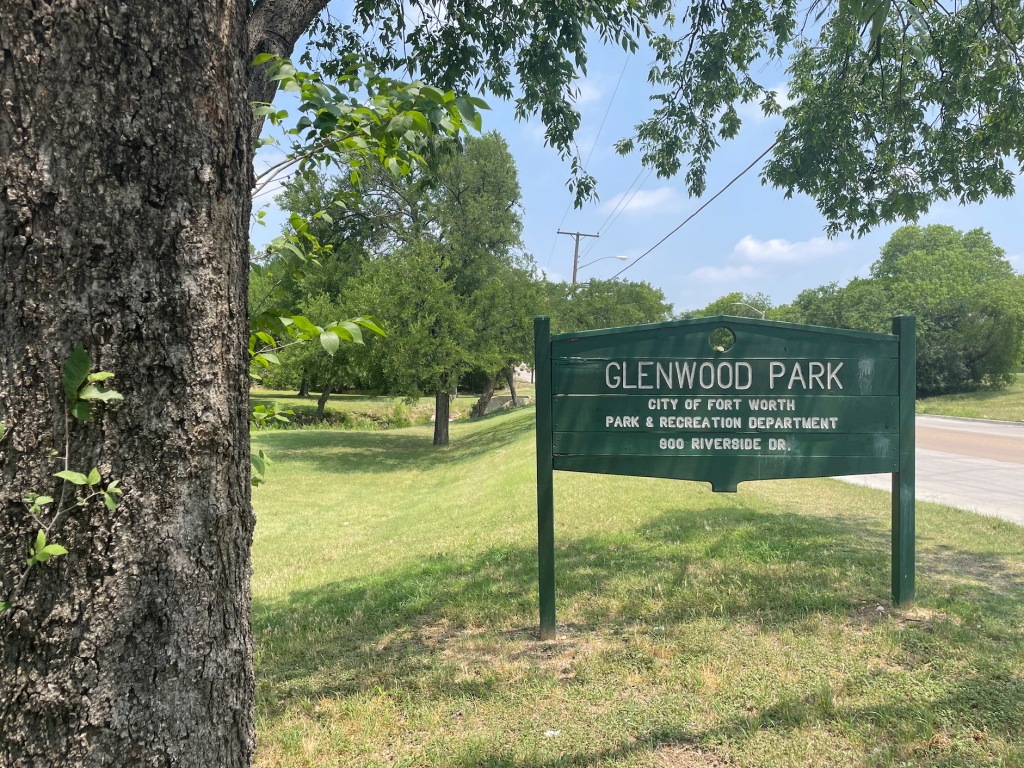 Glenwood Park on South Riverside Drive in the Historic Southside neighborhood of Fort Worth has not seen improvements since 2005, but is now set to receive new playground equipment and a master plan. (Rachel Behrndt | Fort Worth Report)
Increased accessibility offers neighborhood residents important benefits, such as the opportunity to connect with each other, engage with nature and take care of physical and mental health needs by being outdoors.
Both Fort Worth’s and Arlington’s rise in the ranking are largely due to investment in enhancing parks.
Through the Good Natured initiative, Fort Worth has implemented a more equitable parks system, bought more land, created new parks and invested in amenities, Morgan explained.
Mayor Mattie Parker launched the initiative in 2023 in response to rapid development that was eating 50 acres a week of the city’s green space. Under the initiative, Fort Worth has saved 3,400 acres of green space from development, including parkland, trails, open space and other natural areas.
“A lot of work that we’re putting in to engage our partners and look at parks, open space and green space differently is paying off,” Fort Worth park and recreation director Dave Lewis said.
Fort Worth is on its way up after voters approved $185 million in parks bonds in the May 2 election. But the work doesn’t end there for Fort Worth.
Lewis said city officials are committed to improving park access and amenities for neighborhoods lacking green space.
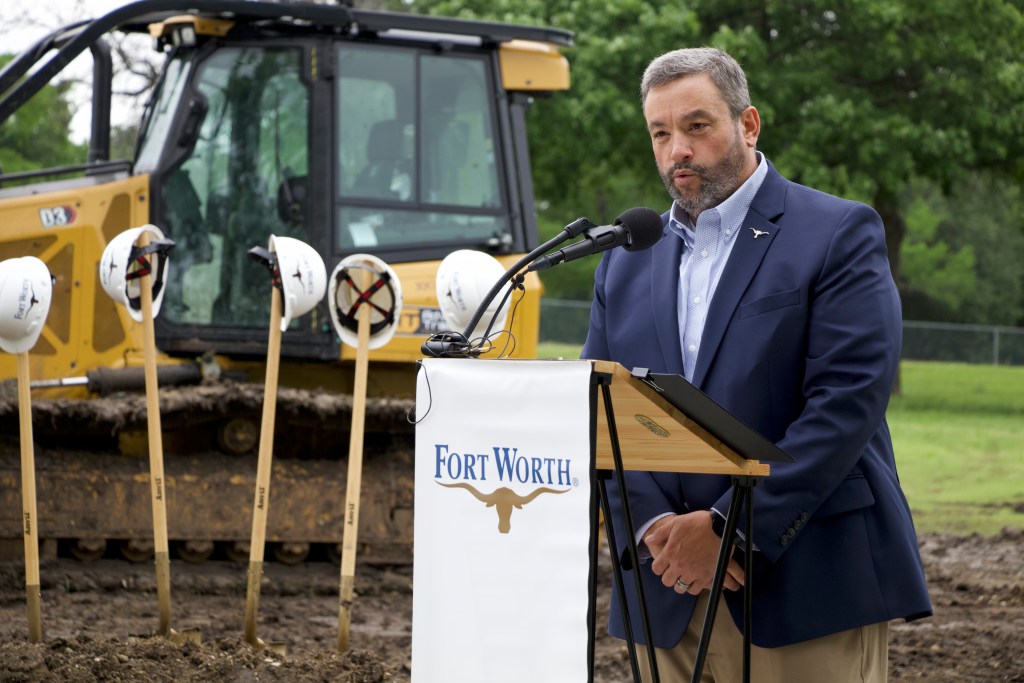 Park and recreation director Dave Lewis joined Fort Worth officials April 23 at North Z Boaz Park to commemorate the groundbreaking of the Bomber Spur Trail. (Nicole Lopez | Fort Worth Report)
“From an equity perspective, we’re on the right path and we need to continue to look at where those gaps are,” Lewis said.
In Arlington’s bond election last year, voters passed a $9 million package for parks and recreation.
The package dedicated $4 million in improvements for the Dottie Lynn Recreation Center. The River Legacy Nature Center was allocated $2.8 million.
Another $2 million will go toward building more playgrounds, installing exercise equipment and building pavilions at athletic fields across multiple Arlington parks.
Arlington is committed to continuously “think about expanding access and committing investment in Arlington,” Morgan said. “We saw them rise last year, and then they’ve held onto that improvement.”
The rebranding of Arlington’s parks department has allowed city officials to get more creative, said Arlington parks, recreation and culture director Gary Packan.
The department name and scope of operations was recently changed to add the idea of “culture.”
Since then, parks staff have brainstormed projects to build on the city’s dedication to preserving and enhancing green space, sometimes with works of art, Packan said.
Arlington has several projects in the works, he said, such as public sculptures and murals.
“That shows our community’s continued focus on not just brick-and-mortar programming but also enhancing culture across the organization, across the community,” Packan said.
The city is also excited about bringing more recreational opportunities. Packan named the ACTIV recreation center as an example.
Serving Arlington residents 50 years and older, the facility opened in the spring to offer a full-court gymnasium, a fitness area, an outdoor patio and a community garden.
“We’re very excited about the success of the ACTIV center … as well as exceeding expectations in just how many people are getting outdoors and active in our park spaces,” Packan said.
He not only applauds Arlington’s year-over-year improvement but looks back on how much the city’s parks have grown over the past three years. In 2023, Arlington’s parks system was ranked 74th best in the country.
About 71% of Arlington residents live within a 10-minute walk from a park and about 9.3% of the city’s land is reserved for those green spaces, according to the 2026 score report.
Like Fort Worth, Arlington wants to focus on bringing more amenities, such as trails and playgrounds, to encourage outdoor recreation and make communities feel more connected, Packan said.
Nicole Lopez is the environment reporter for the Fort Worth Report. Contact her at nicole.lopez@fortworthreport.org.
At the Fort Worth Report, news decisions are made independently of our board members and financial supporters. Read more about our editorial independence policy here.
This <a target=”_blank” href=”https://fortworthreport.org/2026/05/22/how-do-fort-worth-arlington-parks-rank-nationally-theyre-on-the-right-path/”>article</a> first appeared on <a target=”_blank” href=”https://fortworthreport.org”>Fort Worth Report</a> and is republished here under a <a target=”_blank” href=”https://creativecommons.org/licenses/by-nd/4.0/”>Creative Commons Attribution-NoDerivatives 4.0 International License</a>.<img src=”https://i0.wp.com/fortworthreport.org/wp-content/uploads/2021/04/cropped-favicon.png?resize=150%2C150&ssl=1″ style=”width:1em;height:1em;margin-left:10px;”>
<img id=”republication-tracker-tool-source” src=”https://fortworthreport.org/?republication-pixel=true&post=566768&ga4=2820184429″ style=”width:1px;height:1px;”><script> PARSELY = { autotrack: false, onload: function() { PARSELY.beacon.trackPageView({ url: “https://fortworthreport.org/2026/05/22/how-do-fort-worth-arlington-parks-rank-nationally-theyre-on-the-right-path/”, urlref: window.location.href }); } } </script> <script id=”parsely-cfg” src=”//cdn.parsely.com/keys/fortworthreport.org/p.js”></script>