
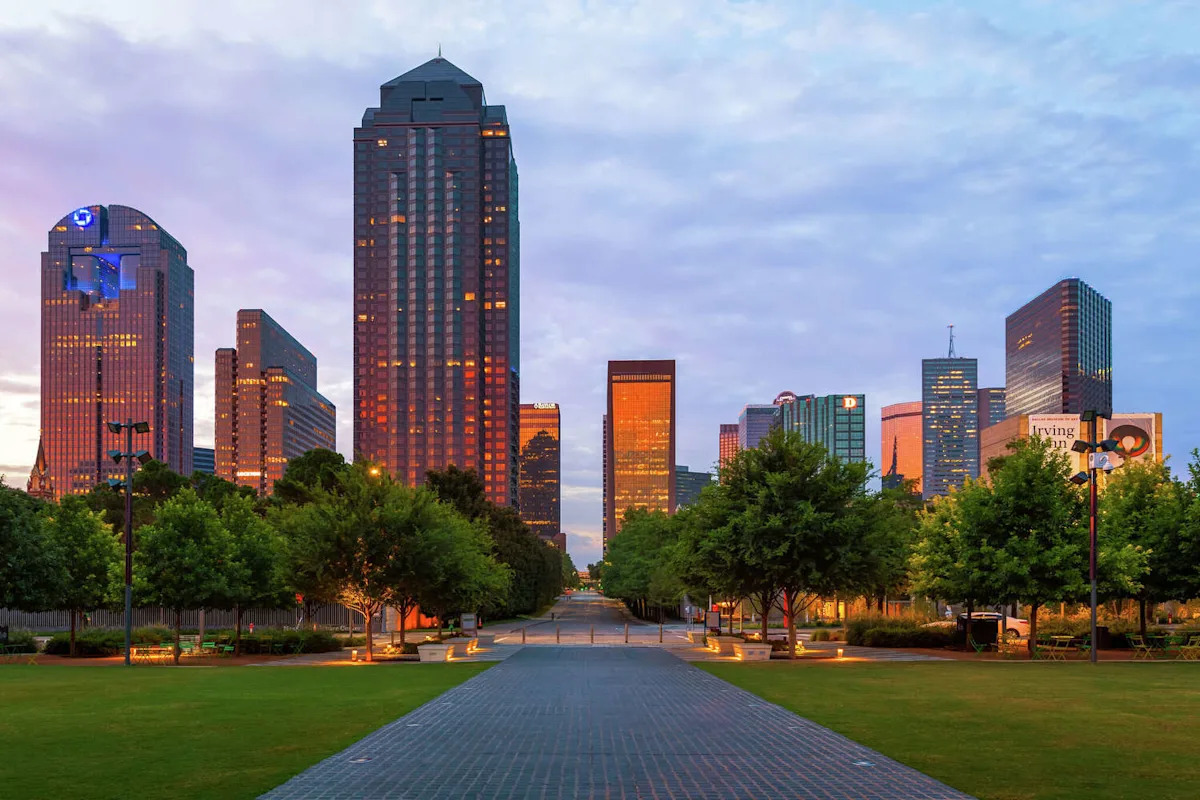
It seems Texas’ status as the home of wide open spaces is in jeopardy. A recent study ranking Americans’ access to parks and green spaces in the U.S.’s 100 most-populated cities notably left all Texas cities out of the top 10.
Of Texas’ largest cities, Plano apparently boasts the best park access, coming in at No. 13. The state’s largest cities-Houston, Dallas San Antonio and Austin-came in at Nos. 69, 38, 61 and 47, respectively.
The Trust for Public Land determined each city’s ParkScore by studying acreage, access, investment in open spaces, amenities and space equity, which takes a look at the ratio of public park space between low- and high-income neighborhoods and “neighborhoods of color and white neighborhoods,” according to the survey’s methodology. And in case you’re ready to argue that Texas has open spaces that aren’t necessarily considered “parks,” the study accounted for that, too. The survey included parks, open-access schoolyards, trails and other natural areas that encourage public use. That includes community gardens and greenways but does not include publicly managed stadiums and zoos or parks in gated communities, among others.
Many of Texas’ cities kept up with others’ acreage, investment and amenities. And Frisco, which ranked No. 30, stood out for its parks investment, winning the city 98 of 100 available points. While staggering, Frisco’s ranking isn’t exactly surprising. Last month, the city started construction on a park that will be larger than New York’s Central Park.
RELATED: Big Bend border fight escalates as former park leaders speak out
“It is a destination for fitness, wellness, respite, and activity that celebrates the diversity of Frisco’s culture and activates the curiosity and creativity of all who visit,” the city wrote in a 2024 Grand Park vision statement.
Where Texas cities rank
13. Plano (71.1)
30. Frisco (62.4)
38. Dallas (59.5)
45. Arlington (56.3)
47. Austin (54.0)
58. Fort Worth (51.2)
61. San Antonio (t) (50.0)
61. El Paso (50.0)
64. Garland (49.8)
69. Houston (47.0)
71. Irving (45.5)
72. Corpus Christi (45.3)
77. Laredo (43.9)
96. Lubbock (36.0)
However Texas seems to have some access issues. In Dallas, residents in low-income neighborhoods have access to 24% less park space per person in the average Dallas neighborhood; and in Houston, low-income residents have access to 35% less park space per person than the average Houston neighborhood resident. The racial split also is significantly more pronounced in Houston, where those in neighborhoods of color have access to 21% less park space per person than those in white neighborhoods.
Texas cities lag top 10 in park access
It’s worth noting, however, the significant difference in population density in the top 10 compared to the Texas cities on the list. Chicago is the largest city by population in the top 10 and received only 28 points for its park acreage. However, 98% of the city’s residents live within a 10-minute walk of a park, compared to 81% in Dallas and 65% in Houston.
RELATED: Houston-area golf course overrun by hundreds of invasive ducks
Is Houston’s sheer size at 2.5 times the size of Chicago (and presumably the larger yards that follow) part of the struggle? Heck, if Houston can fit Chicago, Boston, Dallas, New York and Seattle within the city limits all at once, it’s at least worth acknowledging.
Even still, ParkServe’s mapping tool shows which parts of ranked cities should be a high priority for new parks. And it should be unsurprising that the areas highlighted in Houston, Dallas, San Antonio and other Texas cities are where increased migration in has caused sprawl and parkland has failed to keep pace.
And the Trust for Public Land would call that a mistake. According to the organization’s research, every $1 invested in parks and recreation returns an average of $3 in local economic benefits each year as result of lowered stormwater treatment and healthcare costs, among others.
“In short, if your city isn’t investing in spaces that bring the community together, it’s failing to maximize some of its strongest and most cost-effective assets,” the organization wrote in its report.
More Parks & Wildlife
Adorable | Houston Zoo’s baby monkey reveal is perfect for Astros fans
Politics | Historic Houston-area ranch under threat from new data center project
Unique | A bizarre worm with Texas history is making headlines again
Adventure | Chasing bluebonnets? Texas has a new map for that
For the latest and best from Chron, sign up for our daily newsletter here.
This article originally published at New ranking reveals Texas’ uneven access to parks.