
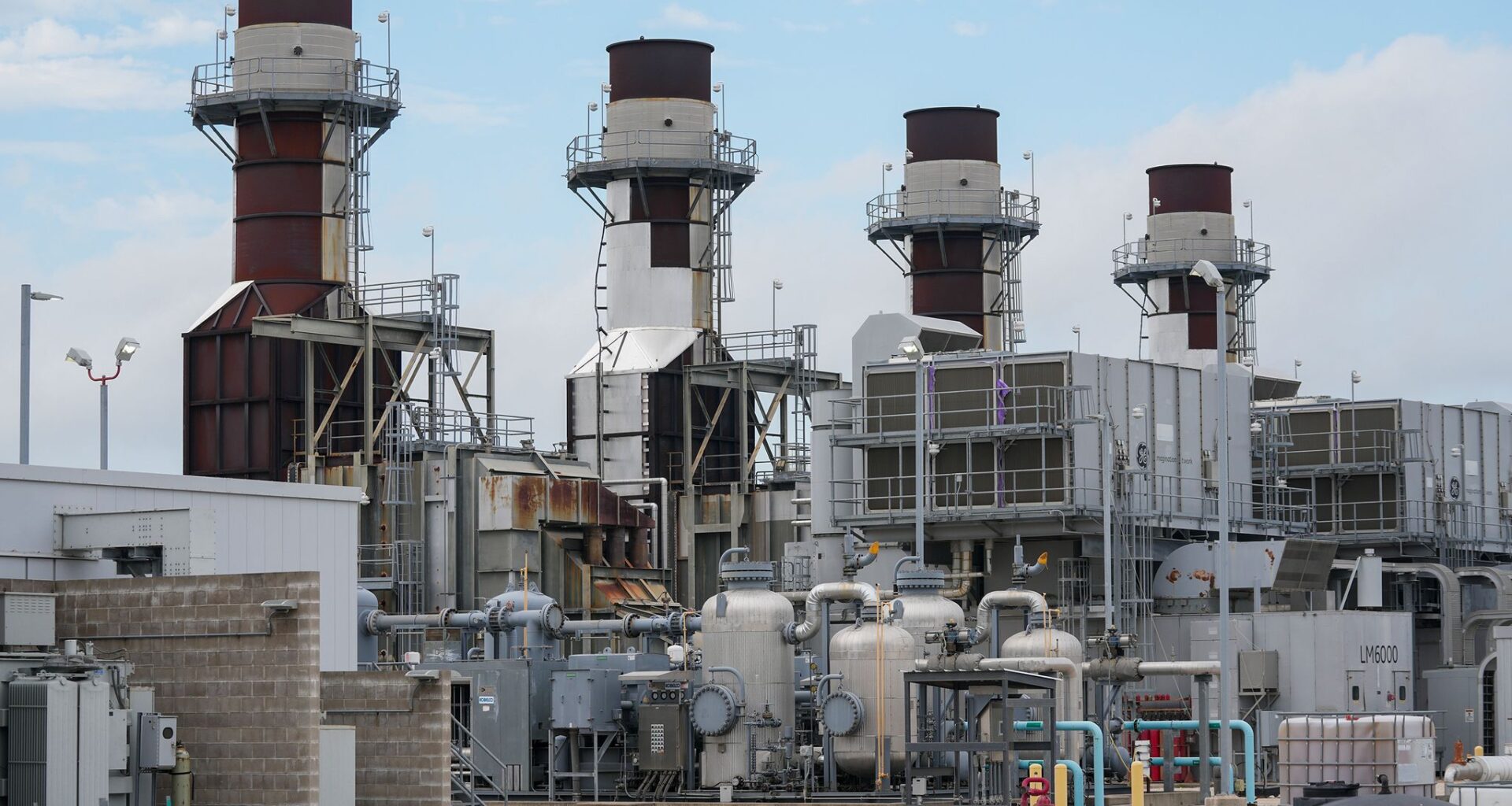
A GE LM6000 peaker unit is seen at the Austin Energy Sand Hill Energy Center in Austin, Tuesday, May 19, 2026.
Jay Janner/Austin American-StatesmanAustin City Council approved a plan for new natural gas plants and authorized wind and battery projects to address rising energy demand and reliability concerns.The natural gas plants are estimated to cost about $1 billion and will provide 400 megawatts of power, while wind and battery projects could add 399 megawatts.The council did not disclose the vote breakdown or contract details, drawing criticism over transparency and concerns about the city’s climate goals.
Austin City Council has approved a controversial plan to build new natural gas plants that Austin Energy officials say are needed to protect residents and the city-owned utility from power shortages and extreme price spikes during severe weather and other grid emergencies.

The late Thursday vote came after council members, acting as the board of Austin Energy, discussed the proposal privately in executive session. The council later announced that the item had passed, though the breakdown of the vote was not disclosed.
Article continues below this ad
A GE LM6000 peaker unit is seen at the Austin Energy Sand Hill Energy Center in Austin, Tuesday, May 19, 2026.
Jay Janner/Austin American-Statesman
The council also authorized Austin Energy to move forward with wind and battery projects, part of a broader effort to add more power generation as the utility faces rising demand, severe weather risks and mounting financial pressure.
Though the exact price tag is not public due to the competitive nature of the agreement, Austin Energy estimates that the natural gas plants could cost about $1 billion.
The controversial proposal came as Austin Energy faces a critical energy crunch marked by soaring demand and cost. Utility officials say the plants are necessary to protect Austin residents and the utility itself from increasing costs. Critics say the decision threatens Austin’s climate goals, commits the city to more fossil fuel use and raises major transparency concerns because basic details — including vendor names, pricing and contract amounts — have not been publicly released.
Article continues below this ad
Kaiba White, a climate and energy policy specialist for the nonprofit Public Citizen who also serves on the Austin Electric Utility Commission, called on every council member to publicly state how they voted.
“It is a shameful day for the city government, as it puts the zero-carbon by 2035 goal out of reach and the health of entire communities at risk,” she wrote in a Friday press release.
Before the vote, White said the city was moving too quickly on an opaque project while failing to fully consider alternatives that could preserve Austin Energy’s climate goals, including more solar and battery storage. She has warned that the new plants could lock the city into fossil fuel use for decades.
Article continues below this ad
Read More: Cheaper power bills or climate goals? New gas plants in Austin force controversial choice
City officials and Austin Energy have pointed to state law, which allows public power utilities to discuss competitive power issues behind closed doors so that they are not outcompeted by private power utilities, which serve most of Texas. Those closed-door discussions can include vendor names, pricing and contract amounts.
Austin Energy officials have said the gas units would replace aging plants dating back to the 1970s, allowing for cleaner and more efficient power generation during emergencies. They also argued that keeping some local generation is essential because Austin has become more dependent on electricity imported from elsewhere in Texas when demand spikes.
“We wouldn’t be bringing this forth if we didn’t think this was a crucial tool to protect the community and to protect Austin Energy,” Austin Energy Deputy General Manager Lisa Martin told council at a Tuesday work session.
Article continues below this ad
Peaker units are seen at the Austin Energy Sand Hill Energy Center in Austin, Tuesday, May 19, 2026.
Jay Janner/Austin American-Statesman
Recent analysis from the utility found that without an increased supply of locally generated energy, power costs could rise to 100 times their normal levels in the hot summer months. Those costs would be directly passed on to customers, with a normal $40 charge ballooning to roughly $5,000.
Austin Energy officials have also warned that another extreme weather event like 2021’s Winter Storm Uri could expose the utility to more than $1 billion in higher energy costs within a matter of days if it lacks enough locally generated power.
Mayor Kirk Watson and Council Member Marc Duchen have also raised a broader concern: that a financially weakened Austin Energy could become a target for state intervention. Watson, a former state senator, has said Austin has fought past efforts to weaken or privatize the utility and should avoid putting the city at a competitive disadvantage.
Article continues below this ad
Council members heard more than an hour of public comment on the deal Thursday. Supporters stressed the need for reliable energy, while opponents warned the proposal could weaken the city’s climate goals, criticized a lack of transparency, and raised concerns that plants could be sited in historically marginalized communities.
Nancy Crowther said Winter Storm Uri had serious impacts on the elderly and disabled population, warning that reliability should be council’s main concern.
“If we do not have that reliability, there are lives at stake, and we need to remember that,” she said.
Critics emphasized climate change and the potential health impacts of adding natural gas plants.
Article continues below this ad
“If the city and Austin Energy truly seek to safely deliver clean, affordable, reliable energy, investing further in harmful, dangerous fossil fuel generation compromises that mission, the resource plan, our city’s climate equity plan, and ultimately, the responsibility to the public you all serve,” Marian Sanchez, an advocate with the East Austin grassroots organization People Organized in Defense of Earth and Her Resources, said.
The gas plants are known as “peakers” because they are used during periods of high demand. The council’s authorization covers 400 megawatts from the gas plants and allows Austin Energy to negotiate for 399 megawatts from battery and wind resources.
The breakdown of the council vote was not revealed because the item was discussed in private.
Article continues below this ad
Now that council has approved the gas plants, along with the wind and battery projects, Austin Energy will begin the contracting process for all three. Austin Energy spokesperson Matt Mitchell said the utility will continue engaging with the community as the projects move forward.