
State Board of Education member Pam Little holds up printed education materials during the discussion of state developed curriculum during a State Board of Education Meeting, Sept. 10, 2024 at the William B. Travis State Office Building in Austin, Texas.
Sara Diggins/American-Statesman
A Republican Texas State Board of Education member raised concerns over how much power the Texas education commissioner and Legislature have in creating the state’s first required book reading list, according to an email posted online Friday.

In the email published on social media by the nonprofit Texas Freedom to Read Project, SBOE Member Pam Little wrote to a constituent, voicing frustration over the diminished role the board has in writing the list of books that all public school students will soon be mandated to read.
Article continues below this ad
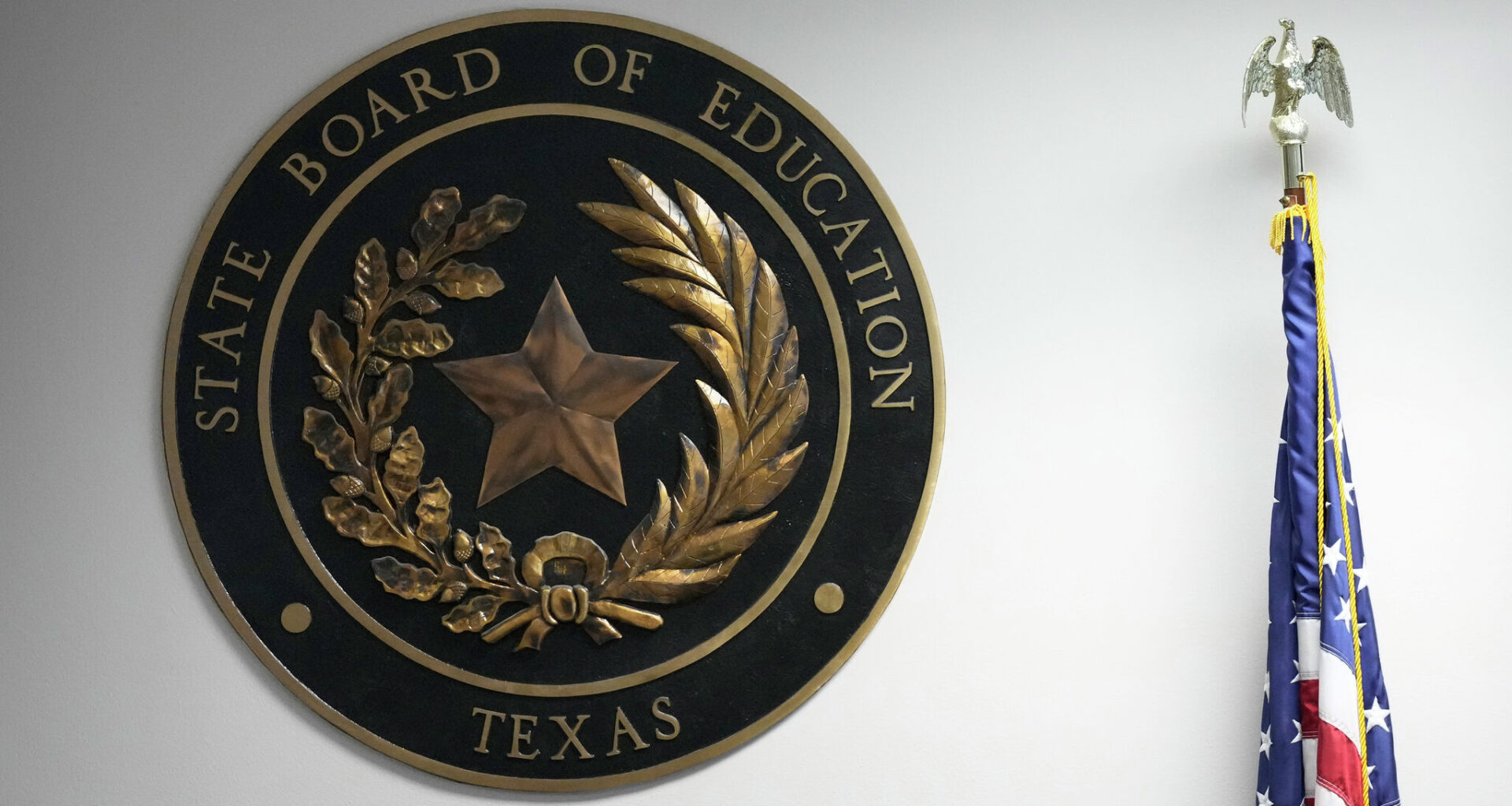
The seal of the State Board of Education during the discussion the controversial Bluebonnet teaching materials at a meeting of the State Board of Education at the William B. Travis Building Friday November 22, 2024. The Bluebonnet materials, which use Bible stories, are K-5 math and reading instructional materials that the 2023 House Bill 1605 mandated the Texas Education Agency created with the intention of creating high quality instructional resources for teachers.
Jay Janner/American-Statesman
“Even though the SBOE is tasked with this list in reality it is the Commissioner who controls it,” Little wrote.
The 15-member partisan SBOE is comprised of elected representatives who oversee what students learn in school, approve new charter schools and establish graduation requirements. The Legislature approved the creation of a public school reading list in 2023 and tasked the SBOE with making it.
Because the SBOE has no staff of its own, the board relied on Texas Education Agency staff to draft the initial required book list; it was really a draft made by the education commissioner, she wrote. A spokesperson for the TEA declined to comment.
Article continues below this ad
“Then the commissioner goes to the (Legislature) and tells them to send us a letter that this is what they intended… and encourage us to pass it,” Little, R-Fairview wrote. “Then there are threats that if we don’t do as the (Legislature) has instructed the (Legislature) will disband the SBOE.”
In an interview, Little said she doesn’t believe there is a real threat that the Texas Legislature would dismantle the SBOE. However, she said she felt like the SBOE should have a greater hand in its duties that are mandated by the Legislature, such as creating the reading list.
“If we’re just going to have to do what we’re told then why do you have us?” Little said.
Article continues below this ad
Debate highlights board’s role in education policy
Little said her comments in the email were made in response to a remark from Member Tom Maynard, R-Florence, during a January meeting in which members discussed the proposed list. He represents a swath of Central Texas, including Williamson County.
During a discussion about how many books to add each year, Maynard told his colleagues that they should remember to keep legislative intent at the forefront.
“When we do rulemaking in this body, I remind people all the time that we’re not the Legislature,” he said in January. “We’re part of the executive branch.”
Article continues below this ad
Other than duties outlined in the Texas Constitution — which include overseeing the state’s Permanent School Fund, which is an endowment for public schools — the SBOE’s duties are at the discretion of the Legislature, he said Friday in an interview. The Legislature has retracted power from the SBOE in the past when lawmakers have been frustrated with the board, but Maynard said he doesn’t see a threat of that now.
Little was not aware the Texas Freedom to Read Project planned to publish her email response. The nonprofit felt Little’s remarks were important to share since board members are elected officials, said Anne Russey, a co-founder of the group, which advocates for access to books and information.
“The State Board of (Education members) are local people elected from our local communities throughout the state of Texas who are chosen by Texans to represent our local interests regarding public education,” Russey said.
Her group has been advocating against the current iteration of the book list over concerns that it is too long and doesn’t contain enough authors of color. When the reading list was first brought before members in January, several members — including Little — raised concerns about its length and the number of materials that educators could reasonably teach in a year.
Article continues below this ad
The board gave initial approval in April to a much shorter version of the list and will take a second vote on it next month. The version that members approved in April contains up to 15 books per grade level.
The list has also drawn criticism from some teachers and advocates for the inclusion of Judeo-Christian texts, which Republicans say help children understand texts that were foundational to the country.