
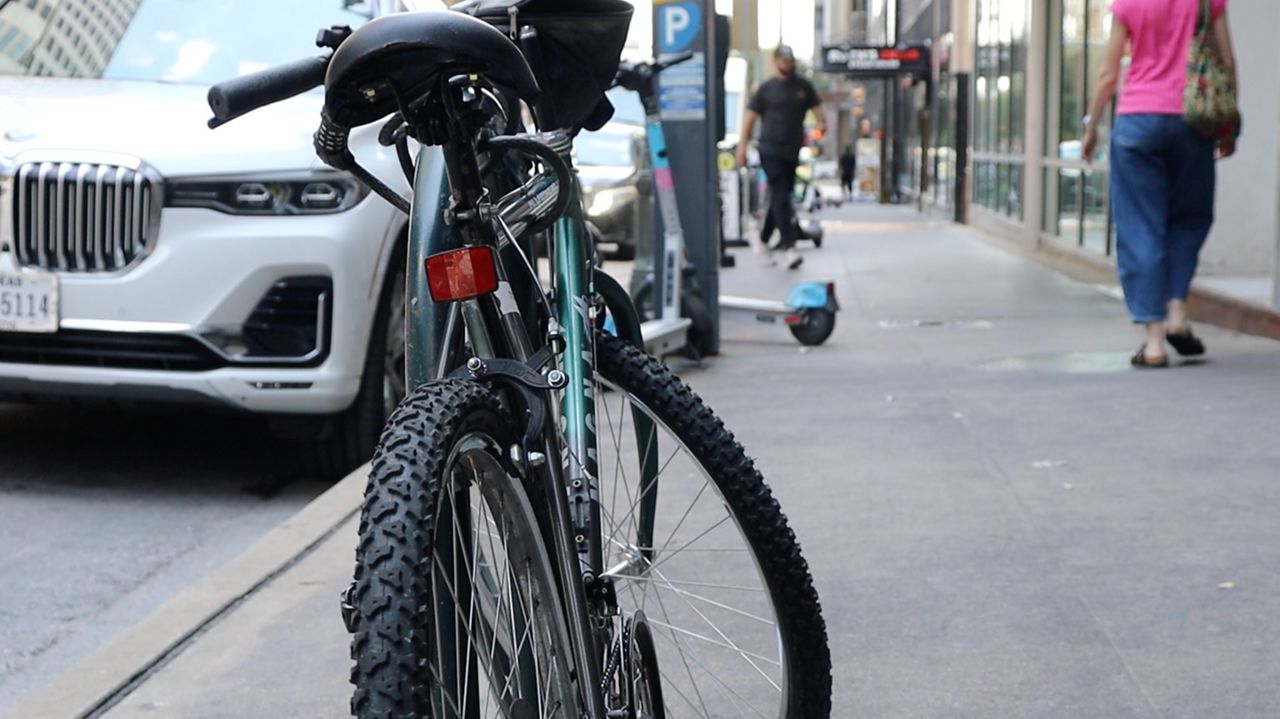
AUSTIN, Texas — For Miriam Schoenfield, navigating the heart of Austin isn’t your typical stroll in the park.
“Congress [Avenue] is just a complicated street,” she said. “There’s lots of people using it: there’s pedestrians, there are cyclists, and there’s also a lot of places where people are trying to do drop-offs and pickups.”
Throw autonomous vehicles (AVs) into the mix, and that’s where she says things can get messy. That’s why she’s a part of the Texas Streets Coalition.
“Texas Streets Coalition is a coalition of transportation advocates throughout the state of Texas that advocates for safe, healthy and just transportation systems,” Schoenfield said.
“I’ve ridden in Waymos a bunch of times,” she said. “We just need to be thinking a little bit differently about how enforcement and regulation works because the systems we have in place were designed around human drivers and not automatic vehicles.”
One observation she has noticed with both AVs and human drivers is a lack of concern for cyclist safety.
According to the Texas Department of Transportation (TxDOT), cyclists account for one in 50 collision deaths in the state. Data from city crash dashboards show that the City of Corpus Christi saw 54 cyclist-involved crashes last year. Dallas experienced 17, and Austin had 11.
One of the major violations that could contribute to the crashes, she says, is vehicles not staying in their lanes.
“[It’s] not [an] uncommon way for a cyclist to get hit is that basically the roads that they’re using is being blocked, and they’re forced to kind of suddenly swerve into traffic,” Schoenfield said.
As for accountability, that depends if a human is behind the steering wheel or not.
“What’s so interesting is AVs aren’t necessarily worse than human drivers with respect to these kinds of behaviors; it’s just that we know how to enforce and regulate human drivers,” Schoenfield said. “If there was a police officer here, they could just give that person a ticket. With an AV, it’s not so simple.”
Restrictions on data sharing and traffic law enforcement are among Schoenfield’s top concerns, and she says that begins when AV companies are part of important conversations on safety.
“The city had a public hearing the other day, specifically on this issue,” she said, referring to an April 29 joint Public Safety Committee and Mobility Committee meeting in the City of Austin.
Waymo declined to send a representative to the meeting.
Spectrum News reached out to Waymo for comment on why no representative attended the meeting.
In a statement, the company said, “Safety is fundamental to everything we do and that means taking responsibility and always improving based on what we learn.
“We’ve already had the substantive conversations this moment calls for, directly with all five requesting Council offices – including Council Member Qadri – more than 15 city officials, and the highest levels of state government. In these briefings, we answered all questions related to the event and emergency response protocols, and provided a detailed and confidential overview of the event, including lessons learned and planned future operational improvements to Waymo’s emergency response procedures and capabilities.
“We will keep working with Austin’s leadership and first responder community, because ongoing collaboration is how we build the trust this city deserves and make Austin’s streets safer.”
The City of Austin confirmed it has been in communication with the company. Brad Cesak, from Austin Transportation and Public Works, said in a statement, “Although cities in Texas cannot regulate Autonomous Vehicles, Austin continues to collaborate with AV companies by using staff knowledge of the local transportation network to help AVs operate more safely and to share the expectations that AVs follow the same rules of the road as any other driver in a car would be expected to do.”
He continued, “Additionally, all Autonomous Vehicle safety-related 311 reports are passed along to AV companies as well as documented on the City’s AV incident dashboard. Tracking these incidents can help companies identify areas for improvement.”
Walking the streets of the capital city, Schoenfield calls on state officials to ensure everyone on the roads is safe, not just those inside a car or truck.
“That really makes it clear that there needs to be legislation from the state to make sure these things are being regulated,” said Schoenfield.