
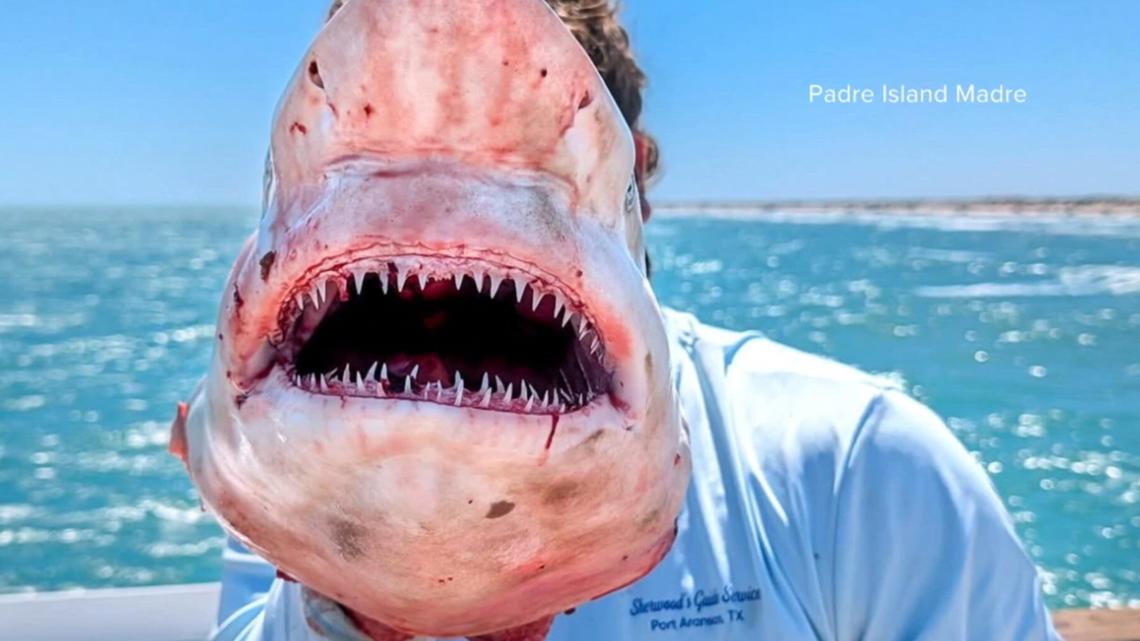
After a teen survived a shark attack near Galveston, Coastal Bend experts and lifeguards are urging beachgoers, anglers and boaters to stay alert this summer.
CORPUS CHRISTI, Texas — After a recent shark attack off the coast of Galveston left a teenager injured, local lifeguards and shark experts in the Coastal Bend are reminding beachgoers and fishermen to stay alert as summer activity ramps up along the Texas coast.
The teen survived the attack after his father quickly applied a tourniquet before a rescue by the U.S. Coast Guard.
RELATED: Teen airlifted to Galveston trauma center after severe shark bite offshore
While the incident did not happen near a beach, officials say the attack serves as a reminder that sharks are active in Gulf waters, especially during the busy summer season.
“Black tip sharks. You’ll see sandbar sharks, bull sharks. We have a lot of hammerheads,” said Texas State Aquarium President and CEO Jesse Gilbert. “I think some of the bigger hammerheads that are caught in the Gulf are here in the Coastal Bend.”
City of Corpus Christi Beach Rescue officials said lifeguards are preparing for increased crowds as the summer season begins.
“We are fully staffed and ready to hit the beach and do all things beach safety,” Beach Safety Outreach Coordinator Lacy Quinones said.
Quinones said lifeguards monitor the water on Jet Skis and ask beachgoers to follow key steps if a shark is spotted.
“Immediately tell a lifeguard in that area,” Quinones said. “Our procedures require that one of our lifeguards, one of the fire department, Texas Wildlife is able to confirm an actual shark sighting.”
Once confirmed, lifeguards will clear swimmers from the water using whistles, announcements and hand signals.
“That will start a two-hour monitoring procedure,” Quinones said. “That two-hour clock will reset any time that that shark is again spotted.”
City lifeguards said they monitor waters up to 500 meters offshore. Beyond that distance, shark experts say deep-sea fishermen and boaters should use extra caution when handling large catches.
“When the animal’s out of water, it can’t breathe,” Gilbert said. “So typically for those types of large sharks to breathe, they’re taking water in through their mouth and pushing it over the gills.”
Gilbert said sharks caught by anglers are often acting out of stress rather than aggression.
“They’re not meaning to go after anything in particular,” he said. “They’re just snapping their jaws.”
Gilbert encouraged shark anglers and beachgoers to practice safety first.
“That you have the right tools to de-hook the animal. Some people take the barbs off so that it’s easy to come out and you release the animal back.” Gilbert said. “You commonly see people taking photos, and we understand why. It’s really a unique opportunity here in the Coastal Bend and it’s a great part of living here, but you have to be mindful that those animals are still alive.”
Corpus Christi Beach Rescue officials said they will transition to their summer schedule beginning May 30, with lifeguard towers staffed daily at McGee Beach, North Beach and Gulf Beach.