
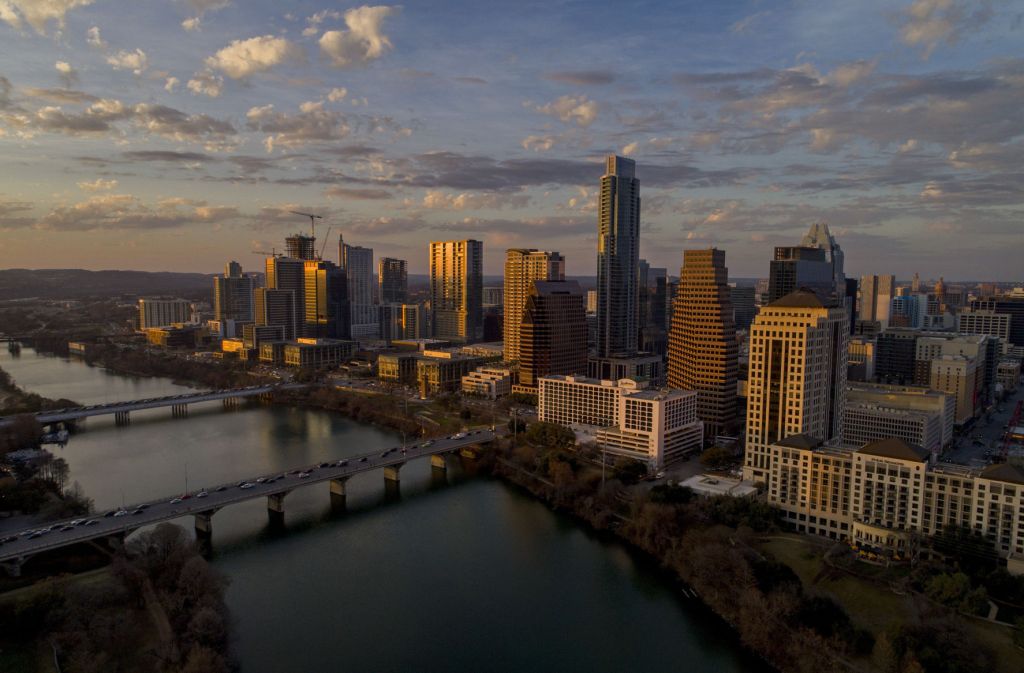
Over Memorial Day weekend, I had the pleasure of making my first visit to Austin, Texas. I didn’t expect much, considering Dallas and Houston dwarf Austin in terms of population. But what I found was a city in serious motion. Cranes dotted the skyline. Apartment buildings were rising on block after block. The streets were clean and well-maintained. Young professionals filled the restaurants, the sidewalks and the neighborhoods. Major corporations such as Google have planted flags there, and their logos are impossible to miss. Simply put, the investment in Austin is visible and tangible.
I came home to Baltimore thinking about the gap, but not because Baltimore lacks what Austin has. In many respects, we have more. We have major league sports teams. We are within driving distance of Washington, Philadelphia and New York. We have world-class universities and medical institutions. We have history, architecture, waterfront access and a cultural identity that Austin could never rival. On paper, Baltimore’s geographic and institutional advantages make Austin look puny.
And yet, despite all that, Austin and cities like it are clearly pulling away from us. The difference is not geography. It is not heritage. It is not the raw material of a great city. The difference is the political will to make Baltimore a place where businesses want to invest, where young people want to build careers, and where the basic functions of city government are reliable enough that a developer, an employer or a 28-year-old weighing their options can make a bet on this city without feeling like they are gambling.
Austin did not become what it is by accident. Texas made deliberate policy choices to attract corporate investment. City leaders in Austin made infrastructure a priority. They made the permitting process workable and made density possible. They made the case, repeatedly and convincingly, that Austin was open for business, and the results are evident in every apartment tower and corporate campus going up across that city. They welcomed the corporate community with open arms, and that same community rewarded the city.
Baltimore has made the opposite case for too long. Overall, this town is hostile to people who aren’t from here. We have a dysfunctional permitting process, persistent public safety concerns and years of headline-grabbing governance failures telling the business community that this city is a risk not worth taking. Young professionals, exactly the demographic Austin is capturing by the thousands, are making the same calculation. And their employers are leading them away from Baltimore and toward cities like Austin.
To be clear, this is not an argument for Baltimore to become Austin. This is an argument that Baltimore’s leaders need to look at what cities like Austin are doing and ask honestly why capital and talent are flowing there instead of here. The answer is not a mystery. It requires accountability, competence and a genuine commitment to making this city function, not just for those who have always lived here, but for those we are trying to attract. A good start would be a serious conversation about permitting reform, a public safety accountability framework and a mayor who treats corporate recruitment as a top-three priority.
Those who have read my previous columns know I am extremely bullish on Baltimore. I’m a son of this region and deeply believe in its future. But at some point, local leaders are going to have to make meaningful strides to get big businesses, and in turn, young professionals, moving to Baltimore City. Otherwise, the next generation will keep fleeing to up-and-coming cities. And Baltimore will die a slow death that, by the time our local leaders fully reckon with it, will have gone too far to reverse.
Julian Baron (jbaron@baltsun.com) is a contributor to The Baltimore Sun editorial board.