
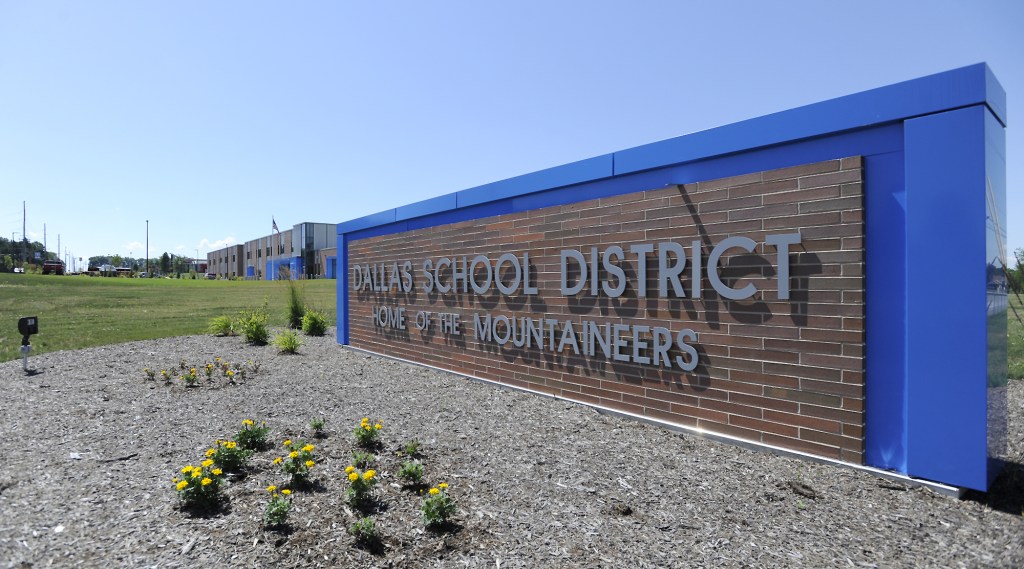
DALLAS TWP. — After three tries, Dallas schools finally have a proposed budget — but questions remain about a multi-million dollar deficit and its implications for the school district’s future.
The Dallas School Board voted 6-3 to introduce a $53.32 million proposed budget Friday with a property-tax increase of 3.1%. The vote came after the school board rejected the same proposed budget in a 7-2 vote just this Tuesday and tabled an alternate proposed budget with a 4.1% tax increase earlier this month.
The sudden change of heart on this version of the proposed budget appeared to be the result of a looming deadline. Under state law, all school boards are required to introduce a proposed budget for the coming school year by the end of May.
Board Finance Committee Chair Christine Swailes was among the members to vote against the proposed budget Tuesday and then vote to approve it Friday. At both meetings, Swailes said she was concerned that failing to adopt the original requested tax increase of 4.1% meant “increased risk” for the district’s finances that could grow the district’s deficits, which have created a fund balance millions of dollars below zero. Given the state deadline, however, Swailes said compromise was now necessary.
“My remarks from Tuesday evening stand. The board’s refusal to pass the original preliminary budget will not help the financial state of the district,” Swailes said Friday. “My decision to recommend and approve the budget tonight was due to school code requirements…It is best for the district, the staff, the students and community to approve the budget tonight even though I disagree.”
A 3.1% tax increase, if enacted in the final budget, would bring the district’s property tax rate to $15.4529 per $1,000 of assessed value. The owners of the median district home, which was assessed at $168,800 for the 2025-26 school year, would have their property taxes increase $78.42 this year to $2,608.45. The original 4.1% tax hike, which was the maximum tax hike the board was allowed to enact under the state Act 1 index, would have resulted in a $103.73 tax increase on the district’s median homeowners, bringing their total tax bill to $2,633.75.
This hike will mark the third consecutive year of significant tax increases in the district. With a 3.1% increase in this budget, taxes will have risen a cumulative 13.34% between the 2024-25 and 2026-27 school years, meaning the median district homeowners in 2025-26 with a property assessed at a constant value will see their annual school-district taxes increase $307.06 over three years. This period of serial tax increases follows a five-year period running from the 2019-20 to 2023-24 school years in which the school board did not raise taxes at all.
Superintendent Thomas Duffy said after the meeting Tuesday, said lowering the tax hike from 4.1% to 3.1% would cost the district between $250,000 and $275,000 in lost revenue. To offset this loss, Duffy said his administration had revised its budget assumptions, estimating a higher tax-collection rate than it had in the earlier proposed budget and more “aggressively projecting” savings from healthcare-policy changes and staffing attrition.
Board member Amy Brakefield said Friday that some of the projections in the proposed budget left her with “serious concerns.” She said she had studied the district’s financial situation with the administration and understood the district’s financial challenges were severe and required revenue-raising measures.
“The reality is we cannot continue to operate at a deficit and rely on borrowing,” Brakefield said while delivering prepared remarks. “Increasing revenue is a necessary part of stabilizing the district, even though I know a tax increase will be difficult for many in our community right now.”
Brakefield added that she is a parent in the district and said she wanted to support students and teachers, while working to help taxpayers. She said she would advocate for the district to continue cutting costs when possible and spending responsibly.
“I am voting yes with significant concern and with the expectation that we will continue to closely monitor spending, follow through on cost-saving measures, and provide strong oversight moving forward,” Brakefield said.
How the budget enacted with a 3.1% increase will alter the trajectory of the district’s badly depleted fund balance is unclear. The district’s 2023-24 audit, the latest one completed, found its fund-balance had fallen to $5.49 million below zero. In its 2025-26 budget, the district projected that this negative balance would narrow but still remain at negative $2.45 million by the end of the school year.
These deficits have impacted the district’s credit. Moody’s recently downgraded the district’s credit rating from what had been an A3 rating in fiscal year 2024 to Ba2 – a “not prime” rating that indicates obligations have “speculative elements and are subject to substantial credit risk.”
Board President Larry Schuler joined with board members Kristin Pitarra and Sherri Newell to vote against the proposed budget Friday. While emphasizing he was relieved the board had avoided a lapse of the state deadline, Schuler expressed reservations about opting for a tax increase lower than what the administration and its experts had recommended. He warned it could ultimately disadvantage the schools and ultimately add to the strain on district residents.
“I personally feel that if you want to save money, get out of debt as quickly as you can, in the long run it’s going to help taxpayers,” Schuler said after the meeting Friday. “Because, the longer it takes to get out of debt, the greater burden (it puts) on taxpayers.”
The proposed budget must be made available for public inspection for 30 days before the school board can put a final budget to a vote. The school board must adopt a final budget by June 30.