
Giovannie Delgadillo will miss every classroom.
Not just one room. Not one hallway. Not one specific place where he learned to read, count or make friends.
Everywhere.
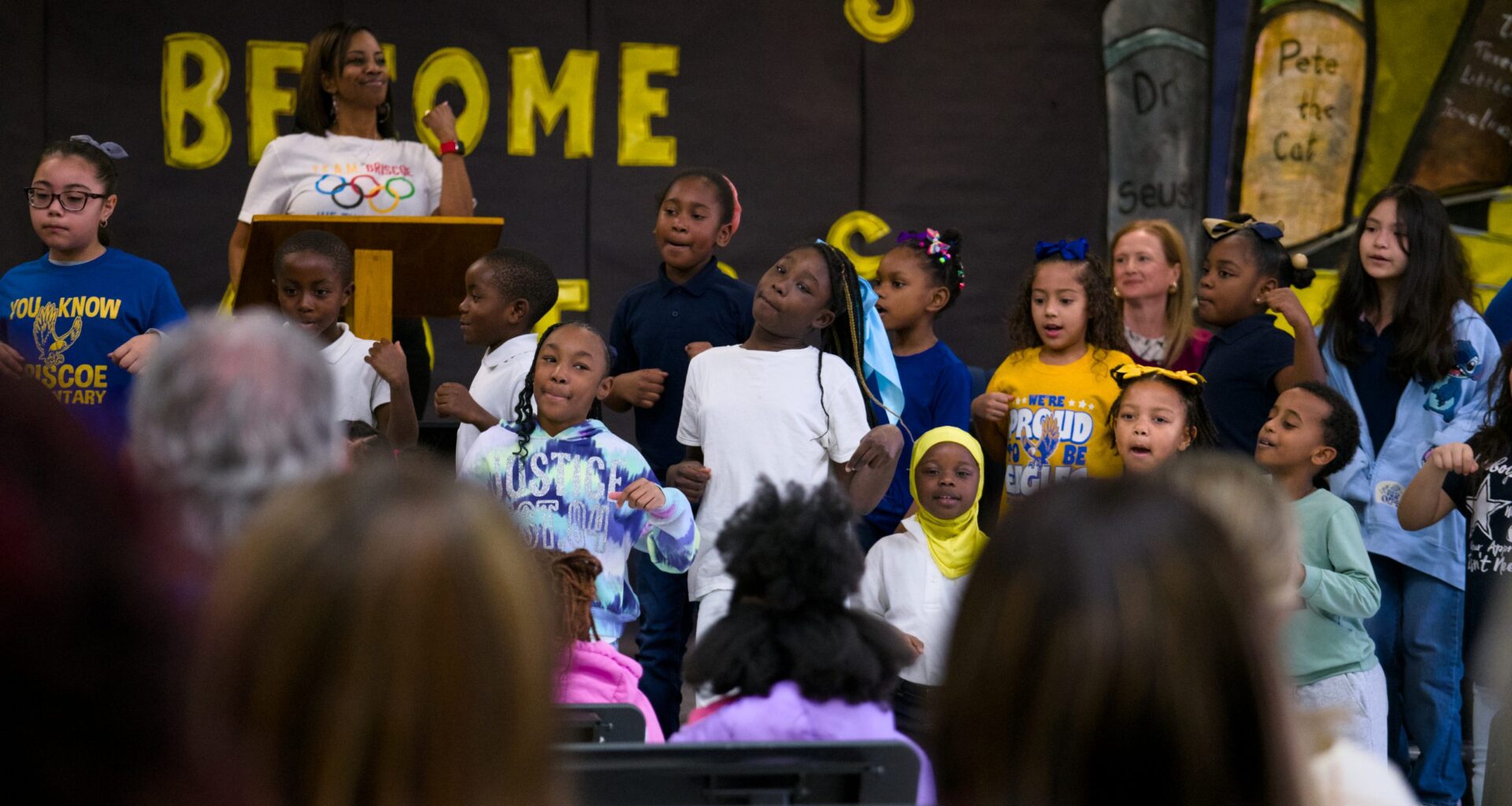
The rising second grader spent his final year at Edward J. Briscoe Elementary watching classmates disappear from the school that had become part of his family’s life. Some parents pulled children out early to allow them to get used to their next campus before Briscoe closed. Now, families are trying to carry what Briscoe gave their children — stability, trust and belonging — into schools that may not yet feel like home.
By the last day of school, Giovannie and his sister, Annabella Delgadillo, noticed fewer children in class.
“It made me sad,” Annabella said.
Annabella, who is entering fourth grade, will miss the playground, her teachers and the classroom where she felt loved.
Her new school, she said, might be boring. Then she paused. Maybe it will be fun, too.
That is where Briscoe families now sit — somewhere between grief and hope, memory and uncertainty.
Fort Worth ISD closed the southeast Fort Worth elementary school at the end of the school year, part of a broader school closure plan meant to shrink the district’s footprint as enrollment falls and buildings age. District leaders say the closures will allow FWISD to stop spending limited dollars on underused campuses and redirect resources into classrooms.
But families say Briscoe’s value was never fully captured by a usage rate, a boundary map or a list of empty seats.
To them, Briscoe was where teachers called when a child was in the hospital. Where staff gave children clothes, food and books. Where parents who had been turned away elsewhere said they finally found a school willing to give their children a chance.
A school people doubted
 Jennifer Giddings Brooks, co-founder of The Renaissance House of Terrell Heights, speaks to guests at the center’s grand opening Feb. 8, 2024. (David Moreno | Fort Worth Report)
Before Briscoe was a closed campus, Jennifer Giddings Brooks knew it as a school people doubted.
Brooks, a Briscoe principal in the late 1990s and early 2000s, wrote “The School That Could: The Edward J. Briscoe Elementary School Story,” a nonfiction book about the high-poverty school where educators believed a child’s ZIP code should not determine academic success.
In 76104, census data shows about 30% of residents live below the poverty line — more than double the rate across the Dallas-Fort Worth-Arlington metro area, Texas and the U.S. In the ZIP code, per capita income is $29,896, about two-thirds of the metro and national figures. About 1 in 5 residents were born outside the U.S.
Brooks was assigned to Briscoe when it was among the district’s lowest-performing campuses, she said. Within two to three years, Briscoe became a recognized campus, she said, then it became exemplary.
“We were able to make a difference,” she said.
That difference came from adults who understood that every part of a child’s day mattered, Brooks said.
“It’s how the phone is answered,” Brooks said. “It’s how the bus driver says good morning to the children when they get on. All of that, that’s all so important.”
While overall scores have fallen over the last decade, Cynthia Dominguez — Annabella and Giovannie’s mom — saw that in the way Briscoe treated her children.
Her family had already thought about leaving Fort Worth ISD. They looked at Joshua ISD. But Briscoe kept them in Fort Worth.
“It was always Briscoe,” she said. “You just stuck with Briscoe.”
Annabella and Giovannie are A honor roll students, Dominguez said. Both are in the gifted-and-talented program. They learned to read, built friendships and grew more comfortable with children from different cultures and backgrounds.
Her children are expected to attend Morningside Elementary next year, though their father has considered sending them to Mary Louise Phillips Elementary near his home. Dominguez wants to avoid more disruption.
“I don’t want to hop from one place to another,” she said. “I think that’s very inconsistent, especially for their education.”
Neisha Lomax’s family found Briscoe after other schools did not feel like an option.
Her children were homeschooled during the pandemic. When she tried to enroll them in public schools afterward, she said other campuses raised concerns because they did not have STAAR scores.
Then her daycare mentioned a school. And Briscoe took them.
“Briscoe gave my children and my family a chance, not knowing how they would be, what we would bring to the table,” Lomax said. “Briscoe gives chances.”
Her children grew academically, and staff checked in during family crises. Teachers and school leaders helped Lomax as she pursued teaching. When Lomax passed her final certification test, Briscoe teachers congratulated her.
“It’s not just the students,” she said. “They care about the parents, the families, they do all that.”
That care, both parents said, cannot simply be moved to another building. For Lomax, it also cannot be promised.
Her family is leaving Fort Worth ISD altogether. Her children will attend charter schools run by Uplift Education next year, a decision she said came after Briscoe’s closure and broader uncertainty about what teaching and learning will look like in the district under its state-appointed leaders.
“You can’t duplicate people. That’s the specialness in the sauce. You can’t duplicate it,” Lomax said.
Dominguez also pointed to the way staff treated children. Transferring that love to another campus will be nearly impossible, she said.
“My kids got treated like they were their own kids,” she said.
Students spoke. Then the vote came
 Deshawn Alexander and students from Fort Worth ISD’s Edward J. Briscoe Elementary School hold up signs reading “Keep Briscoe Open!” and “Don’t let Briscoe close” during a board meeting May 20, 2025, at the District Service Center. (Mary Abby Goss | Fort Worth Report)
A year before their final day on campus, Briscoe students stood before elected Fort Worth ISD trustees and tried to save their school.
“I think Edward J. Briscoe is one of the best schools and the teachers are so kind,” elementary student Aniyah Henderson, Lomax’s daughter, told trustees in May 2025.
Standing beside her, older brother and Briscoe alum Deshawn Alexander said the campus gave him confidence and a sense of belonging.
Elected trustees listened. Then they voted 8-0 to close Briscoe and 13 other campuses over the next four years. Former elected trustee Wallace Bridges, who represented the area, was absent. No discussion followed the vote.
The vote finalized a plan district leaders said was necessary after years of declining enrollment and rising building needs. FWISD has lost nearly 13,000 students since 2019 and expects to lose more than 6,500 by 2030. Officials estimated the district would need $1.2 billion in building repairs over five years if nothing changed.
But for Lomax’s children, the vote left a different lesson. Lomax said they had done what adults always tell children to do: Speak up.
Adults closed the school anyway.
“They felt, ‘I’m glad I did it, but why do they open it up for us to do this if you already know the decision you’re gonna make?’” Lomax said. “‘Just say it and let it be. Don’t give me hope.’”
Dominguez’s children understood the district’s explanation: Briscoe had too many empty classrooms and not enough students. Understanding the reason did not make the goodbye easier.
Dominguez said the closure caused confusion and anxiety for her children. By the end, the sadness deepened.
“A lot of crying,” she said.
The last drop-off felt like a breakup, Dominguez said.
“Just knowing when you have a knot in your throat, you know, and you just cannot let it go,” she said. “I was like, ‘Oh my gosh, this is going to be my last drop off. And my last pick up.’”
Brooks said district leaders should expect next year to be emotional for former Briscoe students. They are losing a building, but also routines, trusted adults, friendships and expectations they carried for years.
“Briscoe, just like many, many schools in certain communities, was the heart for so many years of that community,” Brooks said.
Briscoe students will attend one of three schools next year: Van Zandt-Guinn, Carroll Peak or Morningside.
District documents show Briscoe had capacity for 560 students and a usage rate of 54%. After the rezoning, Van Zandt-Guinn’s usage is projected to increase from 51% full to 53%, Carroll Peak’s will rise from 60% to 69% and Morningside’s from 50% to 66%.
Families do not dismiss the numbers entirely.
But both Dominguez and Lomax questioned whether the district fully accounted for what Briscoe did beyond standard measures.
The school had a food pantry. It helped families with clothes. It served children from immigrant and refugee families. It made children from different cultures feel accepted.
Dominguez worries students could face more judgment at new campuses, especially children whose clothes, shoes or uniforms reflect their families’ financial struggles. At Briscoe, she said, students shared similar circumstances.
“At Briscoe, everyone looks at each other the same way,” Dominguez said. “Zero judgment.”
Dominguez wants the district to prepare for students’ grief. While bus routes and class schedules are important, don’t overlook kids’ emotional health, she said.
Counseling.
Patience.
Adults know some children will not be able to name what they are feeling.
“They’re probably going to need a lot of counseling,” Dominguez said. “They might not show it, but internally, thinking about it a lot can cause them trauma. It’s not because we chose to leave. They were forced to leave the school.”
 Cynthia Dominguez sits with her children, Annabella Delgadillo, Giovannie Delgadillo and Michael Dominguez, at their Fort Worth home. Cynthia Dominguez said Edward J. Briscoe Elementary gave her children stability, confidence and a sense of belonging before the campus closed at the end of the school year. (Matthew Sgroi | Fort Worth Report)
Something to keep
When Briscoe closed, Brooks wanted children to leave with something that belonged to them.
She and Marnese Barksdale Elder, co-founders of The Renaissance House, worked with the Red Oak Foundation and members of her Links Incorporated volunteer group to gather books for Briscoe students before the final day of school.
Brooks did not want to come on the last day. That day, she said, belonged to the Briscoe family. So she went the day before, set up a table and sent children home with books for the summer.
Something they could write their names in. Something they could keep, she said.
The building can empty, students can be reassigned and teachers can apply for new jobs. But a school culture built over years does not automatically reappear somewhere else, Brooks said.
In the end, Annabella’s favorite memory from Briscoe was simple.
“Teachers and class,” she said.
And a lot of love.
Giovannie’s cherished memory was simple, too.
“All of my teachers,” he said. “All of them.”
He will miss all of his friends.
He will miss the classrooms.
He will miss everywhere he went, he said. Picking one friend. Picking one teacher. Picking one classroom. It was all too difficult.
Briscoe is where he, his older sister, Deshawn and Aniyah learned to sound out words, joined the step team, played on the playground, talked to friends, met teachers who called when they were sick and walked through hallways that slowly changed as banners and belongings came down.
Dominguez wants Fort Worth ISD leaders to remember that children did not choose this. She wants them to be patient when the school year starts.
She wants them to understand that the first few weeks at a new campus may be more than difficult.
They may be painful.
Regardless, Briscoe will remain part of the story she tells her children.
“I will always talk to them about Briscoe,” Dominguez said. “I’m not going to let that go.”
Disclosure: FWISD manager Pete Geren leads the Sid W. Richardson Foundation, a financial supporter of the Fort Worth Report. FWISD manager Laurie George is a member of the Report’s reader advisory council. At the Fort Worth Report, news decisions are made independently of our board members and financial supporters. Read more about our editorial independence policy here.
Matthew Sgroi is an education reporter for the Fort Worth Report. Contact him at matthew.sgroi@fortworthreport.org or @matthewsgroi1.
This <a target=”_blank” href=”https://fortworthreport.org/2026/05/30/it-made-me-sad-inside-the-final-year-of-a-beloved-fwisd-school/”>article</a> first appeared on <a target=”_blank” href=”https://fortworthreport.org”>Fort Worth Report</a> and is republished here under a <a target=”_blank” href=”https://creativecommons.org/licenses/by-nd/4.0/”>Creative Commons Attribution-NoDerivatives 4.0 International License</a>.<img src=”https://i0.wp.com/fortworthreport.org/wp-content/uploads/2021/04/cropped-favicon.png?resize=150%2C150&ssl=1″ style=”width:1em;height:1em;margin-left:10px;”>
<img id=”republication-tracker-tool-source” src=”https://fortworthreport.org/?republication-pixel=true&post=579284&ga4=2820184429″ style=”width:1px;height:1px;”><script> PARSELY = { autotrack: false, onload: function() { PARSELY.beacon.trackPageView({ url: “https://fortworthreport.org/2026/05/30/it-made-me-sad-inside-the-final-year-of-a-beloved-fwisd-school/”, urlref: window.location.href }); } } </script> <script id=”parsely-cfg” src=”//cdn.parsely.com/keys/fortworthreport.org/p.js”></script>