
When James Bacon first attempted to taxidermy deer, he taught himself how from instructions in a book with crudely drawn pictures.
“They look terrible, but they’re still hanging on my wall,” Bacon said.
He is a hunter, and his experience with another taxidermist left him dissatisfied, leading him to decide to give it a try himself. Decades later, his much-improved skills allow him to operate a taxidermy business as his full-time gig — and mentor the next generation.
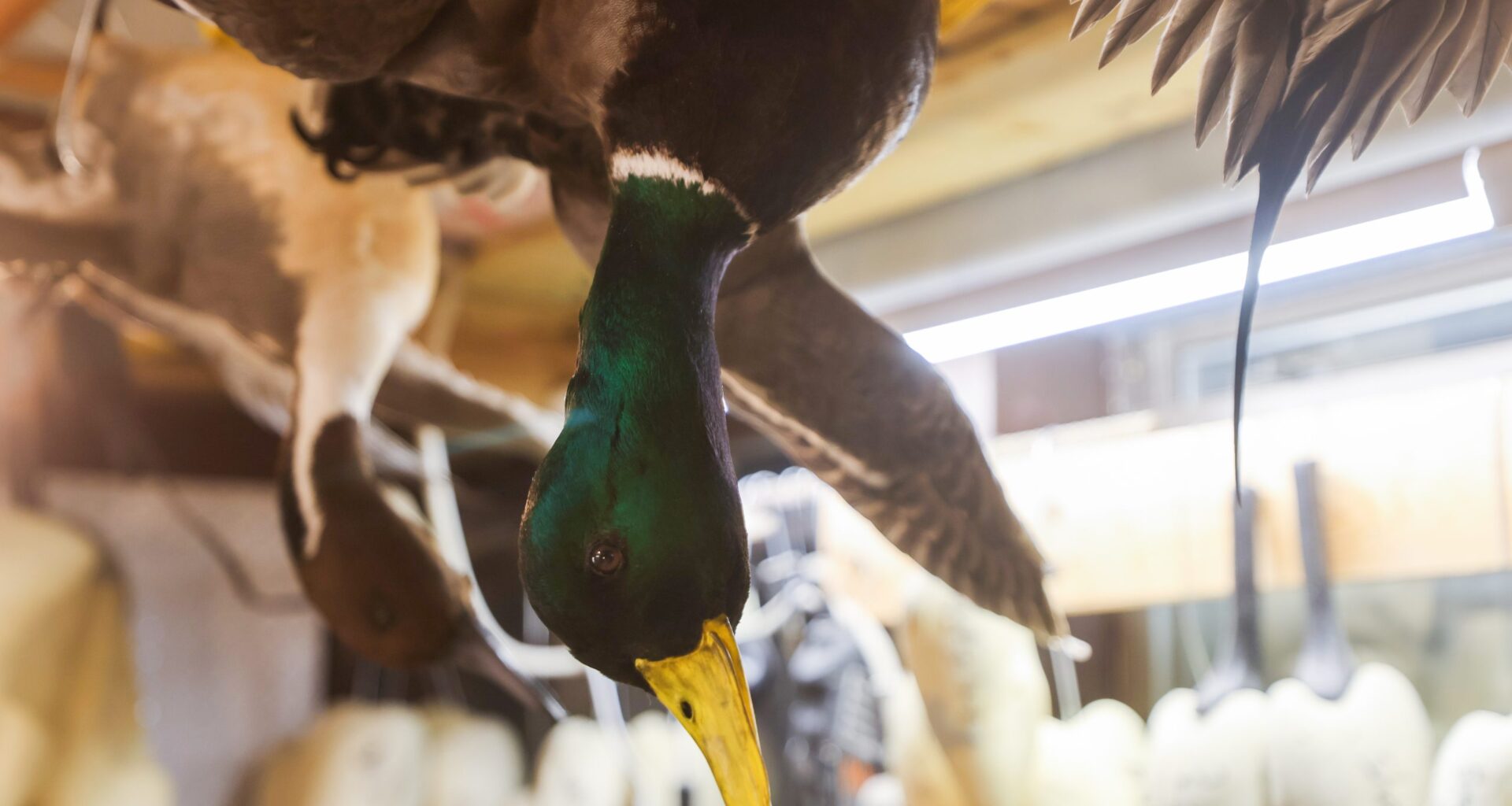
Bacon works in a small workshop behind his Keller home with his son, Zack, and part-time apprentice Bridget Samuel. In the shop, mounted deer hang on the walls. Birds, wings outstretched, dangle from racks frozen in time.
Now in his 30th year of business, Bacon’s shop taxidermies 300 to 400 animals per year. He is happy to be making a living doing something he loves and takes pride in providing high-quality work to customers.
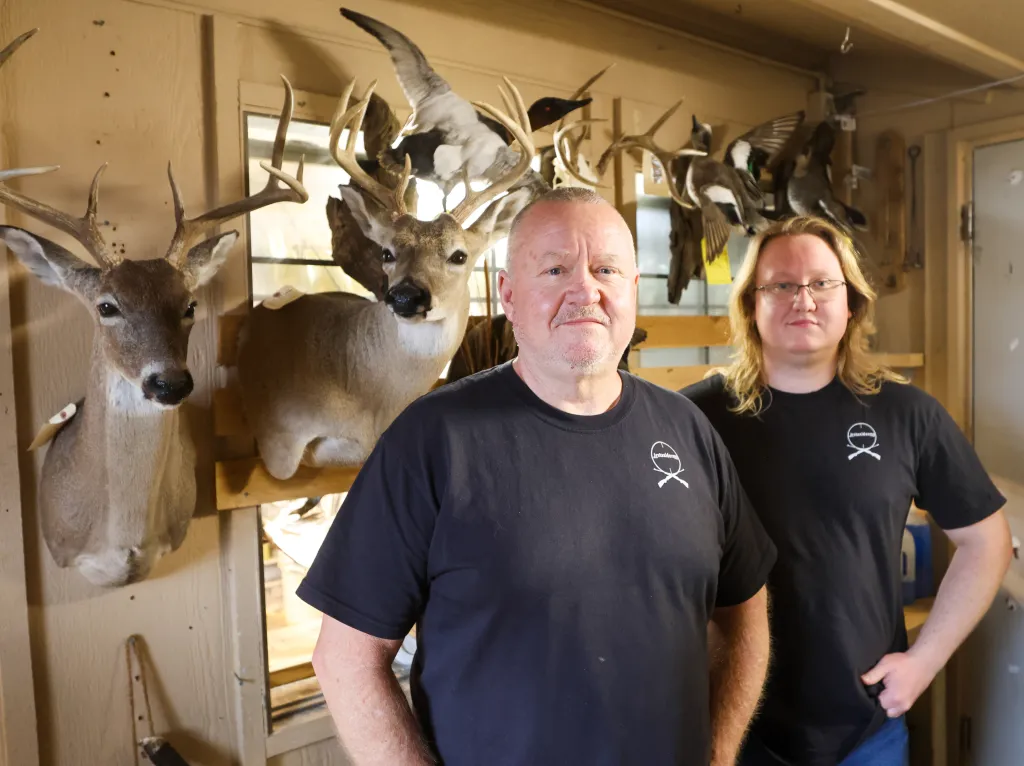 James Russell Bacon, left, of JR’s Taxidermy with son Zack Bacon. (Nicole Williams Quezada | Fort Worth Report)
Taxidermy can be controversial, and some animal activists find the practice to be offensive. But Bacon emphasized that his interest in taxidermy and displaying taxidermied animals comes from a love and respect for animals, something he said is common among hunters.
“They preserve the animals, they manage the animals on their properties,” he said of hunters. “They don’t just go on and kill everything. Most of them do it for food, too.”
From start to finish, preparing an animal for display is a lengthy process. Taxidermists preserve it by separating the skin from the parts that will decay. Then, they measure it to determine which size mannequin to use. Often made from foam, the mannequins are bases that the animal’s hide is then wrapped around. The hide is attached with staples, glue and thread. Taxidermists also use clay to ensure the face looks lifelike and brush the fur so it appears natural.
Birds are particularly difficult, and many taxidermists will not do them, Bacon said. Ducks keep his shop busy.
The intricacy of the work may be the reason why taxidermy is drawing the interest of women, Samuel said. Bacon said more women have reached out wanting to learn than men.
“We don’t get any guys calling us wanting training or to come to work. It’s all women, believe it or not,” he said.
For Samuel, the work combines her interests in art and spending time in the country.
Her friends joked that she should take up taxidermy, and after doing research, she decided to take the leap to reconnect with her artistic side. She gave Bacon a call, and he invited her to come by his shop and see what she thought.
She found that she really enjoyed the work. She also loves animals and sees taxidermy as a way of honoring and respecting them, she said.
Taxidermy has historically been male-dominated, like the hunting with which it is associated. But it is an art form at its core, and women might find they are inclined toward the detail-oriented work, Samuel said.
“There’s no gender associated to doing art, and taxidermy is no different than that,” she said.
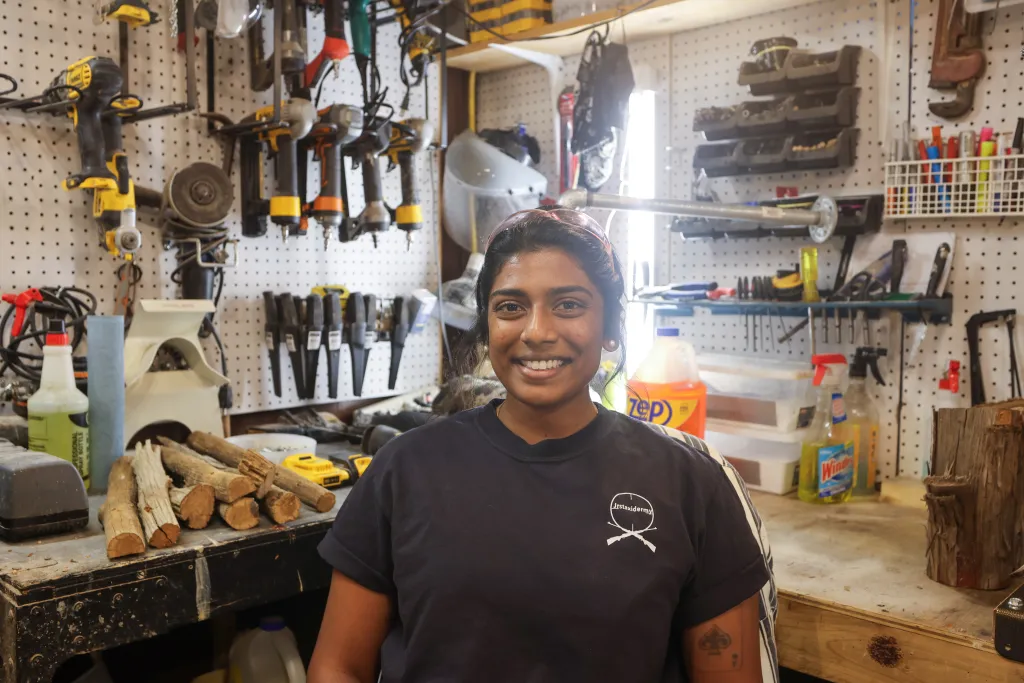 Bridget Samuel, an apprentice at JR’s Taxidermy, poses for a photo. (Nicole Williams Quezada | Fort Worth Report)
Samuel makes a living in pharmaceutical sales and plans to continue doing taxidermy as a hobby, but she has not ruled out potentially making it a source of income in the future.
Her advice to women who may want to give the craft a try? Step out of your comfort zone and go for it.
“You’ll never know what you might fall in love with if you don’t give it a shot from the get-go,” she said.
McKinnon Rice is the health reporter for the Fort Worth Report. Her position is supported by a grant from Texas Health Resources. Contact her at mckinnon.rice@fortworthreport.org.
At the Fort Worth Report, news decisions are made independently of our board members and financial supporters. Read more about our editorial independence policy here.
This <a target=”_blank” href=”https://fortworthreport.org/2026/05/31/tarrant-taxidermists-interest-in-the-work-comes-from-love-and-respect-for-animals/”>article</a> first appeared on <a target=”_blank” href=”https://fortworthreport.org”>Fort Worth Report</a> and is republished here under a <a target=”_blank” href=”https://creativecommons.org/licenses/by-nd/4.0/”>Creative Commons Attribution-NoDerivatives 4.0 International License</a>.<img src=”https://i0.wp.com/fortworthreport.org/wp-content/uploads/2021/04/cropped-favicon.png?resize=150%2C150&ssl=1″ style=”width:1em;height:1em;margin-left:10px;”>
<img id=”republication-tracker-tool-source” src=”https://fortworthreport.org/?republication-pixel=true&post=579224&ga4=2820184429″ style=”width:1px;height:1px;”><script> PARSELY = { autotrack: false, onload: function() { PARSELY.beacon.trackPageView({ url: “https://fortworthreport.org/2026/05/31/tarrant-taxidermists-interest-in-the-work-comes-from-love-and-respect-for-animals/”, urlref: window.location.href }); } } </script> <script id=”parsely-cfg” src=”//cdn.parsely.com/keys/fortworthreport.org/p.js”></script>