
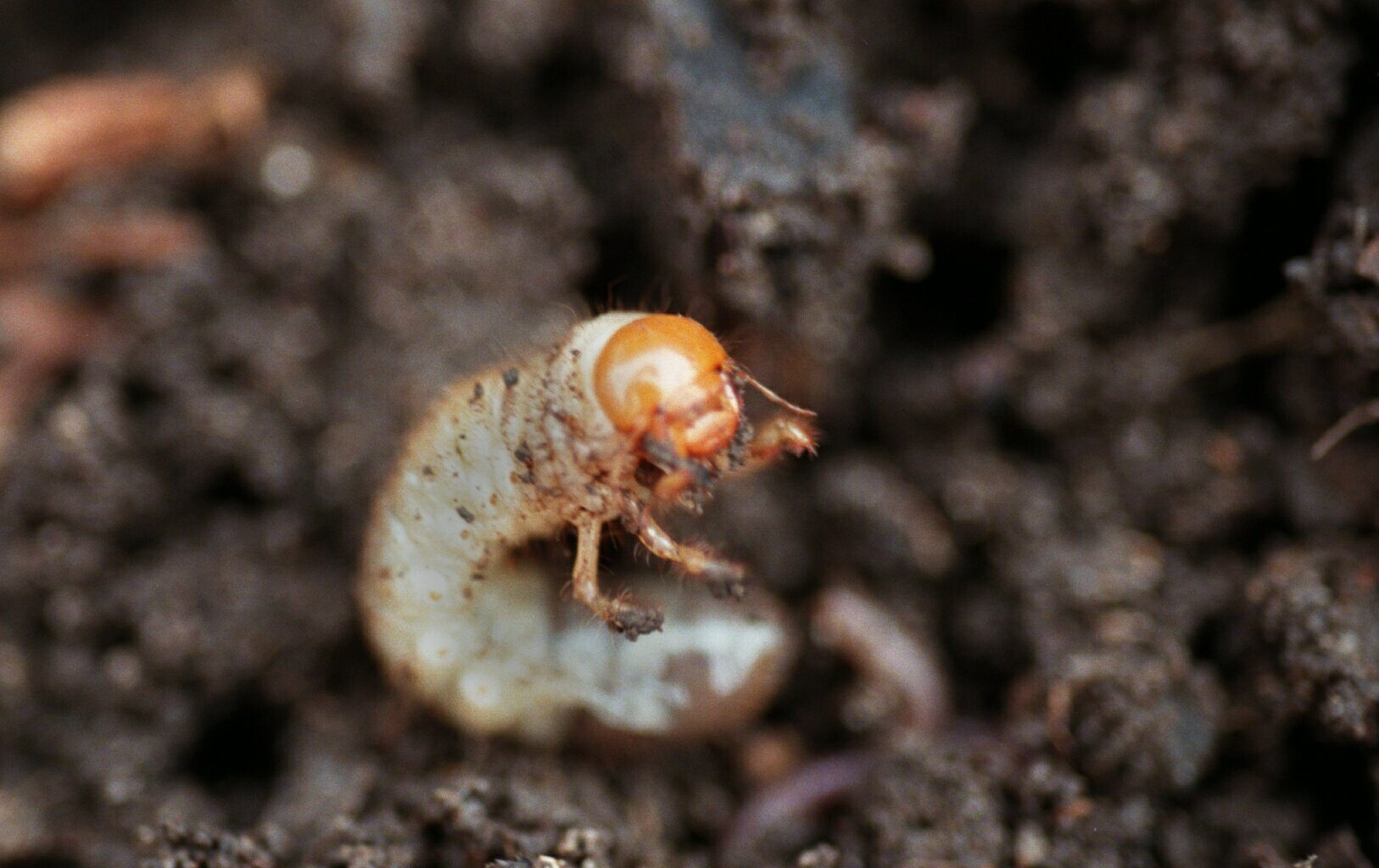
Suspect brown areas in your lawn are caused by grubs if you see June bugs around your porch lights and you have dug around the brown area and found grubs.
Juan Garcia / Dallas Morning News file photo
Undated hand out photo of a june bug.
Handout
Now that June has arrived, it’s time for June bugs to come out — but most Austinites have been seeing these brown beetles for months.

So why are June bugs called June bugs if they show up before the month they’re named after?
Article continues below this ad
Why are June bugs called June bugs?
June beetles — known to most Texans as June bugs — are called that because of the time of year they begin to surface. According to Texas A&M University experts, the beetles begin to emerge in spring, with peak flights occurring in mid- to late June in Central Texas.
Fun fact: Some people refer to these as May beetles for similar reasons, though “June bug” is the more common term.
Article continues below this ad
There are three types of June bugs in Texas: The common June beetle (the reddish-brown ones seen most frequently), the green June beetle (mostly found in East and Central Texas, with a metallic-green hue) and the western green June beetle (
Why did June bugs come out early this year in Texas?
Experts say the time of June bug emergence can depend on temperature and environmental conditions — the critters especially like warm, humid weather. Female June bugs prefer to lay eggs in moist soil.
Article continues below this ad
My cat or dog ate a June bug. What do I do?
June bugs are non-toxic, but your pet still likely won’t be happy if they eat too many of them — the bugs’ hard shells are tough for animals to digest, and they might have an upset stomach for a while after eating them.
How to get rid of June bugs
June bugs are important to the ecosystem as they serve as food sources for birds, lizards, fish and other Texas animals. Their larvae are also vital for breaking down organic matter in soil, so they’re great for compost piles. But June bugs can wreak havoc on your plants and lawn, especially in large numbers.
Article continues below this ad
Experts say to avoid using porch lights during summer months or use bug-safe bulbs to avoid attracting the beetles to your home. Homeowners can also make June bug traps using fruit juice and a funnel to attract the bugs and make them unable to escape. Encouraging natural predators — like frogs, snakes and lizards — to live nearby will also help keep June bug populations low, according to experts.
To keep them off your lawn, some experts say that keeping grass longer than usual could deter female June bugs from laying their eggs, as they generally like shorter grass. They also tend to prefer wet grass, so taller grass will also help it retain moisture and reduce watering frequency.
Why do June bugs like porch lights?
Many bugs are attracted to light, and scientists have proposed several reasons why this might be the case — one likely explanation being that bugs confuse artificial light sources with the natural light of the sun or moon that they use to navigate. They could also be looking for food or escaping from predators, and artificial light could signal that either nutrients or safety are nearby.
Article continues below this ad