
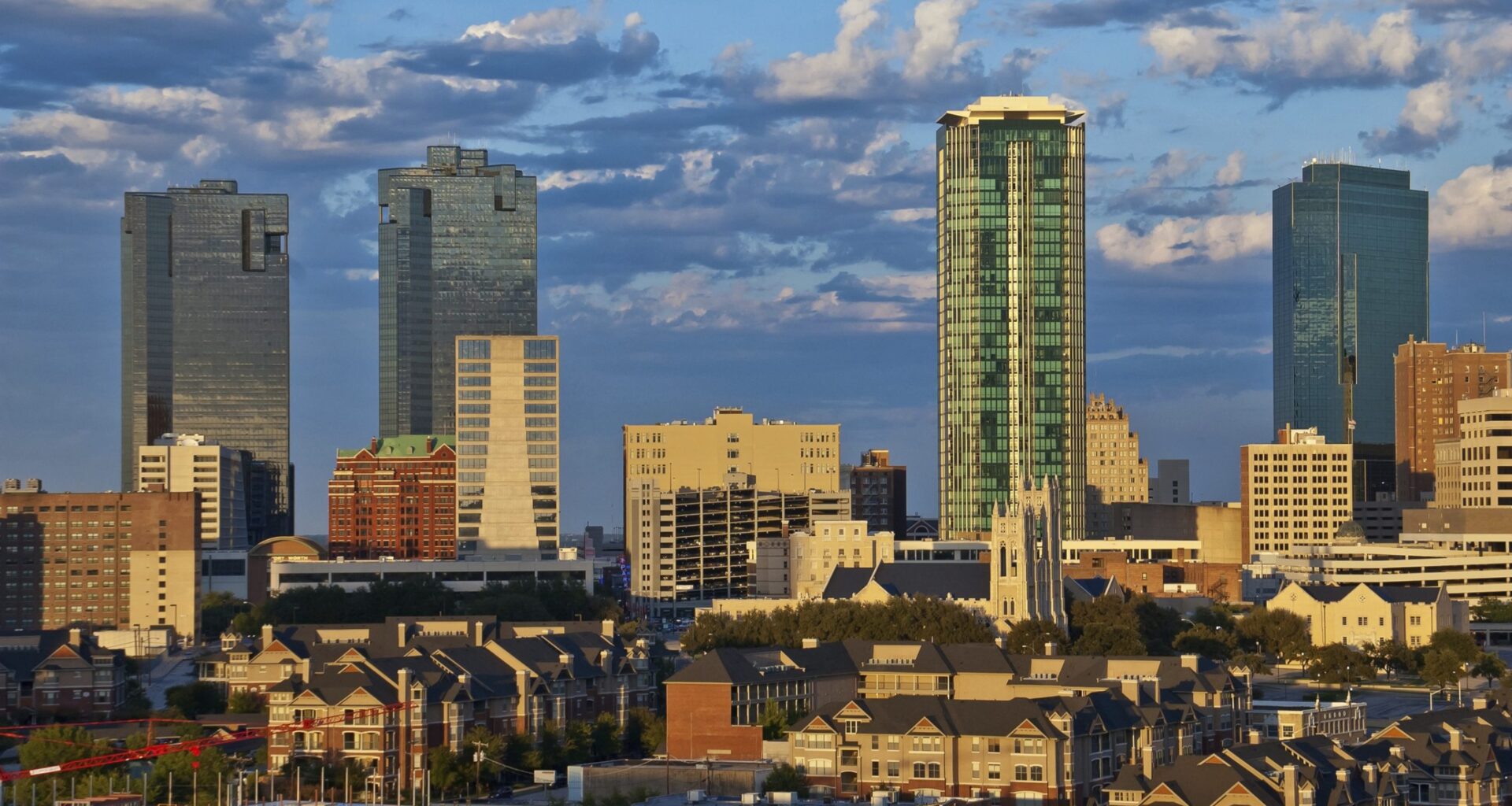
The competition for talent is changing.
For decades, economic development conversations have largely focused on tax incentives, office space, and infrastructure. Those factors still matter, but today’s workforce is evaluating communities differently. Employees increasingly want shorter commutes, flexible housing options, walkable amenities and a stronger sense of work-life balance.
That shift is reshaping how companies decide where to expand, relocate and invest, and it is one reason housing availability has become one of the most important economic development issues facing Fort Worth, especially while it is growing exponentially.
Growth creates tremendous opportunity. The Fort Worth Economic Development Partnership has aggressively positioned the region as a destination for corporate investment, highlighting Fort Worth’s skilled workforce, central location, lower operating costs and business-friendly environment.
But business recruitment today is not only about attracting companies. It is about attracting and, more importantly, retaining people.
Employers increasingly recognize workers are making lifestyle-driven decisions about where they want to live. Housing preferences have evolved well beyond the traditional suburban model centered entirely around long commutes and isolated office parks. Today’s workforce wants communities that offer convenience, connectivity and flexibility.
Today’s home buyers are often looking for live-work-play environments where housing, restaurants, entertainment, parks and employment centers exist closer together, which we are seeing more of in the region. It includes amenity-rich suburbs with trails, mixed-use developments and gathering spaces. It also includes more housing diversity, including townhomes, smaller-lot homes and mixed-use communities that provide attainable options for young professionals, healthcare workers, teachers, first responders and middle-income earners.
In many ways, the workforce is asking for something simple: less time in the Metroplex’s traffic tangle and more time living. Anyone commuting across DFW understands how quickly travel times can escalate depending on distance and time of day. Workers increasingly factor commute quality into employment decisions, especially as hybrid and remote work models have shifted expectations around flexibility and quality of life.
The reality is if workers cannot afford to live near their jobs, whether it is too expensive monetarily or time-wise, many will eventually seek employment closer to home. That creates retention challenges for employers and weakens regional workforce stability.
This is especially important as many companies have permanently adopted hybrid work environments. Remote and hybrid work changed how many North Texans think about housing and commuting. As we have settled into a hybrid work environment, more home buyers who are hybrid workers often prefer shorter, more adaptable commutes and place a premium on convenience and lifestyle integration.
Fort Worth is uniquely positioned to succeed in this environment because it still offers something many fast-growing metros are struggling to maintain: relative accessibility. As other major Texas metro areas price their residents out of homes, residents move to where they can afford to live. Fort Worth has a stronger balance between economic opportunity and attainable living but maintaining that balance will require intentional planning and collaboration among key stakeholders, including the city and the business community.
Housing diversity is no longer simply a residential planning issue. It is workforce infrastructure. The companies evaluating Fort Worth want to know whether they can recruit and retain talent here long term. They want confidence that employees at multiple income levels can live within reasonable proximity to jobs, schools and community amenities.
Fort Worth’s economic momentum is undeniable. But sustaining that momentum requires recognizing that housing, transportation and economic development are now deeply interconnected.
Fort Worth continues to build a city where businesses can grow because workers want to stay.
This <a target=”_blank” href=”https://fortworthreport.org/2026/06/01/greater-fort-worth-association-of-realtors-what-todays-workforce-wants-from-a-community/”>article</a> first appeared on <a target=”_blank” href=”https://fortworthreport.org”>Fort Worth Report</a> and is republished here under a <a target=”_blank” href=”https://creativecommons.org/licenses/by-nd/4.0/”>Creative Commons Attribution-NoDerivatives 4.0 International License</a>.<img src=”https://i0.wp.com/fortworthreport.org/wp-content/uploads/2021/04/cropped-favicon.png?resize=150%2C150&ssl=1″ style=”width:1em;height:1em;margin-left:10px;”>
<img id=”republication-tracker-tool-source” src=”https://fortworthreport.org/?republication-pixel=true&post=577205&ga4=2820184429″ style=”width:1px;height:1px;”><script> PARSELY = { autotrack: false, onload: function() { PARSELY.beacon.trackPageView({ url: “https://fortworthreport.org/2026/06/01/greater-fort-worth-association-of-realtors-what-todays-workforce-wants-from-a-community/”, urlref: window.location.href }); } } </script> <script id=”parsely-cfg” src=”//cdn.parsely.com/keys/fortworthreport.org/p.js”></script>