
While there wasn’t much going on at Dallas City Hall this past week, there were some pretty big headlines that should have everyone’s attention. From the future of the Mavericks and Stars to the future of live music in the Big D, here’s this week’s roundup:
Dueling Lawsuits Over American Airlines Center Add to Relocation Saga
Holy cow. As if Dallas possibly losing both the Mavericks and the Stars wasn’t dramatic enough, now the franchises are suing each other over their joint operation of American Airlines Center.
In a Tuesday filing, the Mavericks accused the Stars of breaching a clause in their agreement that required the NHL team to maintain its corporate headquarters within Dallas city limits. The agreement is from 1998, and the Stars have been officing out of Frisco since 2003, two years after the teams moved into AAC.
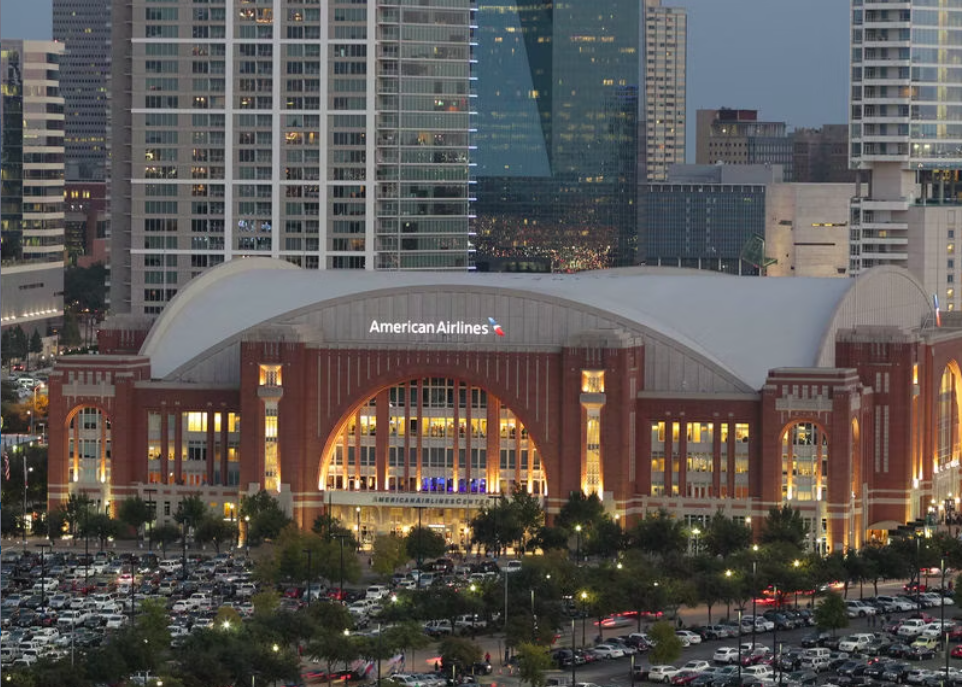 American Airlines Center. Credit: Visit Dallas
The Mavericks reportedly raised the issue last year and have since been withholding tens of millions of dollars in arena proceeds from the Stars. The NBA team also accused the Stars of backing out of a renovation deal valued in the hundreds of millions of dollars.
In a countersuit, the Stars accused the Mavericks of staging a “hostile takeover” of operations at AAC, claiming that only the City of Dallas could assert whether a breach of contact occurred. They also denied agreeing to the renovation plan, which allegedly would’ve kept them in AAC until 2061. Instead, a different deal was allegedly made in which both teams would stay until 2035.
The city’s role in the legal dispute is currently unclear. A letter cited by the Mavericks seems to have officials agreeing with them, with officials getting ready to send the Stars a default letter, according to The Dallas Morning News.
What a mess.
Dallas Reconsiders Nightlife Rules After ‘Sledgehammer’ Code Crackdown
A Hospitality and Nightlife Task Force is being formed after a beloved Bishop Artis District venue known for its live jazz music was targeted by the city for code violations related to noise and the business’s cover fee.
Responding to backlash, City Manager Kimberly Tolbert and Council Members Chad West (District 1) and Zarin Gracey (District 3) announced the new task force on Halloween following an increase in code enforcement against venues in entertainment districts.
While not necessarily related at all, the stepped-up enforcement followed City Hall’s launch of a Nighttime Economy & Responsible Hospitality Division, which is meant to help balance “community needs, business success, and public safety.”
“We don’t run away from our problems, we run to the problem, and we want to make sure that we’re addressing this head-on. I truly believe that that’s what good governance looks like,” Tolbert said, according to the Oak Cliff Advocate.
Last month, city inspectors said the venue’s certificate of occupancy classifies it as a restaurant, not a “commercial amusement” space, meaning it cannot legally charge a cover fee for live entertainment. Officials also cited the hall for keeping its doors open during performances, allowing amplified sound to spill into the street.
“Staff, for better or worse, took a sledgehammer to a problem we should have taken a scalpel to,” West said, according to NBC 5.
The new taskforce will review regulations for restaurants, bars, and entertainment venues and consider changing them. Noise rules, live music fees, and permitting will be considered to mitigate any unnecessary impact on nightlife. The taskforce will be housed under the Office of Arts and Culture.
Texas Public Policy Foundation Sues Dallas Over ‘Death Star’ Law Violations
The conservative think tank Texas Public Policy Foundation (TPPF) filed a lawsuit against the City of Dallas on Wednesday for maintaining 83 ordinances that purportedly violate the Texas Regulatory Consistency Act — aka “the Death Star” law. Enacted in 2023, the law preempts local ordinances to prevent a patchwork of local regulations businesses have to navigate.
While Dallas officials repealed some of the ordinances they said were preempted by the law, many remain on the books. They include anti-discrimination protections for LGBTQ+ people, equal employment opportunity clauses in contracts with the city, minimum wage requirements for city contractors, and a slew of regulations pertaining to waste management and licensing, among others.
“Cities don’t get to pick and choose which state laws they follow,” said Matthew Chiarizio, TPPF’s senior attorney, according to a press release. “For too long, Dallas has piled unnecessary and duplicative regulations on its citizens. The Legislature has rightly preempted those rules, and this lawsuit is about protecting Texans’ freedom to live and work without being smothered by layers of needless local regulation.”
A spokesperson for the city reportedly declined to comment because of the pending litigation. The law itself was previously challenged on constitutional grounds by a handful of municipalities, but a state appeals court affirmed its constitutionality.