
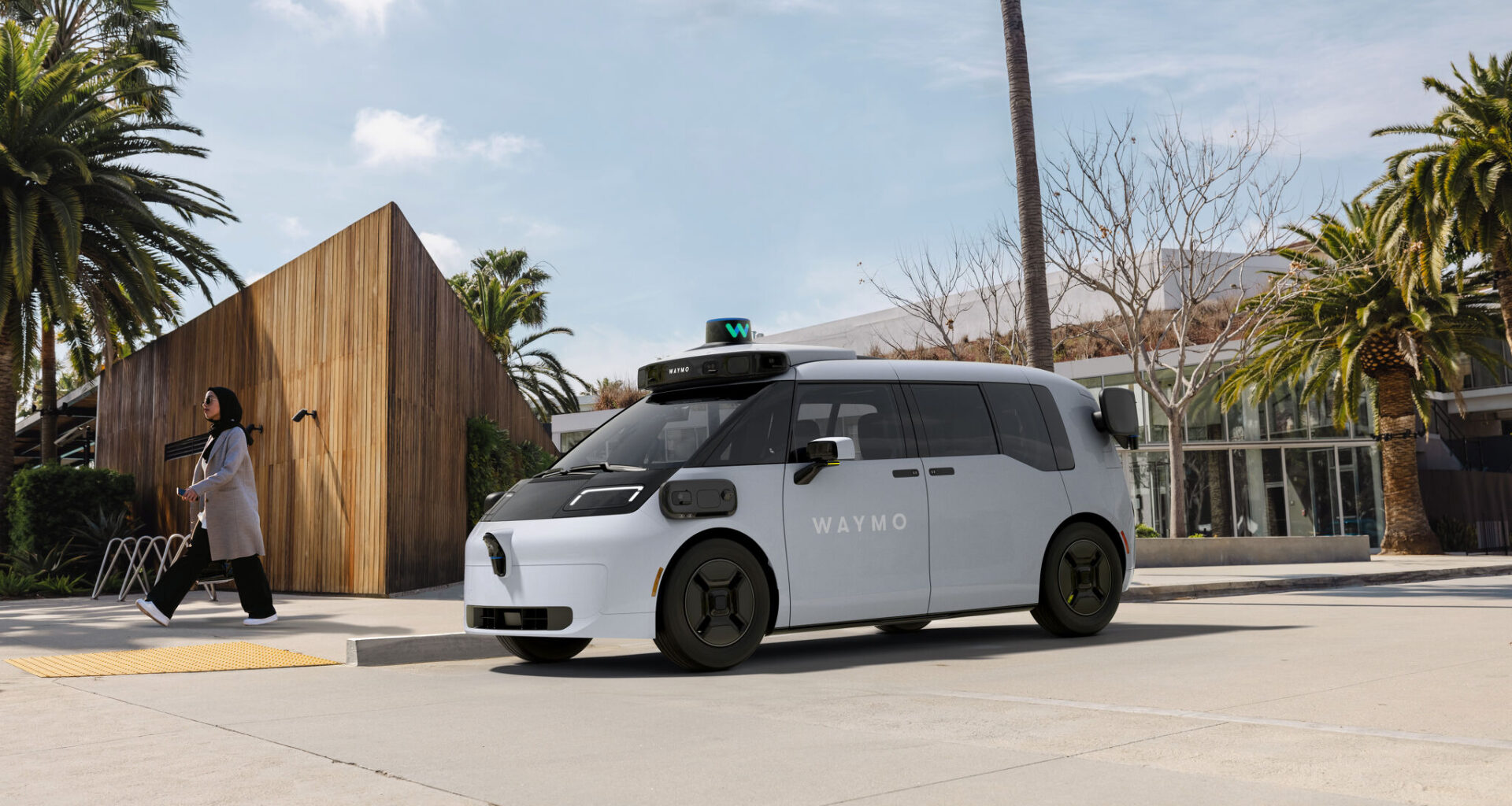
Waymo has started letting select riders test out its new minivan-inspired robotaxi in Los Angeles, Phoenix and San Francisco. The vehicles are the first deployed with Waymo’s sixth-generation autonomous driving software.
Courtesy of Waymo
Waymo has begun rolling out a new minivan-style robotaxi in three U.S. cities, but the vehicles won’t be coming to Austin anytime soon.

The driverless robotaxi company announced last week that select riders in Los Angeles, Phoenix and San Francisco can now hail its new electric robotaxi called Ojai.
Article continues below this ad
The minivan-style vehicle comes after years of testing and development by Waymo, the autonomous vehicle arm of Google parent Alphabet, which has been seeking a more cost-effective, accessible and easier-to-maintain vehicle for its driverless ride-hailing service.
RELATED: Noisy Waymo chargers draw complaints from Lady Bird Lake trail walkers. Here’s why
The new vehicles are initially available only to select riders using the Waymo app in Los Angeles, Phoenix and San Francisco, the company said in a blog post.
In Austin, where Waymo launched public service more than a year ago through the Uber app, riders will have to wait longer. The company said it does not yet know when Ojai will arrive in the city.
Article continues below this ad
Waymo declined to answer additional questions on the record.
But the launch of Ojai, pronounced oh-hi, comes at a critical moment for Waymo as it seeks to rapidly scale deployment amid growing competition from other robotaxi companies and pushback from cities over instances of its robotaxis behaving erratically.
The minivans are made by Zeekr, a Chinese electric automaker. Waymo modifies the vehicles at its Arizona factory, and the robotaxis feature no Chinese connected car tech, the company says.
Courtesy of Waymo
Waymo has faced scrutiny in Texas and beyond after one of its robotaxis drove into floodwaters in San Antonio, prompting a software recall and temporary service suspensions in Austin and San Antonio. The company also has limited freeway driving in some cities because of issues navigating construction zones.
Article continues below this ad
In Austin, city officials reviewed autonomous vehicle operations after several Waymo robotaxis blocked ambulances responding to a West Sixth Street shooting in March, while videos showing the vehicles disrupting traffic have circulated on social media.
Still, the company has deployed in several new cities this year. Waymo is “now meaningfully scaling” the production of its vehicles, with the company saying it expects its Arizona factory to pump out “tens of thousands” of vehicles per year. Waymo, the largest operator of self-driving robotaxis in the U.S., maintains about 3,700 of its Jaguar I-PACE robotaxis across the U.S., including about 300 in Austin.
As the first vehicle deployed with Waymo’s sixth-generation autonomous driving system, which the company says is cheaper to operate, easier to maintain and more adaptable, Ojai is a key step toward scaling the company’s fleet.
Side view of the interior of Waymo’s new Ojai robotaxi. The vehicle is made by Zeekr which Waymo then modifies with its technology. The Alphabet-owned company says Ojai was designed after feedback from riders and community partners expressed interest in more accessible robotaxis.
Courtesy of Waymo
Unlike Tesla, which builds its own robotaxis for its autonomous ride-hailing service, Waymo purchases vehicles from other automakers and equips them with its autonomous Waymo Driver system.
Article continues below this ad
Waymo’s sixth-generation system was made to be modular. It can be applied to any type of car, significantly reducing costs and allowing the company to roll out new robotaxis quickly, including Ojai and the previously announced Hyundai Ioniq 5.
But while the new van is a step toward scaling its fleet and revenue, Waymo is also significantly stepping up its accessibility with Ojai. Since its inception, Waymo has marketed itself as a solution for people with disabilities, with the first fully driverless ride taking a blind man through Austin in 2015.
The robotaxis are much lower to the ground with an expanded flat floor, increasing leg and head room compared to Waymo’s Jaguar robotaxis. The doors slide open similar to elevators, and the interior has three screens, rather than one, where riders can control the music and climate as well as contact support.
On the app, riders can choose which vehicle they prefer when both are available or the company automatically matches riders.
Article continues below this ad
Payton Cavin of Austin steps into a Zoox fully autonomous robotaxi that was displayed at the Line Hotel during the South by Southwest Conference and Festivals on March 14 in Austin. Zoox’s robotaxis also have sliding doors, an expanded interior and lower step-in height like Waymo’s new Ojai vans.
Jay Janner/Austin American-Statesman
Waymo, while the industry leader, isn’t the first company to roll out a more van-like robotaxi. Zoox, which is testing its purpose-built robotaxi in Austin, also has sliding doors similar to elevators or gondolas and is much lower to the ground. Zoox’s interiors, however, do not have a front, a steering wheel or pedals, and the seats face one another similar to a train car.
According to a blog post from the company, Waymo will slowly roll out the van to new cities as it collects rider feedback and data, with plans to launch to “everyone” later this year.