
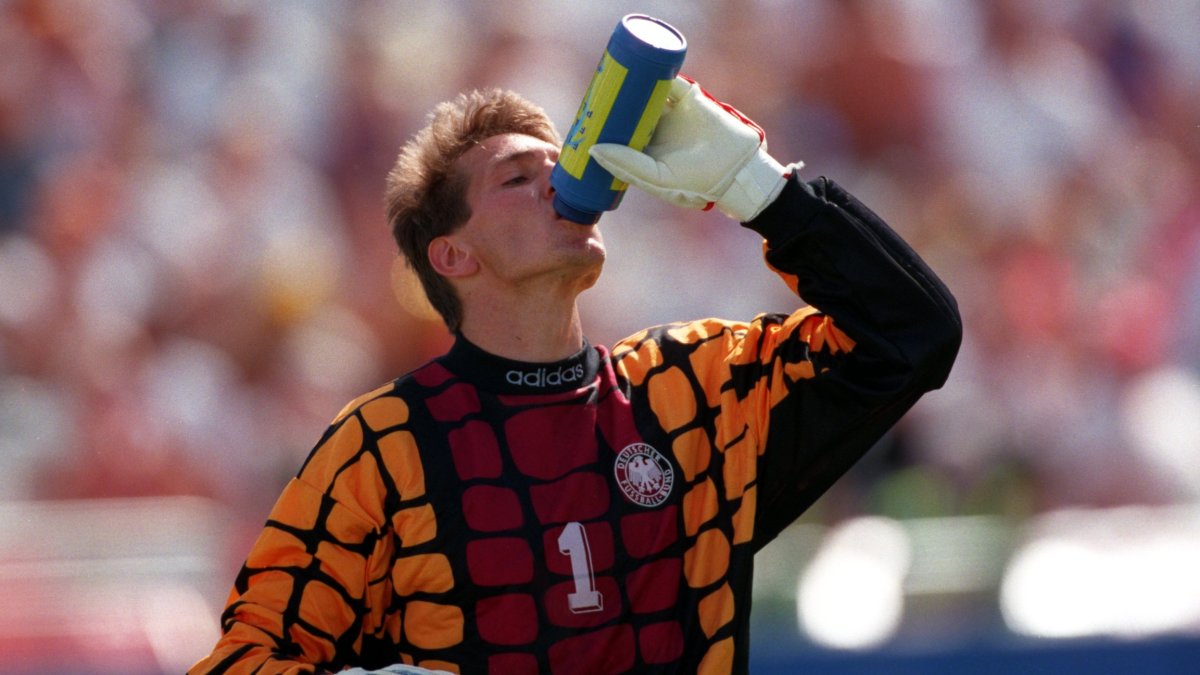
Heat has long been an issue at World Cups. The 2022 Qatar tournament was played later in the year because of it. Last year’s Club World Cup experienced a heat wave that sent temperatures soaring into the 90s F and above in many areas. Following the event, the soccer players’ global union warned that extreme heat would likely be an even bigger problem at the next two men’s World Cups. Spain, Portugal, and Morocco will co-host the 2030 World Cup. The last time the U.S. hosted a World Cup in 1994, games were mostly during the day. That was convenient for television viewers in Europe, but it led to sweltering conditions at venues like the Cotton Bowl in Dallas.
Archival data shows that on June 17, 1994, when Spain played South Korea, the high temperature was 92 degrees. It was even hotter on June 21 for Nigeria vs. Bulgaria (94 degrees). The hottest game was June 27 (101 degrees), when Germany played South Korea. That’s actually one of the hottest matches in World Cup history. German and South Korean players said they could feel the ground scorching their feet through their shoes. As brutal as the triple-digit heat was, it still didn’t top the record that day. June 27th also happens to be the date of the hottest temperature ever recorded in Dallas-Fort Worth — 113 degrees set in 1980.
Other 1994 World Cup Temps:
June 30: The high was 95 degrees for Argentina versus Bulgaria.
July 3: It was 96 degrees for the Saudi Arabia versus Sweden game.
July 9: The high temperature was 83 degrees for the quarterfinal match between the Netherlands and Brazil.
Over three decades later, the Cotton Bowl venue isn’t being used at the 2026 World Cup. Instead, games in the Dallas area will be played with air conditioning in Arlington, at AT&T Stadium, the home of the NFL’s Cowboys, which has a retractable roof. So do a few other stadiums that are being used from Los Angeles to Atlanta. Nine World Cup matches are set to be played at what FIFA will call Dallas Stadium, but for one of them, the curtains are going up. According to our partners at the Dallas Morning News, FIFA plans to install blackout curtains for the June 25th group stage match between Japan and Sweden. Kickoff is scheduled for 6 p.m. The sun likely will not set until 8:40 p.m. Sun glare inside the stadium, especially for the second part of the game, could become a major issue.
If this sounds familiar, it should. During a Cowboys game in 2024, wide receiver CeeDee Lamb missed a pass in the end zone because he said the sun blinded him; Lamb said the stadium should use curtains, but Jerry Jones disagreed.
In total, 16 cities across the United States, Mexico, and Canada will be hosting the 2026 World Cup in June and July. On average, July is the hottest month of the year for the contiguous U.S., according to the National Oceanic and Atmospheric Administration, and it’s only gotten warmer since record-keeping began in 1895. Wet bulb globe temperatures, which factor in humidity, wind speed, sun angle, and more, could exceed 90 F in the afternoons in the Texas cities of Dallas and Houston and Monterrey, Mexico, research shows.
Exposure to heat, amplified during exertion, can lead to nausea, dehydration, headaches, stroke, and, in extreme cases, death. Worries from some that millions of people could be exposed during the tournament were amplified in March, when record-breaking temperatures hit large swaths of the U.S. And with global temperatures rising because of pollution from burning oil, gas, and coal, scientists have warned that staging soccer tournaments in the summer is getting more dangerous.
This year, host cities, stadiums, and FIFA, the world governing body for soccer, are working to protect players and spectators by conducting heat risk assessments, enhancing shade, cooling zones, and water access, stationing medical teams during events, and more.