
Magazine journalism does its job when it makes big statements and sweeping assertions and elicits great feeling. But in order to do all that, the makers of magazine journalism, like makers of anything, must commit to a process involving thousands of tiny steps: Months of logistically nuanced reporting. Eighteen edits to a single sentence. A fact-checking process that investigates the story itself. Photo shoots in which ten people behind the camera stare at the subject and make granular adjustments. Errors can be introduced at countless points along the way. And occasionally one of those errors, despite a bulwark of fact checkers and copy editors, makes it through and lives on forever.
Almost a year ago, Texas Monthly published a cover story titled “ ‘The River House Broke. We Rushed in the River.’ ” It is the most important magazine piece I’ve ever been a part of. We crammed a three-month-long process into about four days, scrapping our planned cover and replacing it with a heartrending story by senior editor Aaron Parsley about his family’s experience of being swept into the Guadalupe River on July 4 of last year. There are a million ways you can screw up when you’re condensing months of work into roughly 84 hours, but the possible mistake that haunted me the most during that harried week was one of the easiest to get right: the spelling of a name.
The name belonged to Aaron’s sister, Alissa, who was in the river house with her two young children on that early morning. In many ways, Aaron’s story was for Alissa. At some point during the editing process, which involved multiple rounds and multiple readers, a misspelling of her name was introduced. I felt like I’d let Alissa and Aaron down. There was plenty of time to fix it, of course, and it was as simple as retyping a couple of characters, but to my mind the damage had been done. I’d shown that there was a chance I would allow her name to be misspelled.
There wasn’t much to do besides correct the error and trust that our copy editors and fact checkers would’ve caught it, as happens with hundreds of other mistakes every week at Texas Monthly. Things are wrong. Things get fixed.
Still, I felt compelled to grab a blank piece of paper and write down in big letters “ALISSA.” I’m not sure why I took a picture of the scene. Maybe it was to send it to Aaron, who’d alerted me to the misspelling, to let him know how seriously I was taking it. In our latest cover story, Aaron uses the phrase “the smallest of things” to refer to his newfound appreciation for the minutiae of life since the tragedy. I love that phrase. It applies to the work too. That’s what I pledged not to lose sight of last year, even if we were moving very fast to get his story published.
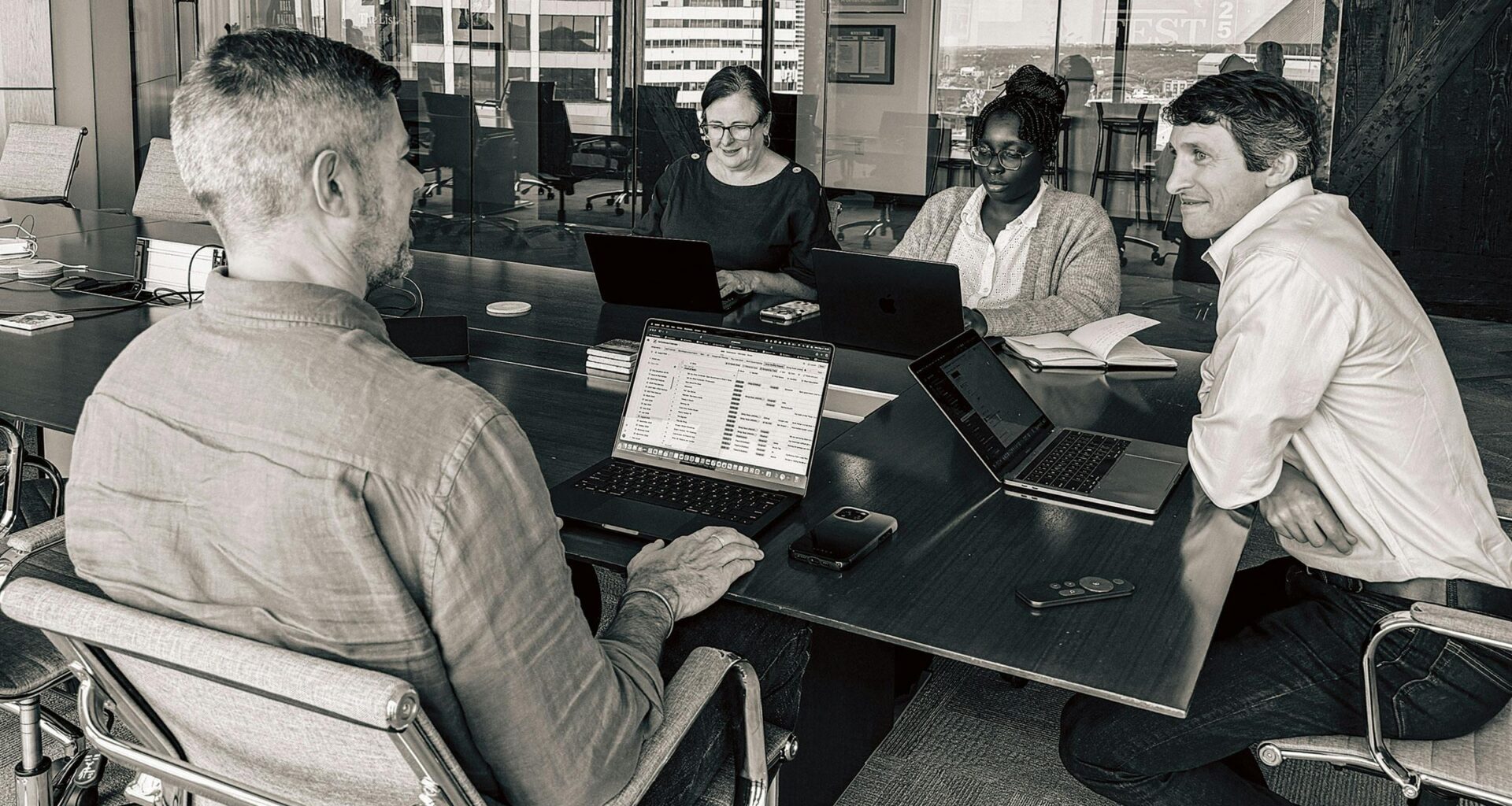
I urge you, when you read this new story about how his life has changed since the flood, to imagine all the decisions that Aaron has made since those fateful hours last July—all of the emotional and reportorial steps he has taken. And I urge you to reread his first story, which won this year’s Pulitzer Prize for feature writing. As we were finishing this issue, the staff gathered in our conference room to watch the announcement. We shed tears and shared hugs when Aaron’s name was called.
When Aaron spoke to the staff afterward, he did what all great colleagues do: He acknowledged the work of those around him, honoring the untold negotiations required to make something special and lasting.
I don’t remember what I said to the staff. The whole experience has been a blur. But I know what I felt. And what I felt was, we did our best. We looked after the little things.
This article originally appeared in the June 2026 issue of Texas Monthly with the headline “The Smallest of Things.” Subscribe today.