
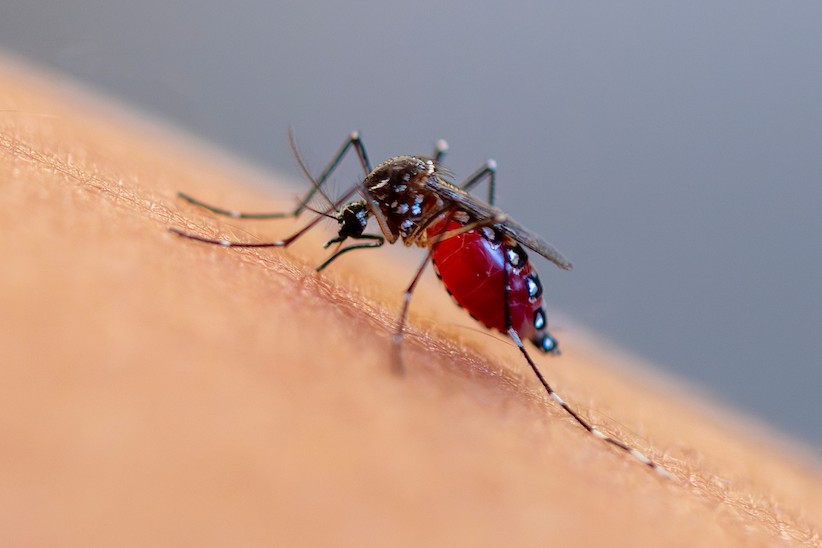
Mosquito activity is increasing across Houston and Harris County after recent rains and a mild winter.
Michael Miller/Texas A&M AgriLife
Stepping outside in Houston lately can feel like an open invitation for mosquitoes. Across social media and neighborhood forums, residents have been venting about swarms of biting insects that seem to appear the moment they step outdoors.

“It’s been horrible walking my dog outside,” one resident wrote on Nextdoor. “Even if I’m outside for 5 minutes, I’m covered in bites.”
Article continues below this ad
Another complained that the pests are no longer just a nighttime nuisance.
“It’s freaking all day,” the person wrote. “You literally cannot come outside; you are a snack.”
If it feels worse than last year, there’s a reason for that.
“The numbers are up from last year for both vectoring mosquito species and nuisance mosquito species,” Sonja Swiger, an entomologist and professor with Texas A&M AgriLife Extension, told Chron on Thursday.
Article continues below this ad
The culprit is simple: water.
Mosquitoes require standing water to complete their life cycle, and the combination of rainfall, moisture and warm temperatures has created ideal breeding conditions. Swiger said mosquito populations tend to surge whenever wet conditions are paired with a mild winter.
“Water is mandatory for mosquitoes to grow,” she said. “When we have more water, we have more mosquitoes.”
Standing water provides breeding habitat for mosquitoes, which require water to complete their life cycle.
Getty Images
The increase isn’t limited to nuisance mosquitoes. The number of mosquito samples testing positive for West Nile virus has also risen sharply.
Article continues below this ad
According to Swiger, Texas had only three positive mosquito pools at this point in 2025. As of Thursday, 20 positive pools have been reported in 2026.
West Nile virus can infect both people and horses, though symptoms and outcomes vary. Swiger noted that horse owners should ensure their animals are vaccinated. “There is a vaccine for horses, and it is highly recommended,” she said.
Last year, Texas recorded 51 confirmed cases of West Nile virus in horses. Swiger said cases reported through the Texas Department of State Health Services represent animals that did not survive the infection.
In the Houston area, mosquito activity never truly slowed down over the winter.
Article continues below this ad
“The mild winter did not bring much relief to the area,” Swiger said.
Harris County Mosquito and Vector Control has identified 20 West Nile-positive mosquito samples this year across more than 14 operational areas. Activity is widespread throughout Harris County, with additional hotspots reported in The Woodlands and Sugar Land.
Asked what makes Houston such a haven for mosquitoes, Swiger had a simple answer: “Everything.”
Houston’s warm temperatures, high humidity, frequent rainfall and abundance of standing water create near-perfect conditions for mosquito populations. Its proximity to the Gulf Coast also allows salt marsh mosquitoes to move inland.
Article continues below this ad
“It is just a perfect place,” she said.
With mosquito season ramping up and West Nile virus already circulating, Swiger recommends using insect repellent, eliminating standing water around homes and keeping pets on heartworm prevention.
“Mosquitoes will be around all year and are just starting to grow in numbers now,” she said.
Article continues below this ad