
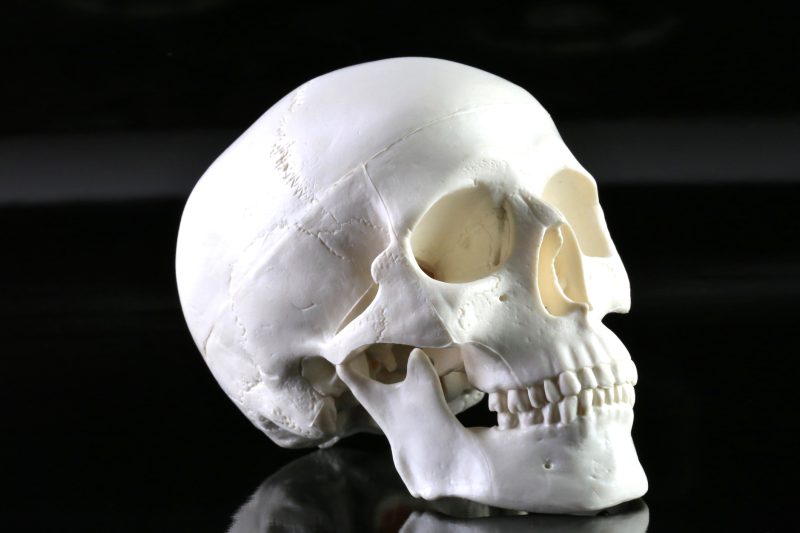
AUSTIN (KXAN) — A man in Kyle was recently arrested for allegedly attempting to sell a human skull via Facebook Marketplace. He faces a charge of purchase or sale of human organs, a felony under Texas law. But what is considered a “human organ”? And is it illegal to own one, too?
According to Texas law, the following are considered “human organs”: human kidney, liver, heart, lungs, pancreas, eye, bone, skin or any other human organ or tissue.
State law — Sec. 48.02 and 48.03 of the Texas Penal Code — prohibits the purchase and sale of human organs, point blank.
The law says, “A person commits an offense if he or she knowingly or intentionally offers to buy, offers to sell, acquires, receives, sells or otherwise transfers any human organ for valuable consideration.”
There are some exceptions, though, mostly relating to medical practices and organ donation.
Is owning human remains legal?
Possession of human bones is perfectly fine, under certain circumstances. The law says it’s illegal for someone to buy, sell, acquire, receive or transfer any human organ “for valuable consideration.”
Owning or possessing human bones is legal in the United States, except for a few states.
A National Geographic article on bone collectors noted, “In the U.S., there is no federal law prohibiting trade and ownership of human remains other than those from Native Americans.”
The Bone Room, which describes itself as a “natural history store,” has been in business in California for more than 30 years. It says that while it’s “perfectly legal to possess and sell human bones in the United States,” there are some exceptions that the store follows, and it does not ship to Georgia, Louisiana, Minnesota and Tennessee due to laws in those states.
How and why someone has human remains can affect legality
Acquiring or possessing bones under certain circumstances can affect the legality of owning or possessing them.
If the remains are acquired by disturbing a grave, cemetery or burial site, it’s illegal. Texas Penal Code § 42.08 details what is considered “abuse of corpse.” Removing bones from any marked or unmarked burial ground can result in a state jail felony charge.
If the remains came from publicly owned land, it’s illegal. In an online brochure describing laws that protect archeological sites, the Texas Historical Commission says, “under federal law, it is illegal to collect or excavate artifacts on federal lands, such as land surrounding U.S. Army Corps of Engineers lakes.”
It goes on to describe a similar Texas law: “Under state law, it is illegal to collect or excavate artifacts on state lands, such as those owned by river authorities or water districts. Most archeological sites in Texas remain on private property, however, and are unaffected by these laws.”
Native American skeletal remains are protected by federal law, regardless of where they are. Under the Native American Graves Protection and Repatriation Act (NAGPRA), it’s illegal to possess, dig up, buy or sell Native American skeletal remains anywhere in the United States.