
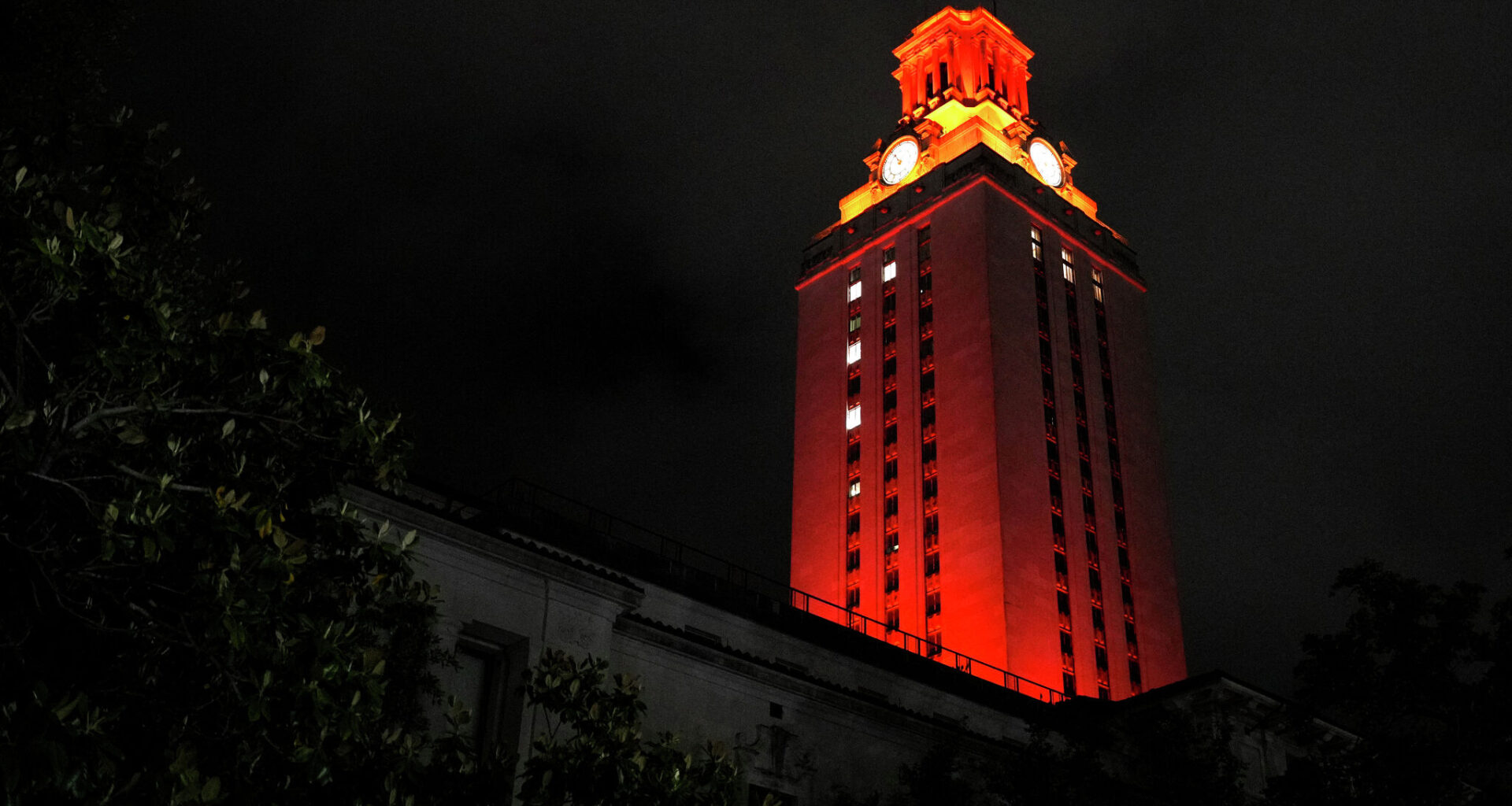
The 307-foot-tall Tower has long overlooked Austin. Completed in 1937, the university’s Main Building and Tower were designed in the New Classicism style by French architect Paul Philippe Cret.
According to a City Cast Austin report, in the 1960s, the university began to use the Tower’s windows in its light displays, starting with spelling out “UT” to celebrate the football team’s undefeated record, the first in 40 years.
“Over the decades, the university has built out its use of the tower lights to indicate lots of different things: an orange top means the Longhorn football team won a regular game,” the article explained. “All-orange indicates big achievements and wins; a “1” celebrates a National Championship win; special numbers and effects are used for commencement; an unlit tower with a white cap commemorates solemn occasions; and if it’s dark, it’s either Earth Day, or a grid-mergency.”
The Texas Longhorns won the Women’s College World Series, securing their second consecutive NCAA national championship by sweeping the Texas Tech Red Raiders in the best-of-three championship series.
Texas won Game 2 4-1, meaning the UT Tower is expected to display its national championship lighting: an orange Tower with a white No. 1.
According to the university, the lights use several colors and configurations to symbolize different accomplishments and significant dates.
Here’s what each configuration means:
The UT Tower was illuminated in burnt orange on March 31, 2026, to celebrate the Texas men’s swimming and diving team’s NCAA national championship victory. A white “1” appears on all four sides of the Tower to signify NCAA team titles or major championship wins.