
If you’ve seen recent national news headlines about Texas barbecue, you may be under the impression that our state’s great smoked meat traditions are on the chopping block.
Specifically, a narrative has emerged that the rising price of brisket will result in a cascade of Texas barbecue joint closures.
The article in the Washington Post that kicked off the recent spate of bad press, titled “Some of Texas’s oldest barbecue joints close as meat prices skyrocket,” paints a bleak picture but mostly avoids sensationalism.
But as the article gained traction on social media, a flood of follow-up stories appeared, with many using more alarmist headlines that all but announced the imminent extinction of Texas barbecue.
To be sure, the struggles facing Texas barbecue joints, and really any restaurant that features beef as a primary menu item, are real and worth reporting.
But at some point in the last week, it seemed to me that the march of negative headlines shifted from important reporting into a public relations problem for Texas barbecue.
Propelled by social media algorithms, some stories, accurate or otherwise, can take on a life of their own and become self-fulfilling.
As I read article after article, I knew an alternate narrative was needed.
To be clear, I’ve previously written extensively and in depth about challenges facing Texas barbecue, including rising brisket prices, real estate woes and labor costs.
However, considering the current, mostly negative media frenzy, I think it’s important to point out the positive things happening, too.
Many of the more negative articles include a comment by a pitmaster along the lines of “We’re still busy but due the cost of brisket we’re not making much money.”
For me, that’s the glass-half-full part of the story. It’s something I’ve observed myself and pitmasters have confirmed – the demand for barbecue among Texans remains strong.
The common refrain I’m hearing: The problem is on the supply side – high prices – rather than the demand side. Texans still want their beloved barbecue.
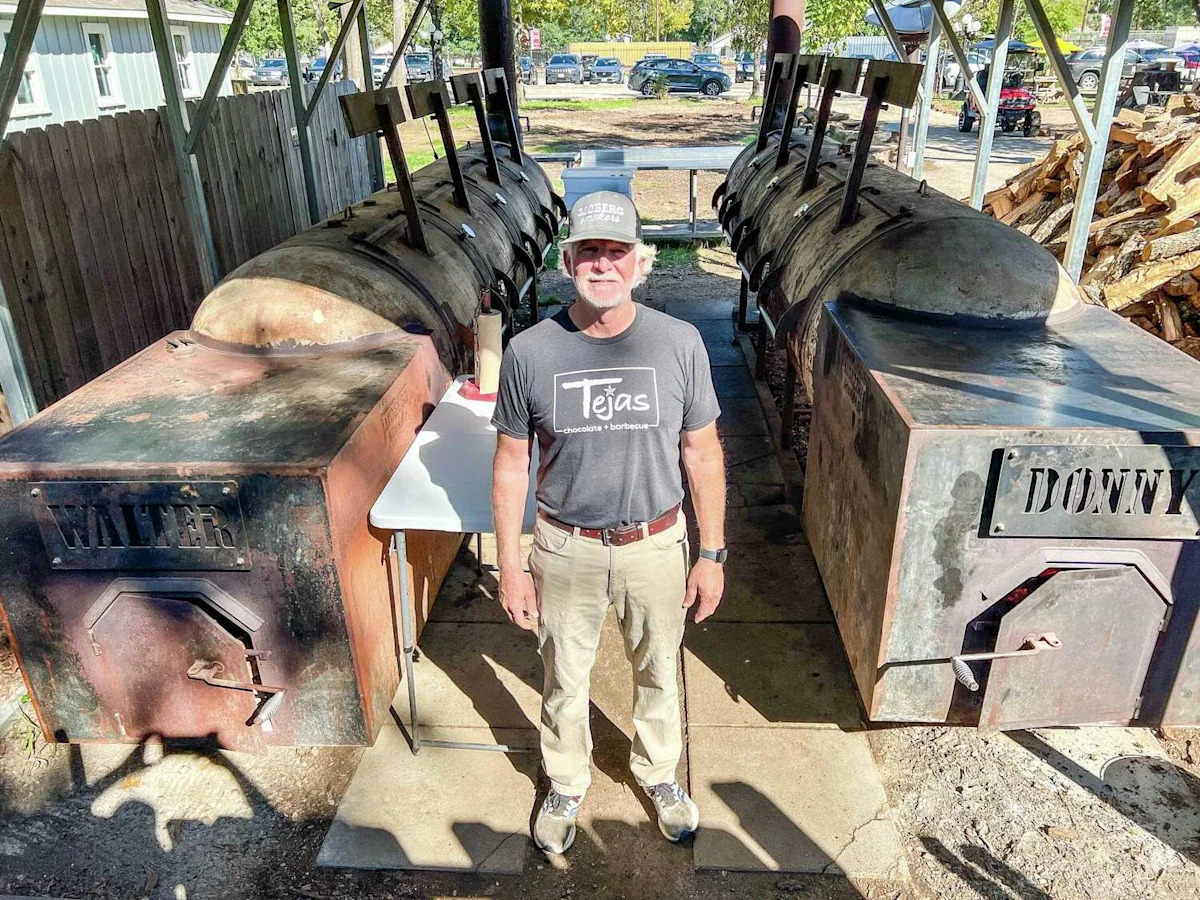
At Tejas Chocolate & BBQ in Tomball, co-owner and pitmaster Scott Moore Jr. confirms that business in 2026 has been steady, especially among locals and regular customers.
“Our revenue is up year-over-year,” says Moore. “The overall dining revenue is very solid.”
Considering that other restaurants, and not just barbecue joints, are struggling, what does he attribute this steady business to?
“Our restaurant is not just a barbecue restaurant. We’re a neighborhood restaurant. We’re open seven days a week until 9 p.m. We made a decision to maintain a high standard in quality and do the opposite of shrinkflation.”
Indeed, another positive aspect of the current barbecue scene is that the quality has stayed high. It would be easy for a pitmaster to switch from a prime or upper-choice brisket to a lower grade, but for now at least, I have not seen that happen.
Still, I can only hope that the naysayers are wrong and there won’t be a string of closures over the next few years.
But just to be sure, the next time a doom-and-gloom headline about Texas barbecue appears on your screen, consider it a reminder to visit your neighborhood barbecue joint.
If the only way to ensure the long-term success of Texas barbecue is to eat more barbecue, that sounds like a pretty good deal to me.
Tejas Chocolate & BBQ
200 N. Elm St., Tomball; 281-229-1011
Open daily.
Subscribe
There’s more to Houston with the Chronicle. Subscribe today for just 25¢.
This article originally published at National headlines suggest Texas barbecue is in trouble. The story is more complicated..