
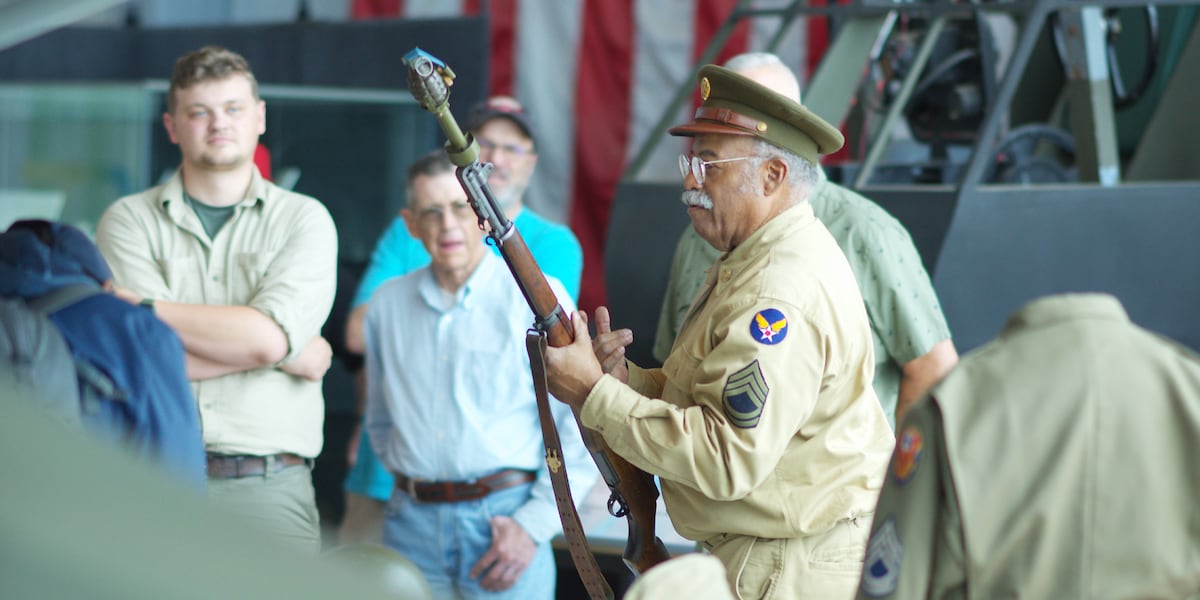
LUBBOCK, Texas (KCBD) – Visitors at Lubbock’s Silent Wings Museum got an up-close and personal view of the D-Day invasion of Normandy Saturday, with historians, educators, collectors, enthusiasts, and professional pilots putting the glider pilot experience in perspective for all ages.
82 years ago, in the early morning hours of June 6, 1944, more than 1,000 American pilots flew 500 Waco CG-4A gliders across the English Channel to prepare for the seaborne invasions at Utah, Omaha, Gold, Juno, and Sword Beaches. They were towing airborne infantry, weapons, munitions, supplies, and pre-fabricated parts used for creating improvised landing strips and aid stations.
They landed near Utah Beach, establishing a foothold behind enemy lines before the first troops even reached that designated point. Along with the anticipated anti-aircraft fire and fortified German positions, they also had to contend with unexpected challenges like the height of hedgerows and trees across the occupied French countryside, since previous reconnaissance photographs didn’t accurately show it.
It was thanks to the training they received at the South Plains Army Air Field that they were able to land and execute the mission. Now, the Silent Wings Museum — housed in the same building where the flying school was and is putting that service on display.
Experts showed the weapons they used to fight, including field stripping demonstrations, along with private collections of everything from entrenching tools and minesweepers to ammunition, baseballs, photographs, field manuals, and periodicals the pilots would have read to pass the time.
Andrew Taylor, a professor at South Plains College in Levelland, was showcasing his personal collection of artifacts, antiques, and period pieces representing what pilots and soldiers would have kept in their musette bags. His grandfather served in World War II and he said he’s proud to share their stories with the visitors.
Curator Sharon McCullar gave two presentations on the different medals, awards, honors, and commendations the glider pilots received over the years, including from other countries, which continued into the 1980s.
This year’s featured exhibit, which will remain on display until April 2027, focuses on those pieces, ranging from the Air Medals they received for each flight into a combat zone to the Silver Stars they earned in ground combat, which represented their gallantry above and beyond the call of duty.
Pilots and crew members of the ‘Southern Cross,’ a Douglas C-49J cargo plane built in the 1940s, joined with the Texas Air Museum and other collectors across our region to showcase some of the aircraft from that time in the war. The C-49J is a later model of the C-47 Skytrains that carried the CG-4A gliders in theaters around the world.
“It’s fantastic,” crew chief Karolina Marek said, describing the experience of flying in the vintage aircraft. “You hear it, you smell it, you feel it. Once those engines turn on, it takes you back in time.”
“It’s important to take a step back,” she continued, “and remember what our men actually went through flying in D-Day and through World War II in these aircraft. It’s quite an amazing experience; there’s nothing else like it.”
The Silent Wings Museum is full of personal stories and artifacts from pilots who flew, fought, lived, and died in Europe and Asia. It’s all intended to keep their memories alive.
The museum’s D-Day observations continue Sunday from 10 a.m. to 5 p.m. with free admission.
Schedule of events:
11 a.m. (Hangar Gallery) – Playing of the National Anthem
11:05 a.m. (Theater) – Eisenhower’s Address to the Troops
11:30 a.m. (Hangar Gallery) – D-Day Moments – A Guided Experience
1 p.m. (Hangar Gallery) – Weapons Demonstration
1:30 p.m. (Hangar Gallery) – D-Day Moments – A Guided Experience
2 p.m. (Hangar Gallery) – Packing the Musette Bag Demonstration
Copyright 2026 KCBD. All rights reserved.