
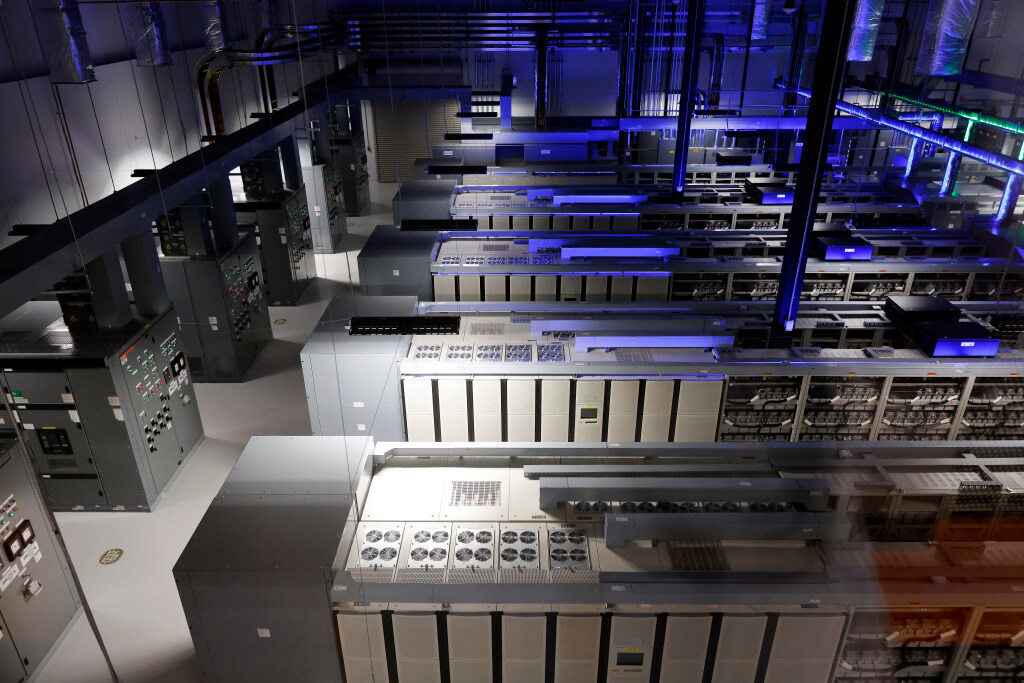
As data centers continue to pop-up around Texas and the Dallas-Fort Worth region, some experts weighed in on their water and energy consumption.
tom-fox
Dallas-Fort Worth is a hotspot of the country’s data center boom.

In May, a report from real estate firm Cushman & Wakefield named Dallas the No. 1 primary data center market in the world, stating these centers powering the internet are flocking to Texas to take advantage of the state’s pro-business attitude, independent and deregulated power grid and abundance of land.
Texas has an estimated 465 data centers, with 184 operating in Dallas-Fort Worth, the state’s largest hub by a significant margin, according to data from Data Center Map.
Article continues below this ad
But what is a data center, and how do the water and energy consumption necessary to operate them impact Texas? Here’s what to know.
Related: Dallas ranks No. 1 primary data center market globally, surpassing Atlanta, Virginia
What is a data center?
Although the explosion of AI in recent years has brought data centers into the spotlight, they existed long before, housing servers which store the internet’s data.
Raul Martynek, CEO of Dallas-based company DataBank,previously told The Dallas Morning News he first heard of data centers in the late 1990s when computer technology companies such as IBM needed data processing locations. Office spaces, he said, had “computer closets” where servers and other tech were stored. With the internet came the introduction of centralized locations making up cloud storage to replace in-office and home storage.
Article continues below this ad
Related: DataBank CEO: Dallas poised to be the nation’s leading location for data center capacity
Now, these centers power “everything that we do every day,” says Dan Diorio, the vice president for state policy at the Data Center Coalition, the industry’s membership organization whose members include Google, Anthropic, OpenAI and NTT Data.
“They are an indispensable part of our everyday lives,” Diorio said, adding that everything from making online purchases to reading online news articles requires the digital infrastructure of data centers. He explained one common misconception is that data centers solely power artificial intelligence, when really, phones, computers and even smart home appliances with internet capabilities require the digital infrastructure to store information and complete processing.
Are there data centers in Dallas?
NTT Data, the third-largest data center provider in the world, holds a 42-acre campus in Garland with three data centers and a fourth one on the way.
Article continues below this ad
Smaller data centers also exist throughout North Texas, with some even right in downtown Dallas office buildings. Carrier hotels, as they are classified, are buildings which house cloud services and networks, The News previously reported.
There are a number of massive AI data centers in Texas. OpenAI, Oracle and SoftBank joined forces for the Stargate Project, constructing a campus of centers in Abilene to support AI. Oracle previously told The News this campus will provide OpenAI with the largest supercluster in the world.
Related: Inside Stargate AI’s massive Texas data center campus, with 5 more sites announced
Related: Dallas at a crossroads on data center policy amid regional boom
Article continues below this ad
Why are there so many data centers in Texas?
Though Dallas has been ranked the top data center market, it has yet to surpass Virginia in terms of the number of data centers. Texas is set to do so by 2030, becoming the world’s largest data center market, per reports by JLL.
Diorio explained that Texas’ eagerness to welcome infrastructure, available land, workforce and existing tech ecosystem put the state on the map as a leading market.
Related: Dallas-Fort Worth is a leading data center market with a ‘significant scale issue’
How much energy do data centers use?
Powering data centers’ computer systems and technology infrastructure takes a significant amount of energy.
Article continues below this ad
Some of the largest single facilities require up to two-thirds the amount of the 3,000 megawatts of energy it takes to power the city of Fort Worth, Geoffery Bailey, VP of corporate strategy for Oncor Electric Delivery, previously told The News.
According to Bailey, the average data center now requires 700 to 800 megawatts of power.
In 2025, The News reported the U.S. Energy Information Administration had predicted that large-scale computing facilities, including data centers and cryptocurrency mining operations, could total 54 billion kilowatthours that year, rising 60% from expected demand in 2024.
Now, the U.S. Energy Information Administration is predicting that nationwide energy consumption for data center computing could reach between 446 and 818 billion kilowatthours by 2050.
The amount of energy data centers use is predicted to grow rapidly. The Electric Reliability Council of Texas, which oversees Texas’ electricity grid, is forecasting that peak electricity demand from homes and businesses, including data centers, could jump 70% by 2031, the Houston Chronicle reported.
Article continues below this ad
Diorio said data centers’ energy consumption is comparable to other large industrial users.
He also noted a steep demand curve for the services of data centers is driving growth, pointing to a Visual Capitalist report detailing a 10-gigawatt shortfall between demand for digital infrastructure and current capacity.
Why does this energy use matter?
Luke Metzger is the executive director of Environment Texas, an advocacy organization whose mission is to protect the natural world, working at the local, state and federal levels.
He explained the amount of energy data centers require exceeds the capacity of current infrastructure. Given the strain on Texas’ resources, Metzger said the state should cease encouraging the development of new data centers.
He cited information from the Environmental Integrity Project, an environmental nonprofit, estimating that building all of the power plants proposed to support Texas data centers would be the climate equivalent of adding 27 million cars to Texas roads.
Metzger worries the energy needs of the state’s ever-increasing number of data centers will be met by new gas burning power plants and diesel generators, contributing further to environmental concerns.
He suggests data centers be required to use clean energy such as wind, solar and batteries to avoid carbon impacts.
Metzger also said Environment Texas suggests data center development projects fund energy efficiency programs to offset their energy use, as there is a pressing need in Texas for support in upgrading inefficient heating systems for residents.
The Texas electricity grid operates independently, meaning it avoids federal regulation, making it easier for data centers to connect to the grid in light of less regulation.
This doesn’t mean data centers’ electricity use goes entirely unchecked, though. Texas Senate Bill 6 enables state regulators to enact a “kill switch” for large energy users on the grid during emergencies.
How much water do data centers use?
The same Cushman & Wakefield report naming Dallas the No. 1 primary data center in the market noted that growing concerns over water availability in Texas threaten the industry.
A 2024 research report from Environment Texas indicated that data center demands for AI could be responsible for the withdrawal of more than 2.4 million Olympic-sized swimming pools of freshwater in 2027.
A new report from UT Austin found that Texas data centers could account for 3% to 9% of the state’s water use by 2040. Currently, the centers account for less than 1%. In comparison, manufacturing accounts for 7% of water use in the state.
A study from the Environmental and Energy Study Institute details how data centers use water to cool systems and produce the power necessary to operate the centers. Nearly 80% of the water used for cooling data centers evaporates in the process, the report says. The rest of that water is discharged to municipal wastewater facilities. In order to avoid the water consumption of this evaporative cooling, some data centers are working to shift towards closed-loop cooling, which keeps water in the circuit to be reused.
Metzger explained that Texas is already a water-strained state, and the understanding is that there won’t be enough water to meet demand in the future. By one estimate from the Texas Water Development Board, the state’s municipal water supply could fail to meet demands as early as 2030 in light of a drought and lack of action to find solutions.
The way to mitigate these water concerns, he explained, is to reduce water footprints using ground water, rain water, reclaimed wastewater or oil field wastewater instead of potable water.
He also pointed to Google’s announcement of a $10 million investment in water projects in Texas as an example of work data center constructors can do to offset water demands and help local communities.
Related: Google spending $10 million in Texas on water projects where it’s building, operating data centers
Diorio said data centers are among the most efficient users of water in comparison to other industrial water users. He added that the permitting for data centers often makes their water consumption seem worse than it really is.
“We are an efficient water user. We will continue to be an efficient water user, and we are rapidly deploying advanced technologies to do so,” Diorio said, discussing the water efficiency technologies implemented by data centers, including hybrid systems which use air to cool infrastructure and only switch to water-based cooling when explicitly necessary.
He noted that data centers are permitted for the “worst case scenario” of their water usage, when really, water use does not approach the maximum figure on a daily basis.
Metzger said, though, that while the water use of data centers is similar to other industrial users and efficient methods have been deployed, what’s different is the scale of these developments and how quickly they are growing.
How do data centers impact the economy, job market?
A February 2025 report from the Data Center Coalition revealed that in 2024, Texas’ 41 million gross square feet of data center capacity had brought in over $1.6 billion in tax revenue and an additional near $1.6 billion for local tax authorities.
A new PWC study prepared for the Data Center Coalition found that data centers contributed $65.8 billion to Texas’ GDP in 2024 and directly created 103,700 jobs. Though short-term construction jobs are typically associated with the industry, Diorio explained that data centers can bring long-term, multi-campus construction and maintenance jobs as well as the hiring of electricians and plumbers for the centers.